
European Economic
and Social Committee
When uncertainty becomes the new tariff
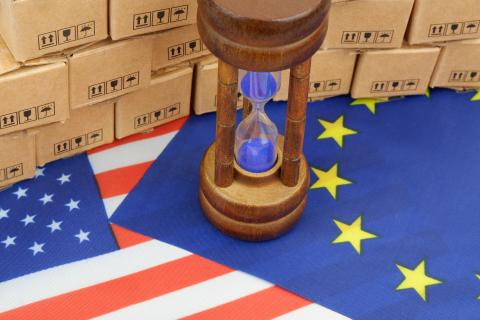
Europe’s economic relationship with the United States is often described as resilient. In reality, it is indispensable and therefore dangerously exposed to policy shocks.
The EU-US economic corridor remains the largest bilateral trade and investment relationship in the world. Europe exports more than €500bn in goods to the US every year, according to Eurostat, powering jobs across manufacturing, pharmaceuticals, technology, agri-food and services. Yet, in an era where tariff lines change overnight, confidence is crumbling.
For companies, uncertainty has de facto become the new tariff. Entire teams now spend their days refreshing so-called “tariff trackers” to keep up with the latest announcements, counter-announcements, court rulings, and threats of new duties. When businesses need real-time dashboards just to know if their goods can cross a border tomorrow, something has gone badly wrong.
Businesses thrive on predictability; its absence is corrosive.
This moment should alarm policymakers on both sides of the Atlantic. The Turnberry Deal was meant to reset trust after years of tensions, trade disputes, retaliatory tariffs, and post‑pandemic protectionism. Instead, it risks becoming another casualty of escalating tariff chaos.
The immediate collateral damage? Europe’s own industrial base.
For much of the post-Cold War period, tariffs were treated as tactical tools on a long road towards liberalisation. That assumption no longer holds. Analysts at the Peterson Institute for International Economics and other policy institutions have observed that US trade measures increasingly reflect industrial strategy, domestic employment priorities, and supply-chain security considerations rather than traditional market-access objectives.
Trade competence exists at EU level for a reason: negotiating power rests on unity, scale and credibility. Mixed political messaging or diverging national signals reinforce Washington’s perception that pressure yields concessions.
The United States of President Trump values strength above everything else. Member States cannot afford to be played against one another. A divided Europe invites negotiation fatigue and creates space for competing blocs to set the standards of global trade.
The remedy is clear and urgent: Europe must speak with one voice. This means a single, firm, collective stance towards Washington that restores legal certainty, guarantees customs predictability, and sets a credible timeline for implementation. Businesses don’t expect immunity from every geopolitical shock, but they do expect the EU to manage them with unity, clarity and foresight.
Above all, Europe must invest in its own competitiveness. In a prolonged era of trade weaponisation, only a stronger and competitive industrial base within a fully-fledged single market can preserve cooperation with reliable partners. That means accelerating new trade agreements, deepening existing partnerships, and diversifying markets to reduce exposure to transatlantic volatility. The current tariff turmoil is unlikely to be the last.
If businesses begin to treat transatlantic access as politically contingent rather than structurally reliable, the adjustment won't come as sudden crash, but as a gradual diversion of investment flows, a slow re-engineering of supply chains, and a steady erosion of Europe's preferred position within US-linked industrial ecosystems.
Such shifts, once embedded, are extremely difficult to reverse.
The EU-US economic relationship is too big to fail suddenly. But it is not too big to fade gradually. And gradual weakening - not sudden collapse - is precisely how systemic economic repositioning usually occurs.
Tariffs rarely destroy trade overnight. Uncertainty, however, can quietly redirect it for decades.
By Mira Maria Danisman, President of the EESC International Trade follow-up Committee, and Stefano Mallia, Vice-president of the EESC Transatlantic Relations Follow-up Committee.
Work organisation
Recommended for you
YEYS! 2023: Mládež žiada transparentnejšiu, digitálnejšiu a jednoduchšiu EÚ
News
Európsky hospodársky a sociálny výbor (EHSV) usporiadal 23. a 24. marca 14. ročník podujatia Vaša Európa, váš názor (YEYS), ktoré priviedlo do Bruselu 105…
Slovenská organizácia Integra získava Cenu EHSV pre občiansku spoločnosť za boj proti stereotypom spájaným s duševnými poruchami
News
Európsky hospodársky a sociálny výbor (EHSV) sa tohto roku rozhodol udeliť Cenu pre občiansku spoločnosť projektom na podporu duševného zdravia. Víťazom sa stala írska charitatívna organizácia…
EHSV otvára nový ročník Ceny pre občiansku spoločnosť, ktorej ústrednou témou je duševné zdravie
News
Organizácie občianskej spoločnosti, jednotlivci a súkromné spoločnosti môžu odteraz predkladať svoje neziskové projekty a uchádzať sa o cenu EHSV venovanú podpore duševnej pohody…
Odovzdajte svoj hlas v európskych voľbách v júni 2024: EHSV vyzýva Európanov, aby hlasovali za zjednotenú a demokratickú Európu
News
Vzhľadom na celosvetový trend ústupu demokracie, rýchle šírenie dezinformácií a zvyšujúcu sa nespokojnosť v dôsledku nárastu inflácie a hrozby vojny, pôjde pri hlasovaní o novom…
Dezinformácie a nedostatok záujmu sú hlavnými príčinami vysokej neúčasti voličov vo voľbách do Európskeho parlamentu
News
Európania musia poznať konkrétny vplyv rozhodnutí EÚ na ich životy, čo ich pomôže mobilizovať sa k účasti na voľbách. Rôznym krajinám EÚ je potrebné prispôsobiť rôzne posolstvá. Je potrebné preto…