
European Economic
and Social Committee
Energy poverty – 42 million people in the EU cannot afford to heat their homes adequately
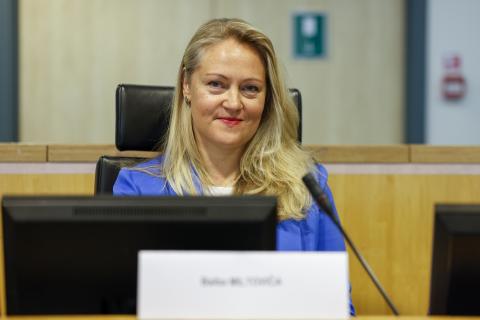
At its annual conference in Brussels, the European Economic and Social Committee (EESC) pointed out that the EU must do more to tackle energy poverty and protect its vulnerable citizens. The time has come to set out a clear strategy with an unequivocal commitment at all levels.
The third energy poverty conference, held by the EESC in Brussels on 19 July 2023, highlighted new, alarming data.
Approximately 42 million people across Europe – 9.3% of EU citizens – were unable to keep their homes adequately warm in 2022.
According to Eurostat (June 2023), the situation was slightly better in 2020 and 2021, when energy poverty affected 8% and 6.9% of the population respectively, but over the past few months the unprecedented surge in energy prices and the Russian invasion of Ukraine have made it more difficult for even more people.
These figures are appalling and this situation is no longer acceptable,
said Baiba Miltoviča, President of the Section for Transport, Energy, Infrastructure and the Information Society (TEN). Clearly, the measures implemented so far have not worked. We need a new deal, a new agreement supported by strong political will where all levels of governance push in the same direction.
According to the EESC, the EU must set out a clear strategy, where all political levels – local, national and European – come together and support each other.
The REPowerEU Plan is not enough. The focus must be more and more on renewables and local energy communities.
In short, in order to tackle energy poverty, the EESC proposes:
- establishing inflation control mechanisms and reforming the current electricity market;
- lowering energy consumption through energy saving and efficiency measures that will permanently reduce energy demand;
- boosting investment in renewables;
- increasing the renovation rate of buildings to improve housing energy efficiency;
- providing additional financial resources to the local level by streamlining procedures for accessing EU funding;
- mainstreaming transport poverty and energy poverty among women in all energy-related policy measures.
The key issue remains access to essential energy services and products. Energy is an essential building block of our society and cannot be treated like any other commodity. Decision-makers should take into account the fact that energy is a public service, and the upcoming redesign of the electricity market must guarantee, on the one hand, a sustainable and reliable supply and, on the other, the right to energy for citizens,
said Andrés Barceló Delgado, President of the EESC Permanent Group on Energy.
The detailed conclusions of the conference on Tackling energy poverty for a just transition will be published on the EESC website soon.
Work organisation
Downloads
-
Energy poverty – 42 million people in the EU cannot afford to heat their homes adequately
Recommended for you
YEYS! 2023: Mládež žiada transparentnejšiu, digitálnejšiu a jednoduchšiu EÚ
News
Európsky hospodársky a sociálny výbor (EHSV) usporiadal 23. a 24. marca 14. ročník podujatia Vaša Európa, váš názor (YEYS), ktoré priviedlo do Bruselu 105…
Slovenská organizácia Integra získava Cenu EHSV pre občiansku spoločnosť za boj proti stereotypom spájaným s duševnými poruchami
News
Európsky hospodársky a sociálny výbor (EHSV) sa tohto roku rozhodol udeliť Cenu pre občiansku spoločnosť projektom na podporu duševného zdravia. Víťazom sa stala írska charitatívna organizácia…
EHSV otvára nový ročník Ceny pre občiansku spoločnosť, ktorej ústrednou témou je duševné zdravie
News
Organizácie občianskej spoločnosti, jednotlivci a súkromné spoločnosti môžu odteraz predkladať svoje neziskové projekty a uchádzať sa o cenu EHSV venovanú podpore duševnej pohody…
Odovzdajte svoj hlas v európskych voľbách v júni 2024: EHSV vyzýva Európanov, aby hlasovali za zjednotenú a demokratickú Európu
News
Vzhľadom na celosvetový trend ústupu demokracie, rýchle šírenie dezinformácií a zvyšujúcu sa nespokojnosť v dôsledku nárastu inflácie a hrozby vojny, pôjde pri hlasovaní o novom…
Dezinformácie a nedostatok záujmu sú hlavnými príčinami vysokej neúčasti voličov vo voľbách do Európskeho parlamentu
News
Európania musia poznať konkrétny vplyv rozhodnutí EÚ na ich životy, čo ich pomôže mobilizovať sa k účasti na voľbách. Rôznym krajinám EÚ je potrebné prispôsobiť rôzne posolstvá. Je potrebné preto…