Wschodni sąsiedzi

This page is also available in:

Działania EKES-u związane ze wschodnimi sąsiadami obejmują Armenię, Azerbejdżan, Białoruś, Gruzję, Mołdawię i Ukrainę. Głównym celem EKES-u w odniesieniu do wschodnioeuropejskich sąsiadów jest rozszerzanie stosunków z organizacjami społeczeństwa obywatelskiego w regionie i angażowanie ich w dialog zarówno z decydentami krajowymi, jak i ze zorganizowanym społeczeństwem obywatelskim UE.

Głównymi mechanizmami współpracy z Gruzją, Mołdawią i Ukrainą są platformy społeczeństwa obywatelskiego, które uzupełniają organy polityczne istniejące w ramach układów o stowarzyszeniu z tymi krajami. Platformy umożliwiają organizacjom społeczeństwa obywatelskiego zarówno z UE, jak i z krajów partnerskich monitorowanie procesu wdrażania oraz przygotowywanie zaleceń dla właściwych organów.

Po stronie UE w skład platform wchodzą członkowie EKES-u oraz przedstawiciele dużych europejskich sieci społeczeństwa obywatelskiego. Po stronie krajów partnerskich reprezentują one szerokie spektrum organizacji społeczeństwa obywatelskiego. Członkostwo w platformie oparte jest na zrównoważonej reprezentacji wszystkich grup interesów (organizacje pracodawców, związki zawodowe i grupy interesów różnych).

W ramach EKES-u Komitet Monitorujący ds. Wschodnich Sąsiadów UE ustanowiono w 2004 r. jako specjalny organ odpowiedzialny za relacje ze społeczeństwem obywatelskim w państwach wschodniego sąsiedztwa. Komitet Kontrolny zbiera się zazwyczaj cztery razy do roku, a jego członkowie biorą czynny udział w działaniach Partnerstwa Wschodniego, takich jak platformy wielostronne w ramach Partnerstwa Wschodniego oraz Forum Społeczeństwa Obywatelskiego Partnerstwa Wschodniego.
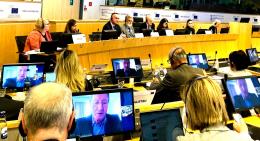
  • The External Relations Section (REX) of the European Economic and Social Committee (EESC) held a debate on 23 February 2026 to address the alarming deterioration of trade union freedoms in Belarus. Despite sustained international pressure and the appointment of an International Labour Organization (ILO) Special Envoy in June 2025, the Belarusian authorities continue to refuse any dialogue aimed at restoring compliance with fundamental labour standards. Around twenty trade unionists remain imprisoned.

  • On the occasion of the fifth anniversary of the ratification of the Enhanced Partnership and Cooperation Agreement (EPCA) between Kazakhstan and the EU, the European Economic and Social Committee (EESC) adopted at its March plenary session an action plan for enhancing cooperation between civil society organisations in the European Union and Kazakhstan. 

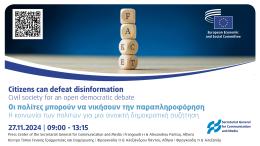
  • Civil society for an open democratic debate
    Event type
    Conference

    This conference in Lisbon is the fourth event on disinformation being hosted by the European Economic and Social Committee (EESC) as part of its ongoing project aiming to fight disinformation with the help of civil society.

  • Przyjęte on 17/07/2025 - Bureau decision date: 23/01/2025
    Sygnatura
    REX/598-EESC-2025
    Plenary session number
    598
    -
    • Follow-up from the Commission REX/598
    Download format:
    Download — Opinia EKES-u: The importance of institutionalising civil and social dialogue in EU candidate and partner countries
  • The fifth meeting of the EU-Armenia Civil Society Platform (CSP) is scheduled to be held on 15 October 2024 in Brussels.

    The meeting will focus on assessing progress in the implementation of the EU-Armenia Comprehensive and Enhanced Partnership Agreement (CEPA), with a strong emphasis on its impact in the Areas of Democracy, Rule of Law, Anti-Corruption, and Human Rights.


  • Civil society for an open democratic debate
    Event type
    Conference

    This conference in Athens is the third event on disinformation being hosted by the European Economic and Social Committee (EESC) as part of its ongoing project aiming to fight disinformation with the help of civil society.

  • The 14th meeting of the EU-Ukraine Civil Society Platform (CSP) took place on 15 December 2023. During the meeting, a debate focused on assessing the implementation of the European Commission's opinion and the state of play of the implementation of the EU-Ukraine Association Agreement.

    In addition, the CSP discussed the initiatives for Ukraine's green recovery, economic integration of Ukraine to the EU, as well as current challenges related to labour market.

    A joint declaration, prepared by both sides, was discussed and adopted.

  • Published in
    8 pages

    The External Relations Section (REX) of the European Economic and Social Committee (EESC) is responsible for dialogue between European civil society organisations and their homologues from the countries with which the European Union has formal relations (e.g. under the form of a Free Trade Agreement). Through this dialogue, made possible by a series of bilateral bodies, and through specialized opinions and information reports, the Committee is able to concretely contribute to EU foreign policy.

  • Document type
    Joint declaration
    Latest update
    • Joint declaration - 7th joint meeting of the EU-Moldova Domestic Advisory Groups
  • Przyjęte on 26/10/2022 - Bureau decision date: 20/09/2022
    Sygnatura
    REX/564-EESC-2022
    Civil Society Organisations - GR III
    Download format:
    Download — Opinia EKES-u: Specific provisions for the 2014-2020 cooperation programmes supported by the European Neighbourhood Instrument and under the European territorial cooperation goal, following programme implementation disruption