Vizinhos europeus do Leste

This page is also available in:

As atividades do CESE relativas aos vizinhos europeus de Leste envolvem a Arménia, o Azerbaijão, a Bielorrússia, a Geórgia, a Moldávia e a Ucrânia. O principal objetivo do CESE em relação aos vizinhos europeus de Leste é reforçar as relações com as organizações da sociedade civil na região e envolvê-las num diálogo com os responsáveis políticos, quer a nível nacional, quer a nível da sociedade civil organizada da UE.

Os principais mecanismos de cooperação com a Geórgia, a Moldávia e a Ucrânia são as plataformas da sociedade civil, que complementam os órgãos políticos existentes no âmbito dos acordos de associação da UE com estes países. As plataformas permitem às organizações da sociedade civil da UE e do país parceiro monitorizar o processo de implementação e formular recomendações às autoridades competentes.

Do lado da UE, as plataformas são compostas por membros do CESE e por representantes das grandes redes europeias da sociedade civil. Do lado do país parceiro, as plataformas representam um vasto leque de organizações da sociedade civil. A sua composição tem por base uma representação equilibrada de todos os grupos de interesse (empregadores, sindicatos e grupos de interesses diversos).

No CESE, o Comité de Acompanhamento para os Vizinhos Europeus do Leste foi criado em 2004, como órgão responsável pelas relações com a sociedade civil nos países da vizinhança oriental. O Comité de Acompanhamento reúne-se habitualmente quatro vezes por ano e os seus membros participam ativamente nas atividades da Parceria Oriental, tais como as plataformas multilaterais da Parceria Oriental e o Fórum da Sociedade Civil da Parceria Oriental.
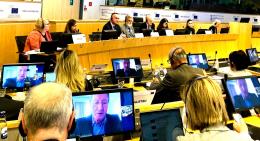
  • The External Relations Section (REX) of the European Economic and Social Committee (EESC) held a debate on 23 February 2026 to address the alarming deterioration of trade union freedoms in Belarus. Despite sustained international pressure and the appointment of an International Labour Organization (ILO) Special Envoy in June 2025, the Belarusian authorities continue to refuse any dialogue aimed at restoring compliance with fundamental labour standards. Around twenty trade unionists remain imprisoned.

  • On the occasion of the fifth anniversary of the ratification of the Enhanced Partnership and Cooperation Agreement (EPCA) between Kazakhstan and the EU, the European Economic and Social Committee (EESC) adopted at its March plenary session an action plan for enhancing cooperation between civil society organisations in the European Union and Kazakhstan. 

  • A sociedade civil em prol de um diálogo democrático aberto
    Event type
    Conference

    Esta conferência em Lisboa é o quarto evento sobre desinformação organizado pelo Comité Económico e Social Europeu (CESE) no âmbito do seu projeto em curso destinado a combater a desinformação com a ajuda da sociedade civil.

  • Adotados on 17/07/2025 - Bureau decision date: 23/01/2025
    Referência
    REX/598-EESC-2025
    Plenary session number
    598
    -
    • Follow-up from the Commission REX/598
    Download format:
    Download — Parecer do CESE: The importance of institutionalising civil and social dialogue in EU candidate and partner countries
  • The fifth meeting of the EU-Armenia Civil Society Platform (CSP) is scheduled to be held on 15 October 2024 in Brussels.

    The meeting will focus on assessing progress in the implementation of the EU-Armenia Comprehensive and Enhanced Partnership Agreement (CEPA), with a strong emphasis on its impact in the Areas of Democracy, Rule of Law, Anti-Corruption, and Human Rights.


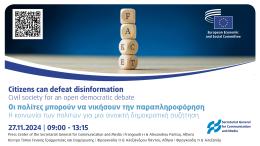
  • Civil society for an open democratic debate
    Event type
    Conference

    This conference in Athens is the third event on disinformation being hosted by the European Economic and Social Committee (EESC) as part of its ongoing project aiming to fight disinformation with the help of civil society.

  • The 14th meeting of the EU-Ukraine Civil Society Platform (CSP) took place on 15 December 2023. During the meeting, a debate focused on assessing the implementation of the European Commission's opinion and the state of play of the implementation of the EU-Ukraine Association Agreement.

    In addition, the CSP discussed the initiatives for Ukraine's green recovery, economic integration of Ukraine to the EU, as well as current challenges related to labour market.

    A joint declaration, prepared by both sides, was discussed and adopted.

  • Published in
    8 pages

    The External Relations Section (REX) of the European Economic and Social Committee (EESC) is responsible for dialogue between European civil society organisations and their homologues from the countries with which the European Union has formal relations (e.g. under the form of a Free Trade Agreement). Through this dialogue, made possible by a series of bilateral bodies, and through specialized opinions and information reports, the Committee is able to concretely contribute to EU foreign policy.

  • Document type
    Joint declaration
    Latest update
    • Joint declaration - 7th joint meeting of the EU-Moldova Domestic Advisory Groups
  • Adotados on 26/10/2022 - Bureau decision date: 20/09/2022
    Referência
    REX/564-EESC-2022
    Civil Society Organisations - GR III
    Download format:
    Download — Parecer do CESE: Specific provisions for the 2014-2020 cooperation programmes supported by the European Neighbourhood Instrument and under the European territorial cooperation goal, following programme implementation disruption