The EESC held a debate in plenary on the growing importance of organised civil society and cities in Europe's ability to face asymmetric shocks and unforeseen crises. This was linked to the adoption of two opinions, on Flexible Assistance to Territories (FAST-CARE) and on the Ljubljana Agreement on the Urban Agenda of the EU. The Committee welcomes both initiatives, but finds they miss the bar in terms of properly empowering and involving organised civil society. A key measure proposed by the EESC is to create a separate EU fund for the reconstruction and development of Ukraine to complement the efforts made by the Member States.
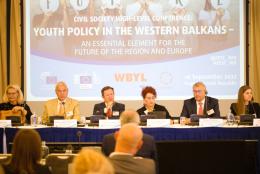
The high-level civil society conference on youth policy in the Western Balkans, hosted by the European Economic and Social Committee (EESC), highlighted the key role of young people for the future of the region and called for their active involvement in policy-making.
Podczas wydarzenia zorganizowanego przez Europejski Komitet Ekonomiczno-Społeczny (EKES) i Uniwersytet w Debreczynie podkreślono kluczowe znaczenie współtworzenia usług świadczonych w interesie ogólnym w dziedzinie zdrowia i dobrostanu, zwłaszcza w świetle wniosków wyciągniętych z pandemii COVID-19.
Europejski Komitet Ekonomiczno-Społeczny (EKES) zorganizował 19 lipca konferencję wysokiego szczebla nt. pomocy dla Ukrainy i jej odbudowy. Podczas tego wydarzenia zobowiązał się w pełni i na wszystkich polach wspierać ten zmagający się z wojną kraj.
The European Economic and Social Committee (EESC) is proud to announce the finalists, by category, for the first ever EU Organic Awards, co-organised with the European Commission and other partners to reward excellence along the European organic value chain. The winners of each category will be announced on 23 September, EU Organic Day, during a special ceremony with EU commissioner for Agriculture, Janusz Wojciechowski.
At its July plenary, the European Economic and Social Committee (EESC) argued that the new Trade and Technology Council (TTC) can become an innovative tool for both the EU and USA to work together towards a safer and more prosperous world, based on the principles of sustainable development and democratic values.
The European Commission should place greater focus on the long-term development of an EU able to better withstand geopolitical upheavals, counter their negative economic and social impacts and ensure that sustainable development guides its policies, the European Economic and Social Committee (EESC) has said in a resolution on the EU's priorities for 2023.
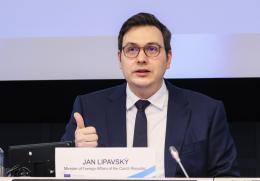
The July plenary session of the European Economic and Social Committee (EESC) hosted a debate with Czech Foreign Minister Jan Lipavský to discuss the priorities of the Czech presidency of the Council of the European Union for the second semester of 2022.
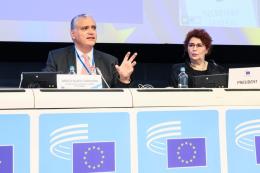
At the July plenary session of the European Economic and Social Committee (EESC), its president Christa Schweng and the newly elected president of the European Committee of the Regions (CoR) Vasco Alves Cordeiro discussed renewed prospects for joint action and cooperation between the two committees.