
European Economic
and Social Committee
A stronger European Semester for competitiveness, social inclusion and the next EU budget
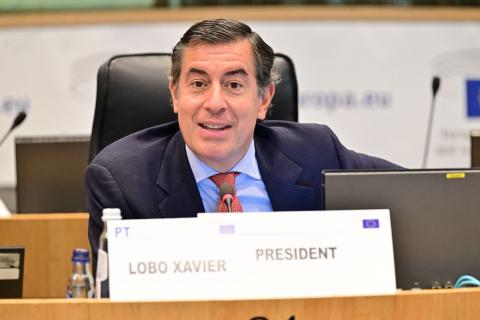
The European Semester must evolve into a more results-oriented framework that promotes sustainable competitiveness and social inclusion while ensuring that reforms and investments deliver tangible benefits for citizens. This is even more crucial given its future link to the next Multiannual Financial Framework. This was the central message from the Annual European Semester Group Conference, held by the European Economic and Social Committee (EESC) in Brussels on 30 June.
Bringing together representatives of the European institutions, Member States, national economic and social councils, social partners, organised civil society and academia, the conference examined the future of the European Semester at a decisive moment for the European Union.
As negotiations on the next Multiannual Financial Framework (MFF) gather pace, the European Semester is expected to play an increasingly important role in coordinating national reforms and investments, and aligning EU priorities with the national and regional needs of Member States.
European Semester Group Vice-President Judith Vorbach said: Social cohesion is the foundation of sustainable competitiveness and economic security. Strengthening the social dimension of the European Semester means, for example, striking a better balance between the Macroeconomic Imbalance Procedure and the Social Convergence Framework, while ensuring stronger delivery of social objectives at national level.
‘Europe faces a challenging economic and geopolitical environment that requires us to strengthen competitiveness, accelerate sustainable growth and reinforce social resilience in a strategic budgetary framework. Achieving these objectives demands not only sound policies but also a coherent strategic framework that links reforms, investments and public resources,' said EESC's ECO section president Elena Calistru.
EESC President Seamus Boland: 'Europe has every reason to be ambitious, but lasting success depends on advancing prosperity, economic resilience and social cohesion together. The European Semester is a vital tool to achieve this, and the EESC stands ready to contribute the expertise of organised civil society.'
Participants agreed that this development requires a European Semester that goes beyond economic oversight. To steer reforms successfully and support the implementation of the next EU budget, it must promote investment, strengthen Europe's competitiveness and resilience, and ensure that economic, employment and social policies remain closely aligned. By ensuring greater consistency and complementarity between reforms and investments at EU, national and regional levels, the Semester can enhance impact, efficiency and European added value while strengthening its role as one of the Union's key governance instruments.
European Semester Group Vice-President Luca Jahier added: 'There is broad recognition that a closer alignment between the European Semester, the next MFF and national policy priorities could enhance the coherence, effectiveness and strategic impact of EU action.'
The conference also highlighted the Semester’s growing importance as the EU seeks to respond to a rapidly changing global environment marked by geopolitical tensions, upheavals in international trade, demographic change, the green and digital transitions and mounting pressure on Europe’s competitiveness and the labour market. Participants pointed out that the future European Semester framework must strike the right balance between fiscal responsibility, strategic investment and social cohesion, enabling Member States to deliver reforms while preserving the European social model.
A recurring theme throughout the discussions was the need to reinforce democratic ownership of the Semester. Speakers stressed that a stronger role for social partners and civil society is not a barrier to efficiency – it is a condition for it. Effective social dialogue is essential for successful economic governance. Reforms are more effective and politically sustainable when they are developed in partnership with those directly affected by them. Meaningful stakeholder involvement must therefore become an integral part of every stage of the Semester cycle but also within the framework of the next MFF, from identifying priorities to implementing and monitoring reforms.
European Semester Group President Gonçalo Lobo Xavier said: 'The European Semester should evolve beyond a coordination mechanism into a genuine delivery framework.'
These discussions echoed the EESC’s recently adopted Information Report and Resolution on “national reforms and investments measures proposed under the European Semester”, as well as the opinion on the 2026 European Semester-Autumn Package. Through the Resolution, the EESC calls on the Commission to establish a European Code of Consultation Practices, introduce mandatory assessments of stakeholder involvement throughout the Semester cycle, and strengthen structured dialogue at both national and European levels.
Contact: colombe.gregoire@eesc.europa.eu
Work organisation
Recommended for you
YEYS! 2023: Jongeren vragen een EU die transparanter, digitaler en eenvoudiger is
News
Op 23 en 24 maart is bij het Europees Economisch en Sociaal Comité (EESC) de veertiende editie van Jouw Europa, jouw mening! (YEYS!) gehouden. Voor dat evenement kwamen 105 leerlingen van 35 scholen…
De elektriciteitsmarkt van de EU moet worden hervormd
News
Uit een door het Europees Economisch en Sociaal Comité (EESC) georganiseerd debat kwam naar voren dat het van cruciaal belang is de Europese elektriciteitsmarkt aan te passen om de zwakke punten…
Kandidaten kunnen zich nu aanmelden voor de EESC-prijs voor het maatschappelijk middenveld, die dit jaar geestelijke gezondheid als thema heeft
News
Maatschappelijke organisaties, individuen en particuliere ondernemingen kunnen nu met hun non-profitprojecten meedingen naar de EESC-prijs voor het maatschappelijk middenveld, die deze keer in het…
EESC roept de EU-burgers op om in juni 2024 te stemmen voor een verenigd en democratisch Europa
News
Tegen de achtergrond van een wereldwijde achteruitgang van de democratie, welig tierende desinformatie, groeiende ontevredenheid, stijgende inflatie en oorlogsdreiging, staat er veel op het spel bij…
De sociale en burgerdialoog kunnen de EU helpen duurzaam te groeien
News
Slechts enkele dagen na de Europese verkiezingen van 2024 kwamen het Europees Economisch en Sociaal Comité (EESC) en de nationale sociaal-economische raden van de EU bijeen om de stand van zaken van…