
European Economic
and Social Committee
European Economic
and Social Committee
The European Economic and Social Committee (EESC) is the voice of organised civil society in Europe.
Find out more about its role and structure at http://www.eesc.europa.eu/en/about
The EESC issues between 160 and 190 opinions and information reports a year.
It also organises several annual initiatives and events with a focus on civil society and citizens’ participation such as the Civil Society Prize, the Civil Society Days, the Your Europe, Your Say youth plenary and the ECI Day.
Find the latest EESC opinions and publications at http://www.eesc.europa.eu/en/our-work/opinions-information-reports/opinions and http://www.eesc.europa.eu/en/our-work/publications-other-work/publications respectively.
The EESC is active in a wide range of areas, from social affairs to economy, energy and sustainability.
Learn more about our policy areas and policy highlights at http://www.eesc.europa.eu/en/policies
The EESC holds nine plenary sessions per year. It also organises many conferences, public hearings and high-level debates related to its work.
Find out more about our upcoming events at http://www.eesc.europa.eu/en/agenda/our-events/upcoming-events
Here you can find news and information about the EESC'swork, including its social media accounts, the EESC Info newsletter, photo galleries and videos.
Read the latest EESC news http://www.eesc.europa.eu/en/news-media/news and press releases http://www.eesc.europa.eu/en/news-media/press-releases
The EESC brings together representatives from all areas of organised civil society, who give their independent advice on EU policies and legislation. The EESC's326 Members are organised into three groups: Employers, Workers and Various Interests.
Find out more about our Members and groups at http://www.eesc.europa.eu/en/members-groups
The EESC has six sections, specialising in concrete topics of relevance to the citizens of the European Union, ranging from social to economic affairs, energy, environment, external relations or the internal market.
Find out more at http://www.eesc.europa.eu/en/sections-other-bodies
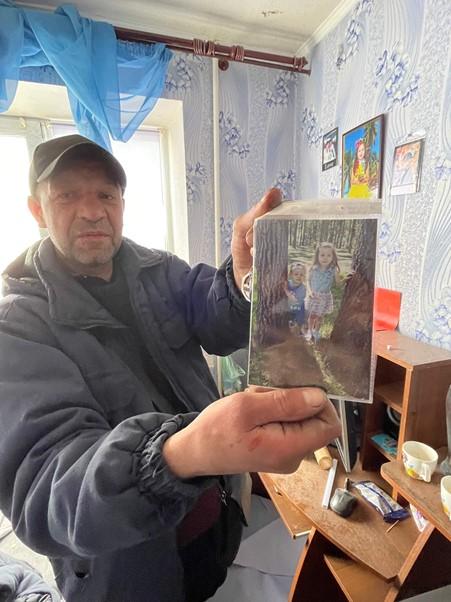
Kolya woont alleen met de kat van het gezin in zijn flat, die gedeeltelijk werd vernietigd door Russische luchtaanvallen pal in het centrum van Irpin. Zijn gezin is naar Frankrijk gevlucht, maar hij besloot te blijven omdat hij naar zijn gevoel hun huis en hun bezittingen moest verdedigen. Hij liet ons trots de foto’s van zijn kinderen zien, hun medailles voor ballet en taekwondo, en zei er zeker van te zijn dat hij zich weer snel met hen zal herenigen “zodra dit allemaal voorbij is”.
Costas Constantinou is hoofdredacteur van het Cypriotische dagblad Politis. Hij reisde in maart en in april naar Oekraïne om verslag te doen van de oorlog, de vluchtelingencrisis en de overlevingsstrijd van gewone Oekraïners. Hartelijk dank, Costas Constantinou, voor het verhaal achter deze foto. (ks)