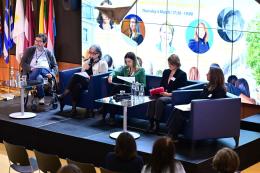
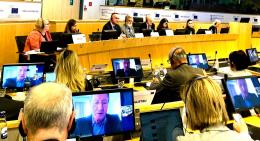
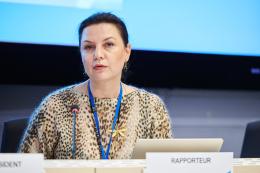
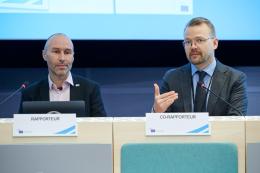
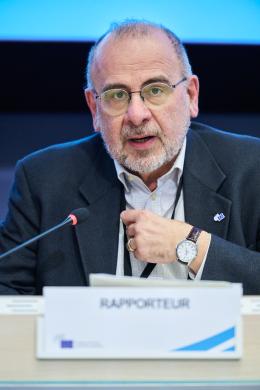
To mark International Women’s Day 2026, the European Economic and Social Committee (EESC) hosted a panel discussion highlighting the essential but undervalued work carried out largely by women across Europe. The event, held at the close of Civil Society Week, examined how invisible work supports families, communities, and entire economies, yet too often remains unrecognised, unprotected and uncompensated.
Gender stereotypes continue to be perpetuated and amplified by contemporary media, particularly in the digital sphere. At a conference organised by the European Economic and Social Committee (EESC), speakers called for stronger use of EU legal instruments to address the repression of female journalists, both online and offline.
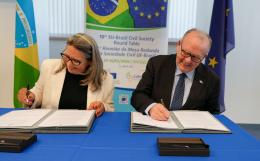
EU and Brazilian civil society pledged closer collaboration on safeguarding democracy, the Mercosur trade deal, social inclusion and climate action during the tenth meeting of the EU-Brazil Civil Society Round Table, which took place on 25-26 February 2026 at the EESC.
The European Economic and Social Committee (EESC) believes that the challenges faced by EU islands are not adequately addressed by the EU's sectoral policies. Instead of being treated as peripheral territories, islands should be recognised as frontline regions for Europe.
An opinion adopted at the EESC’s February plenary session points out that the European Union will only be able to secure a stable, low-carbon and affordable energy supply by adopting a comprehensive forward-looking approach that prioritises the security of the electricity system.
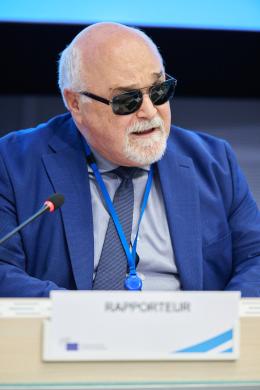
The External Relations Section (REX) of the European Economic and Social Committee (EESC) held a debate on 23 February 2026 to address the alarming deterioration of trade union freedoms in Belarus. Despite sustained international pressure and the appointment of an International Labour Organization (ILO) Special Envoy in June 2025, the Belarusian authorities continue to refuse any dialogue aimed at restoring compliance with fundamental labour standards. Around twenty trade unionists remain imprisoned.
The European Economic and Social Committee (EESC) recognises the need to adapt the excise duty framework for tobacco products in line with market developments. However, it urges caution regarding excessive increases in excise duties, as these could lead to an increase in illicit trade.
Europe cannot afford to treat biodiversity as a secondary concern. In the recent opinion adopted by the European Economic and Social Committee (EESC) in its February plenary, is stressed that the Kunming‑Montreal Global Biodiversity Framework set ambitious global targets, but ambition alone will not restore degraded ecosystems or protect collapsing species. Delivery, not declarations, will determine whether 2030 marks a turning point or another missed deadline.
In an opinion adopted at the February plenary, the European Economic and Social Committee (EESC) warns the European Commission against the EU’s chronic lack of investment and highlights five political priorities for an ambitious European Semester based on investments, the single market and sustainable growth.