argues that, to be competitive in the area of general-purpose AI, Europe must invest in secure connectivity and resilient backbone infrastructure as well as in a resilient supply chain to ensure that the effects of generative AI can be harnessed for European actors and aligned with European values and needs;
recommends organising dialogues with stakeholders, including the social partners, about codes of practice in workplaces and workers' rights in the context of GPAI;
stresses that coordinated European and national investment in innovation and mobilisation of the tools of competition policy are needed in order to combat a market concentration dominated by large, often non-European, digital companies and to help develop EU value chains and value creation in AI.
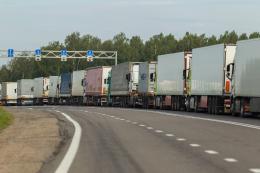
For Bulgaria and Romania, the costs of not being full members of the Schengen area are counted in billions of euros. The transport and tourism sectors of both countries are most affected and checks at land borders create huge barriers for Romanian and Bulgarian companies, restricting their competitiveness and preventing them from fully reaping the benefits of the single market
points out that there is still a long way to go to reach the final objectives of decarbonisation and transition to a more sustainable economy, objectives that were set out by the Commission in its original Green Deal formulation. Companies need much more certainty, global agreement, guidance, sophisticated accountability methods and, ultimately, support from legislators;
highlights the urgent need for public funds to be strategically allocated to goals that are jointly agreed on by European policy-makers and civil society. This initiative must be closely interlinked with the industrial strategy;
emphasises that Member States need EU-level support and civil society input to assist companies through guidance, benchmarking and shared learning capacities to adopt and carry out the structural reforms flowing from the Green Deal: bolstering employment rates, enhancing access to skills and labour, and promoting flexibility and efficiency in labour markets.
How to eradicate skills poverty among the most vulnerable? On 10 July, the Civil Society Organisations’ Group of the European Economic and Social Committee held a thematic debate exploring this question. The debate saw the launch of a new exploratory study on this same issue.
15 June 2023 - The Employers' Group of the European Economic and Social Committee today pushed through a counter-opinion to strongly voice its concern about adding a Social Progress Protocol that would fundamentally change the nature and functioning of the EU social market economy.
On the occasion of the 30th anniversary of the Single Market, the EESC held a debate about the future of the world's largest trading bloc with Commission Executive Vice-President Margrethe Vestager. The Single Market is widely considered the EU's greatest achievement, but has also shown its limitations in the face of current crises.
At the European Economic and Social Committee plenary session on Wednesday, EESC members discussed the EU's response to geopolitical challenges with Roberta Metsola, President of the European Parliament. The presidents of both institutions agreed that competitiveness, together with more strategic autonomy, is crucial in the current challenging times.
Lifelong learning will ensure jobs and decent living standards. However, in the absence of a standardised system across the EU, not all workers have opportunities to reskill and upskill during their careers, an EESC study finds
Trillions of euros are needed for Europe's economic recovery. EU proposals for accessible investment data and long-term funding must be more flexible and promote a transparent level playing field, to include more investors and businesses in capital markets.