
European Economic
and Social Committee
How the EESC wants youth entrepreneurship to boost Europe’s competitiveness
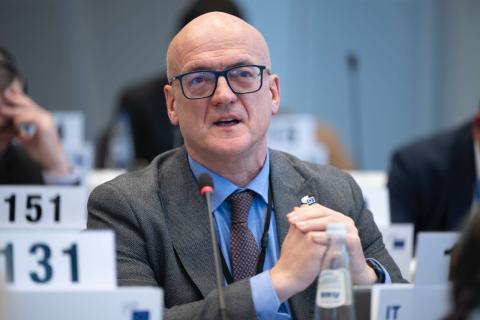
At its April 2026 plenary session, the European Economic and Social Committee (EESC) adopted an exploratory opinion on EU competitiveness and youth entrepreneurship. Requested by the Cyprus Presidency of the Council of the EU, the opinion sets out how supporting young entrepreneurs can strengthen innovation, foster sustainable growth and help secure the future of Europe’s SMEs.
The EESC has delivered a clear message: youth entrepreneurship is not only a response to labour market challenges but a strategic tool to reinforce Europe’s competitiveness and long‑term prosperity. In its newly-adopted opinion on EU Competitiveness and Youth Entrepreneurship, the Committee outlines a comprehensive approach to enable young people to turn entrepreneurial ambition into viable, sustainable businesses.
The opinion underlines that young entrepreneurs face persistent barriers, notably limited access to finance, regulatory complexity and skills gaps. Addressing these obstacles requires coordinated action at EU, national and local level, combining funding, education, mentoring and regulatory simplification.
Rapporteur Giuseppe Guerini stressed the importance of inclusive and realistic approaches to entrepreneurship education: "Support for youth entrepreneurship is a strategic tool for strengthening the EU's competitiveness and innovation capacity, which may also prove decisive in addressing the challenge of generational renewal in many SMEs."
Youth entrepreneurship as a driver of competitiveness
The EESC considers youth entrepreneurship a strategic lever to strengthen the EU’s innovation capacity, address productivity challenges and support generational renewal in SMEs. Demographic change and increasing global competition make it essential to encourage new generations to engage actively in economic life, not only as employees but also as business creators.
At the same time, the Committee emphasises that entrepreneurship should never be a default response to a lack of decent employment opportunities. Young people must be supported to choose entrepreneurship freely, with adequate safeguards, realistic expectations and access to alternatives in the labour market.
Combining funding and support
Difficulty accessing capital remains one of the most significant barriers for young entrepreneurs. The EESC therefore calls for stronger support for alternative financing instruments, moving beyond traditional bank lending, and for financial tools adapted to the specific realities of youth‑led businesses. This is particularly relevant for innovative start‑ups, social enterprises and cooperatives, which often struggle to attract private investment.
Financial assistance alone, however, is not sufficient. The opinion stresses the importance of combining funding with mentoring, coaching, business incubation programmes and strategic evaluation tools that help young entrepreneurs identify risks and strengthen the sustainability of their projects from the outset.
Developing an entrepreneurial mindset
Developing an entrepreneurial mindset must start early and be accessible to all. The EESC recommends integrating entrepreneurship education across different levels and pathways of education and training, including vocational education and dual training systems that combine classroom learning with real‑world experience in companies.
Financial literacy is identified as a key enabling factor. Young people who wish to start businesses need basic financial skills to ensure long‑term viability, manage risk and adapt to changing market conditions. In parallel, the opinion highlights the growing relevance of digital and artificial intelligence‑related skills for the future activity of young entrepreneurs.
Cutting red tape and fostering networks
Administrative and regulatory burdens remain a major obstacle to business creation. The EESC welcomes recent EU‑level efforts to simplify rules and reduce red tape, while calling for similar reforms at national and local level. A stable, accessible legislative environment is essential to allow young entrepreneurs to focus on innovation and growth rather than compliance.
The opinion also underlines the importance of networks and ecosystems. Participation in business and social networks can open access to markets, partners, investors and good practices, significantly improving the chances of success for young entrepreneurs. Strengthening local and regional initiatives is therefore key.
Failure as a learning experience
The EESC stresses that boosting competitiveness must go hand in hand with social inclusion. Support measures for youth entrepreneurship should pay particular attention to women, people with disabilities and other underrepresented groups, ensuring equal opportunities and social cohesion. The Committee also highlights the need to protect the right to a second chance, recognising failure as a learning experience rather than a stigma.
Work organisation
Recommended for you
„Sinu Euroopa, Sinu arvamus“ 2023: noored soovivad läbipaistvamat, digitaalsemat ja lihtsamat ELi
News
23. ja 24. märtsil korraldas Euroopa Majandus- ja Sotsiaalkomitee 14. korda ürituse „Sinu Euroopa, Sinu arvamus“. Üritus tõi Brüsselisse 105 õpilast 35 koolist kõigist 27…
Algab kandideerimine Euroopa Majandus- ja Sotsiaalkomitee kodanikuühiskonna auhinnale, mille teemaks on vaimne tervis
News
Kodanikuühiskonna organisatsioonid, üksikisikud ja eraettevõtted saavad nüüd esitada oma mittetulunduslikke projekte, et konkureerida Euroopa Majandus- ja Sotsiaalkomitee auhinnale, mis on pühendatud…
Valimised 2024. aasta juunis: Euroopa Majandus- ja Sotsiaalkomitee kutsub eurooplasi üles hääletama ühtse ja demokraatliku Euroopa poolt
News
Uue Euroopa Parlamendi valimistel on palju kaalul, sest demokraatia on nõrgenemas kogu maailmas, desinformatsioon on laialt levinud ja rahulolematus kasvab, kuna inflatsioon kiireneb ja sõjaoht…
TENi sektsiooni esimees Baiba Miltoviča ja Euroopa Regioonide Komitee raportöör Andres Jaadla kirjutavad alla elamumajandust käsitlevale deklaratsioonile
News
14. novembril 2024 allkirjastatud ühisavalduses kutsuvad Euroopa Majandus- ja Sotsiaalkomitee transpordi, energeetika, infrastruktuuri ja infoühiskonna sektsiooni (TEN) esimees Baiba…
EL peab transpordisektori CO2 heite vähendamiseks viivitamatult keskenduma saastevabale vesinikule
News
Eestis toimunud konverentsil rõhutati, et vähese CO2 heitega vesinik on energiasüsteemi eduka ümberkujundamise põhielement, mille potentsiaali arendamiseks on aga vaja taristut ja rahastamist.Ürituse…