
European Economic
and Social Committee
Beating cancer by beating EU's strategic dependencies
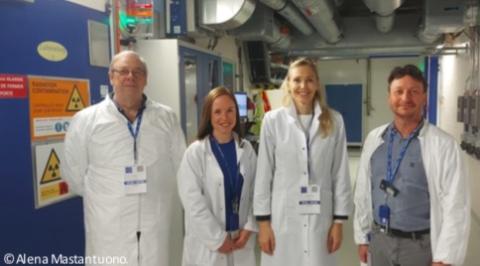
Despite being a world leader in the supply of medical radioisotopes, Europe heavily relies on third countries for key source materials and specific processing operations. This has the potential to disrupt supply chains and threaten access to life-saving diagnosis and treatment for many Europeans. To reverse this trend and meet the increasing demand from patients, we need public and private investment in research and development and in new production infrastructures, sound regulation and bold political decisions.
The number of patients benefiting from nuclear medicine is growing, mainly because of scientific breakthroughs. European researchers and businesses have developed some of the latest innovative radioligand cancer treatments, such as pharmaceuticals targeting endocrine and prostate cancer tumours and disseminated metastasis. In comparison with traditional treatments, modern radionuclide therapy offers good targeting of cancer cells and is often less harmful to the body. Tens of thousands of cancer patients need targeted radionuclide therapy, which is often the only treatment available.
However, before reaching the patient, the supply chain of nuclear medicine is highly complex. It includes the supply of source materials and their storage, irradiation, processing, logistics and application. Once the radioisotopes are produced, they must be processed, shipped and used within a relatively short period of time, some on the same day, others within a few days, depending on their half-life. They are highly and quickly perishable.
Surprisingly enough, these characteristics are not always reflected in cross-border transport and customs procedures. For instance, when it comes to cross-border transport, there are several barriers, leading to situations where priority may be given to perishable goods such as shrimps over radioisotopes being on the way to saving a patient's life.
This is why in its opinion on the supply of medical radioisotopes, the EESC calls for better cooperation among Member States for the regulatory and procedural barriers to be removed.
Europe has to provide production incentives in order to ensure better strategic autonomy in the supply of radioisotopes. Despite being a world leader in the supply of medical radioisotopes, Europe has critical dependencies on the US and Russia for the supply of metallic high-assay low enriched uranium (HALEU) and for the supply of some enriched stable isotopes for radioisotope production targets. The EU remains highly dependent on Russia for the supply of stable isotope targets, which allow the production of certain radioisotopes used in modern or developing molecular radiotherapies. This presents a veritable challenge to the supply chain for this specific radioisotope, for which the global demand is expected to triple in the coming years.
The supply chain also depends on the systems of production using reactors or accelerators, as well as on processing and delivery to hospitals. To ensure equal access to care, the Member States, and in particular research centres and hospitals, should work together more closely. Access to radiation therapy is not uniform across the Member States, especially in the development and pilot phases. The aim is to have faster access to medicines in the research phase or in compassionate use, as well as to improve access for small hospitals that may lack expertise and infrastructure. For some patients, this access can be vital.
The European funding of research, development and innovation in nuclear medicine, particularly in the Horizon and Euratom programmes, is crucial to respond to the needs of patients. Europe should have strategic projects of common interest in this area under the EU’s future Multiannual Financial Framework (MFF). The European Commission’s SAMIRA strategy and the European Radioisotopes Valley Initiative (ERVI), in connection with Europe’s Beating Cancer Plan, are valuable projects. The European Commission should go further and include nuclear medicine more prominently in Europe’s Beating Cancer Plan and in the Horizon Europe Mission on Cancer.
Member States should also finance public health policies with focus on medical radiological and nuclear technologies. This will give a good signal to the industry and will allow the research and innovation as well as industrial infrastructure to be developed and grow in Europe. It will also attract more people to the sector.
Read the full article in EESC info: https://europa.eu/!Rc8qHr
 Alena Mastantuono
Rapporteur of the opinion TEN/833 “Europe's Beating Cancer Plan:
Driving forces for the security of medical radioisotopes supply”
Member of the EESC Employers’ Group
Recommended for you
„Sinu Euroopa, Sinu arvamus“ 2023: noored soovivad läbipaistvamat, digitaalsemat ja lihtsamat ELi
News
23. ja 24. märtsil korraldas Euroopa Majandus- ja Sotsiaalkomitee 14. korda ürituse „Sinu Euroopa, Sinu arvamus“. Üritus tõi Brüsselisse 105 õpilast 35 koolist kõigist 27…
Algab kandideerimine Euroopa Majandus- ja Sotsiaalkomitee kodanikuühiskonna auhinnale, mille teemaks on vaimne tervis
News
Kodanikuühiskonna organisatsioonid, üksikisikud ja eraettevõtted saavad nüüd esitada oma mittetulunduslikke projekte, et konkureerida Euroopa Majandus- ja Sotsiaalkomitee auhinnale, mis on pühendatud…
Valimised 2024. aasta juunis: Euroopa Majandus- ja Sotsiaalkomitee kutsub eurooplasi üles hääletama ühtse ja demokraatliku Euroopa poolt
News
Uue Euroopa Parlamendi valimistel on palju kaalul, sest demokraatia on nõrgenemas kogu maailmas, desinformatsioon on laialt levinud ja rahulolematus kasvab, kuna inflatsioon kiireneb ja sõjaoht…
TENi sektsiooni esimees Baiba Miltoviča ja Euroopa Regioonide Komitee raportöör Andres Jaadla kirjutavad alla elamumajandust käsitlevale deklaratsioonile
News
14. novembril 2024 allkirjastatud ühisavalduses kutsuvad Euroopa Majandus- ja Sotsiaalkomitee transpordi, energeetika, infrastruktuuri ja infoühiskonna sektsiooni (TEN) esimees Baiba…
EL peab transpordisektori CO2 heite vähendamiseks viivitamatult keskenduma saastevabale vesinikule
News
Eestis toimunud konverentsil rõhutati, et vähese CO2 heitega vesinik on energiasüsteemi eduka ümberkujundamise põhielement, mille potentsiaali arendamiseks on aga vaja taristut ja rahastamist.Ürituse…