
European Economic
and Social Committee
Climate target for 2040 opens the next phase of EU climate policy
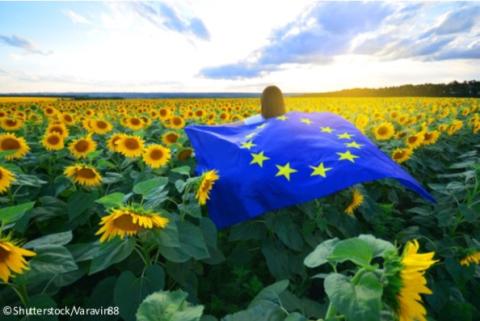
The incoming European Parliament and the Council will be faced with the task of setting a 2040 climate target for the European Union. As the goals for climate neutrality by 2050 and 55 percent emissions reduction for 2030 are already laid down in EU Climate Law, the 2040 target is a midway point that opens the debate on EU climate and energy policy in the 2030’s.
Consideration for the 2040 target must be anchored in the global context. In the UN climate process, parties are required to submit their next nationally determined contributions (NDC) under the Paris agreement by early next year. The breakthrough UN climate conference COP28 in Dubai at the end of 2023 called for parties to align their contributions with the 1.5 degree goal. The 2040 target will form the basis for the EU NDC and will impact also how seriously other major economies take their pledges.
Additionally, the EU is not navigating its climate policy in a vacuum. We are impacted by the subsidy race fueled by the US Inflation Reduction Act, and the dominance of China in clean technology supply chains. Our industry was hit hard by the energy crisis. Public economies are strained by increased defence spending and aging populations. Europe must therefore steer its path to the climate targets in a way that safeguards its competitiveness, maintains its industrial base and builds on a solid economic basis.
The European Economic and Social Committee is the first EU body to adopt a stance on the target. The opinion to that was adopted at the EESC’s May plenary proposes supporting the 90 percent target recommended by the outgoing Commission while underlining that this can only be achieved through policies that safeguard European competitiveness, ensure a just transition, and use all net zero and low emission technologies.
From the perspective of the Employer’s group, the role of business is central in achieving the climate targets. At this point, climate policy is all about investment. We need investment in the decarbonisation of industrial processes such as steel and chemicals, investment in the manufacturing of net zero technologies such as batteries and hydrogen, and investment in clean energy production that will enable the former.
Leveraging the benefits of climate leadership will require an environment that is open to developing, adopting and scaling up new technologies in Europe. The EU should aim to not only improve its self-sufficiency in net zero technologies and materials, but also seek to increase the exports of European cleantech products and services. At the same time, Europe must promote a global level playing field, for example by expansion of carbon pricing.
Electrification is at the heart of the transformation. An ambitious 2040 target will require the EU to electrify over 50 percent of total energy consumption and almost double power generation while decarbonising the power sector by 2040. This should be closely followed by heating and cooling. Availability of affordable and secure clean energy is the foundation for the decarbonisation of other sectors, such as industry, transport and construction.
While already aiming for 2040, we first need to get to 2030. This should not be taken for granted. Many policies agreed during this mandate, such as the Carbon Border Adjustment Mechanism and the Emissions Trading System for transport and buildings, will only come fully into force in the coming year. Businesses and households will require support in adapting to the new regulative environment, and regulation should be streamlined to alleviate the administrative burden, particularly for SMEs. Therefore, the next Commission should focus more on implementation than coming up with new legislative proposals. This was also recognised by Enrico Letta in his report on the Single Market.
In the upcoming mandate, the focus should be in designing a pathway to the climate targets where we not only maintain but gain competitiveness through the transition. Reducing our dependency on imported fossil fuels strengthens our energy security, while the availability of affordable clean energy could become a genuine competitive advantage for Europe. This requires climate policy that builds on market-based approaches and a wide range of technologies.
 Teppo Säkkinen
Rapporteur of the opinion NAT/931 “EU climate target for 2040”
Member of the EESC Employers’ Group
Recommended for you
„Sinu Euroopa, Sinu arvamus“ 2023: noored soovivad läbipaistvamat, digitaalsemat ja lihtsamat ELi
News
23. ja 24. märtsil korraldas Euroopa Majandus- ja Sotsiaalkomitee 14. korda ürituse „Sinu Euroopa, Sinu arvamus“. Üritus tõi Brüsselisse 105 õpilast 35 koolist kõigist 27…
Algab kandideerimine Euroopa Majandus- ja Sotsiaalkomitee kodanikuühiskonna auhinnale, mille teemaks on vaimne tervis
News
Kodanikuühiskonna organisatsioonid, üksikisikud ja eraettevõtted saavad nüüd esitada oma mittetulunduslikke projekte, et konkureerida Euroopa Majandus- ja Sotsiaalkomitee auhinnale, mis on pühendatud…
Valimised 2024. aasta juunis: Euroopa Majandus- ja Sotsiaalkomitee kutsub eurooplasi üles hääletama ühtse ja demokraatliku Euroopa poolt
News
Uue Euroopa Parlamendi valimistel on palju kaalul, sest demokraatia on nõrgenemas kogu maailmas, desinformatsioon on laialt levinud ja rahulolematus kasvab, kuna inflatsioon kiireneb ja sõjaoht…
TENi sektsiooni esimees Baiba Miltoviča ja Euroopa Regioonide Komitee raportöör Andres Jaadla kirjutavad alla elamumajandust käsitlevale deklaratsioonile
News
14. novembril 2024 allkirjastatud ühisavalduses kutsuvad Euroopa Majandus- ja Sotsiaalkomitee transpordi, energeetika, infrastruktuuri ja infoühiskonna sektsiooni (TEN) esimees Baiba…
EL peab transpordisektori CO2 heite vähendamiseks viivitamatult keskenduma saastevabale vesinikule
News
Eestis toimunud konverentsil rõhutati, et vähese CO2 heitega vesinik on energiasüsteemi eduka ümberkujundamise põhielement, mille potentsiaali arendamiseks on aga vaja taristut ja rahastamist.Ürituse…