From breaking intergenerational disadvantage and tackling child poverty to ending homelessness and protecting civic space, the European Economic and Social Committee (EESC) is calling for a comprehensive, rights-based approach to poverty. Key opinions adopted during its October plenary underline one central message: lasting solutions must be shaped with the support of civil society and the people most affected.
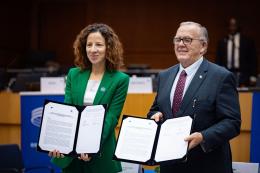
The European Economic and Social Committee (EESC) and the European Commission signed a Memorandum of Understanding to strengthen their cooperation in the fight against poverty and social exclusion. EESC President Séamus Boland, EU policymakers, civil society representatives, social partners and people with lived experience of poverty discussed how Europe can accelerate progress towards eradicating poverty by 2050 at a debate hosted by the EESC.
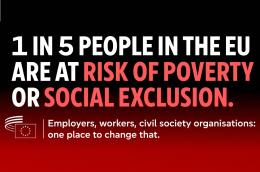
Poverty is not simply a lack of income. It can mean being unable to afford food, heating, healthcare or secure housing, or to participate fully in society. To mark the International Day for the Eradication of Poverty, the European Economic and Social Committee (EESC) highlights its longstanding call for coordinated European action to tackle its many interconnected causes.
In this overview the European Economic and Social Committee (EESC) shares its opinions on the European Commission’s proposals for the Multiannual Financial Framework (MFF) 2028-2034, bringing together the perspectives of organised civil society on the future direction of the EU budget.
rue Belliard 101, Jacques Delors building, room JDE 63, 9:30-11:00
Brussels
Belgium
EESC, room JDE 63, 9:30-11:00
The policy debate brings together stakeholders to assess how National and Regional and Partnership Plans will work in practice. In a workshop setting connected to the European Economic and Social Committee, participants from civil society, social partners and institutions will exchange perspectives on transparency, inclusiveness and impact. The discussion aims to highlight gaps, share best practices and strengthen the role of organised civil society in shaping and monitoring the implementation of NRPPs in the EU.
This study analyses European Union (EU) policy through the lens of intergenerational poverty (IGP), shifting attention from poverty as a static condition to the long-term persistence and transmission of disadvantage across generations.
This opinion examines the Commission's proposal for a EU Anti Poverty Strategy and sets out the EESC’s priorities. It calls for a comprehensive, rights-based and life-course approach to poverty, addressing its structural causes and the specific needs of groups facing the greatest risks of poverty and exclusion. The opinion stresses the importance of adequate social protection, access to quality essential services and inclusive labour markets, and calls for stronger EU and national action to prevent poverty and ensure effective social inclusion.
Download format:
Download — Γνωμοδότηση της ΕΟΚΕ: Anti-poverty strategy and inter-generational poverty
The European Anti-Poverty Network unveils the 2025 EU Poverty Watch at the EESC, highlighting the role of national and local strategies in the fight against poverty.