
European Economic
and Social Committee
The EU should go beyond the asbestos limit value proposed by the Commission
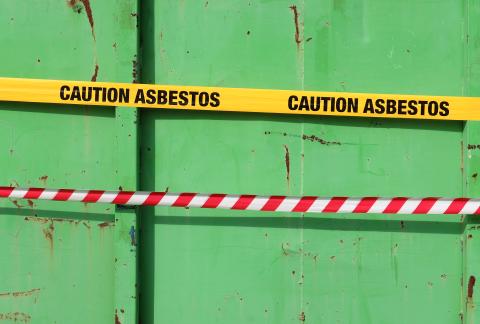
The technical limit value for asbestos exposure should ultimately be set at a lower level than the Commission is currently proposing in a recent Directive regulating the protection of workers from dangers of occupational asbestos exposure, the European Economic and Social Committee (EESC) said in an opinion adopted at its plenary session in December.
Social partners can go beyond the new limit that will apply under the Directive and take appropriate measures to further reduce the presence of asbestos fibres in workplaces,
the EESC stated in the opinion on Protection from exposure to asbestos at work, which received 155 votes in favour, with 49 abstentions and 9 votes against.
The EESC said that the technical limit should ultimately be set at 0.001 fibres/cm3, after a reasonable transition period.
Under the Directive on the protection of workers from the risks related to exposure to asbestos at work, the Commission proposed to reduce the limit from 0.1 fibres per cm3 as an eight-hour time-weighted average (TWA) and to minimise the exposure of workers to dust containing asbestos as much as technically possible below the limit value.
We welcome the Commission's ambition to reduce the incidence of cancer and its specific efforts to minimise exposure to asbestos at work. It is a good basis for moving forward in the longer term towards zero tolerance to asbestos exposure. But we believe that the EU should go beyond what is proposed by the Commission,
said the rapporteur of the EESC opinion Ellen Nygren.
There is no level of asbestos exposure that can be considered safe without the risk of cancer. Thus, despite the current ban on the use of new asbestos, there are still large amounts of work where workers are still exposed to this deadly substance,
she warned.
According to figures presented at a recent EESC hearing, about 90 370 people die each year in the EU from asbestos-related cancer, demonstrating the need for a reduced limit value.
To meet this target, the EESC recommended drawing up a roadmap of complementary measures going beyond the Commission's proposal. They include financial support for businesses and regions that would otherwise be unable to achieve this objective.
Given that many people may be exposed to asbestos without even knowing it, the EESC called on the Commission to organise an information campaign to educate the public about asbestos and its harmful effects through all possible channels, including the media. The campaign should be carried out in cooperation with the Member States, the social partners and relevant civil society organisations.
The EESC also called on the EU and Member States to actively promote an international ban on the use of asbestos and also to protect workers who might be at risk of exposure during activities such as renovation, demolition and waste management.
Furthermore, all workers at risk of exposure to asbestos should undergo training to be adequately informed about the risks they might be taking at their workplace. The EESC highlights that it is of the utmost importance for such training to be given in the worker's native language or another language in which they are proficient, including in the case of foreign workers without a good command of the language of their country of work. This applies both to EU citizens and to workers from non-EU countries
In the event that the risk of exposure is real or suspected, all workers should undergo checks, with the results being documented, making sure their health is properly monitored and followed up every time they change job throughout their career. This special documentation must be presented to both employers and workers, and it must also cover undocumented and migrant workers. The documentation should be given to the worker, in order to be presented in all further medical examinations to ensure lifetime follow-up of the possible late effects of asbestos exposure.
The EU and its Member States should play an active and leading role in promoting positive developments in all countries of the world and in international trade chains. EU free-trade agreements with other countries and regions should include requirements to step up efforts to ban the use of asbestos and reduce its harmful effects in all countries of the world, the EESC concluded.
Work organisation
Recommended for you
Η εργαλειοποίηση των μεταναστών και η προσφυγική κρίση της Ουκρανίας επιβάλλουν ένα νέο ξεκίνημα για τη μεταναστευτική πολιτική
News
Η κρατική εργαλειοποίηση των μεταναστών, που αποσκοπεί στην αποσταθεροποίηση της ΕΕ, και ο τρέχων πόλεμος στην Ουκρανία, που οδηγεί σε πρωτόγνωρη εισροή προσφύγων, επιβάλλουν την επανεξέταση της…
YEYS! 2023: Οι νέοι ζητούν μια πιο διαφανή, ψηφιακή και απλοποιημένη ΕΕ
News
Στις 23 και 24 Μαρτίου, η Ευρωπαϊκή Οικονομική και Κοινωνική Επιτροπή (ΕΟΚΕ) φιλοξένησε την 14η διοργάνωση της εκδήλωσης «Η δική σου Ευρώπη, η δική σου φωνή!» (YEYS!), η οποία προσέλκυσε στις…
Η ΕΕ χρειάζεται αποτελεσματικότερη πολυμέρεια για την αντιμετώπιση των κινδύνων που σχετίζονται με την ασφάλεια στη θάλασσα, επισημαίνει η ΕΟΚΕ
News
Η Ευρωπαϊκή Οικονομική και Κοινωνική Επιτροπή (ΕΟΚΕ) ζητεί περισσότερες κοινές δράσεις σχετικά με τη στρατηγική της ΕΕ για την ασφάλεια στη θάλασσα και το σχετικό σχέδιο δράσης, που αποσκοπούν στη…
Η ΕΟΚΕ δρομολογεί τη διαδικασία υποβολής υποψηφιοτήτων για το Βραβείο της Κοινωνίας των Πολιτών, το οποίο θα αφορά την ψυχική υγεία
News
Οι οργανώσεις της κοινωνίας των πολιτών, οι ιδιώτες και οι ιδιωτικές εταιρείες μπορούν τώρα να υποβάλουν τα μη κερδοσκοπικά έργα τους για το βραβείο της ΕΟΚΕ που είναι αφιερωμένο στη στήριξη της…
#ReskillEU — Το εργατικό δυναμικό της Ευρώπης στους τομείς της ενέργειας και των μεταφορών χρειάζεται νέες δεξιότητες για να κάνει πραγματικότητα την απανθρακοποίηση
News
Για να επιτύχει η απανθρακοποίηση των τομέων της ενέργειας και των μεταφορών της ΕΕ, οι εν λόγω τομείς χρειάζονται εργαζομένους εξοπλισμένους με «νέες» δεξιότητες, προειδοποιεί η Ευρωπαϊκή Οικονομική…