The European Economic and Social Committee (EESC) has adopted an opinion supporting the European Commission’s ambition to simplify tax reporting obligations across the EU, reduce administrative burdens, especially for SMEs, and improve the effective use of tax information by authorities. The EESC stresses that simplification must avoid creating loopholes or unfair tax shifts, while also calling for harmonised rules, clearer guidance and enhanced digitalisation.
At its June plenary session, the European Economic and Social Committee (EESC) adopted a pivotal opinion addressing the growing threat of social exclusion and marginalisation driven by the erosion of purchasing power. This opinion, part of the EESC’s broader cost-of-living crisis package, focuses on the social dimensions of the crisis and outlines a comprehensive strategy to safeguard vulnerable populations and reinforce Europe’s social fabric.
The EU Charter of Fundamental Rights is meant to protect everyone’s rights and freedoms in the Union. Yet, 25 years after it became legally binding, many still don’t feel its full impact. This gap was the focus of a hearing co-hosted by the European Commission and the European Economic and Social Committee (EESC) on 10 June, in the context of the Commission’s midterm review of its Strategy to strengthen the application of the Charter. The event brought together legal experts, civil society representatives and EU institutions to assess how the Charter is used today and what more is needed to mainstream its application.
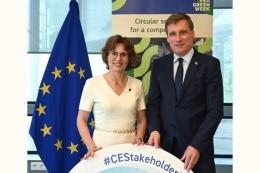
The European Economic and Social Committee (EESC) and the European Commission have reaffirmed their close cooperation on the European Circular Economy Stakeholder Platform (ECESP) at the official launch of EU Green Week 2025.
The European Economic and Social Committee (EESC) held a conference underscoring the importance of community engagement in the fight against disinformation. By fostering media literacy, encouraging critical thinking, promoting active communication and leveraging AI as an ally, societies can be resilient to false information and toxic propaganda.
The European Economic and Social Committee (EESC) has delivered a stark but necessary message: fossil fuel subsidies (FFSs) must go. But this isn’t just another green talking point. This call comes amid a broader strategy aimed at tackling Europe’s ongoing cost-of-living crisis, which the EESC has addressed through a suite of detailed sectoral and umbrella opinions. And while the climate clock ticks louder, the numbers speak louder still – €111 billion in FFSs across the EU in 2023 alone.
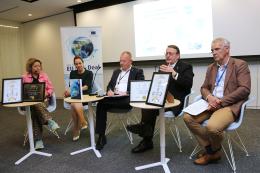
For the past three years, the European Economic and Social Committee and the European Parliament’s MEP Water Group have walked side by side in calling for a comprehensive EU Blue Deal – a strategic response to Europe’s growing water challenges. This collaboration continued on 12 May with a joint panel discussion at the European Parliament on Water Challenge and Opportunities in the current European policy context. The event also featured the screening of the documentary on water Facing the Unknown by Dieter-Michael Grohmann, inspired by the book Emergency Preparedness written by EESC Member Paul Rübig and Achim Kaspar.
As the voice of organised civil society, the European Economic and Social Committee (EESC) plays a crucial role in shaping policies that impact social and economic aspects within the European Union. The EESC's Section for Employment, Social Affairs and Citizenship (SOC) is preparing two key opinions: one will tackle the fight against poverty head-on, while the other looks at revising the European Pillar of Social Rights (EPSR) Action Plan.
The European Economic and Social Committee (EESC) tirelessly defends the rights of the LGBTIQ community through a series of strategic actions and initiatives. In alignment with the European Commission’s LGBTIQ Equality Strategy 2020-2025, the EESC has adopted a set of measures to combat discrimination and promote equality across the EU. In the context of Pride Week, here is an overview of the main opinions that fall under the Strategy.