
European Economic
and Social Committee
Europe’s Electricity Grids are a competitiveness test, not a technical detail
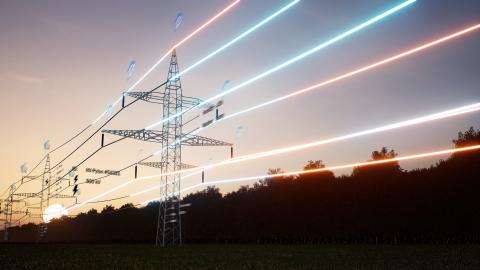
When European employers look at their balance sheets today, electricity is no longer a background cost item: it is a strategic variable that can decide whether investments stay in Europe or move elsewhere.
The recent opinion of the European Economic and Social Committee (EESC) on energy connectivity and electricity grids (TEN/865) should therefore be read not as a technical paper, but as a competitiveness manifesto in disguise, one that largely echoes the concerns of small and large businesses.
A fragmented grid means a fragmented Single Market
Despite years of market integration, Europe still lives with an “energy postcode lottery”: companies in poorly connected regions pay structurally higher prices than competitors just across a border. For energy‑intensive industries and small firms with thin margins, these divergences are not theoretical; they determine where production is located and where jobs are created or lost.
Employers have consistently warned that insufficient grid capacity and delayed interconnections undermine the very logic of the internal market by preventing the free flow of cheap renewable electricity to where it is needed most. The EESC now bluntly recognises that grid bottlenecks “weaken industrial competitiveness and social cohesion within the Union” – diagnosis employers fully share.
SMEs are on the front line of Europe’s energy stress
Companies, particularly SMEs, have been sounding the alarm for years: surging and volatile energy prices have put many smaller firms at the brink of collapse, forcing them either to pass costs on to consumers or to shut down activity altogether. During the recent crises, energy bills for some SMEs increased tenfold; for a small bakery, metal workshop or hotel, no amount of “efficiency advice” can offset that kind of shock.
Yet the same SMEs are also eager to drive the transition. Surveys show that a large majority want to shift to renewables and self‑generation, but they face a tangle of bureaucratic barriers, grid constraints and slow connection procedures. When distribution grids cannot deliver efficiently, it is Europe’s local entrepreneurs who pay the price first.
Planning like a continent, investing like we mean it
European employers therefore welcome the EESC’s call for a genuinely European approach to grid planning, built on a common energy scenario, dynamic system modelling and clear identification of cross‑border capacity needs. For companies, what matters is not another abstract strategy, but a credible, bankable roadmap that translates climate and electrification goals into concrete infrastructure timelines and locations.
This planning must be technologically neutral and focused on economic value: Europe should prioritise those interconnections that deliver the biggest payoff in terms of price convergence, security of supply and integration of new industrial investments. Employers particularly support the EESC’s insistence on optimising existing infrastructure through grid‑enhancing technologies and digitalisation before resorting to expensive new build‑out, as this can deliver faster relief to businesses and consumers.
Grids as critical competitiveness infrastructure
The EESC is right to argue that energy networks should not be treated as an ordinary commodity but as a service of general interest and critical infrastructure, with a clear public‑interest mandate. For employers, this has two implications. First, energy security – including protection against cyber‑attacks, sabotage and extreme weather events – must be recognised as economic security; blackouts and instability destroy confidence and discourage investment. Second, the regulatory framework should enable, not deter, capital flows into grids through smart combinations of public funds, private finance and public‑private partnerships.
PPPs can help accelerate grid modernisation while preserving public oversight. The Connecting Europe Facility, the next EU budget and EIB instruments should work together to lower the cost of capital for strategic interconnections and key national reinforcements, with cost‑sharing mechanisms that reflect all beneficiaries, not just the countries where pylons are erected.
A deal with citizens – and with business
No major grid project will happen without public acceptance, especially in border regions where the visual and environmental impacts are concentrated. The EESC rightly highlights the need for fair compensation, local economic benefits and rigorous environmental safeguards as conditions for public support. Employers would add another dimension: regulatory predictability and timely permitting are just as crucial for securing the confidence of investors as they are for convincing local communities that promises will be kept.
In the end, Europe faces a simple question. Does it want to remain a home for energy‑intensive industries, innovative SMEs and global manufacturing value chains – or does it accept a slow drift of investment to regions with cheaper, more reliable power? The answer will be written not only in climate laws and industrial strategies, but in kilometres of cable, substations, smart meters and digital control systems.
By Marcin Nowacki, President of the EESC Transport, Energy, Infrastructure and Information Society (TEN) Section and Study Group member of Opinion TEN/865 - Energy connectivity, electricity grids.
Recommended for you
Pro odolnost EU má zásadní význam aktivní úloha organizované občanské společnosti
News
Na plenárním zasedání EHSV se diskutovalo o tom, jak roste význam organizované občanské společnosti a měst, neboť ovlivňují schopnost Evropy čelit asymetrickým otřesům a neočekávaným…
Mladí lidé coby hybatelé změn a evropské integrace zemí západního Balkánu
News
V rámci konference občanské společnosti na vysoké úrovni na téma Politika v oblasti mládeže v zemích západního Balkánu, kterou uspořádal Evropský hospodářský a sociální výbor (EHSV),…
České předsednictví chce dát Evropě nové pojetí, novou podobu a nový impuls
News
Jedním z bodů červencového plenárního zasedání Evropského hospodářského a sociálního výboru (EHSV) byla diskuse s českým ministrem zahraničních věcí Janem Lipavským o…
Vaše Evropa, váš názor (YEYS!) 2023: Mladí lidé požadují transparentnější, digitálnější a zjednodušenou EU
News
Evropský hospodářský a sociální výbor (EHSV) uspořádal ve dnech 23. a 24. března 14. ročník akce Vaše Evropa, váš názor (YEYS!). V jejím rámci se v Bruselu sešlo 105 studentů z 35 škol ze všech 27…
Spravedlivý přechod na nízkouhlíkovou společnost není možný bez účasti občanské společnosti
News
Dolní Vítkovice v Ostravě jsou bývalou průmyslovou oblastí, kde se dříve těžilo uhlí a vyráběla ocel. 11. října 2022 se zde na konferenci sešli zástupci akademické obce, místních…