
European Economic
and Social Committee
EESC and Albanian Government Launch New Chapter of Civil Society Dialogue in Tirana
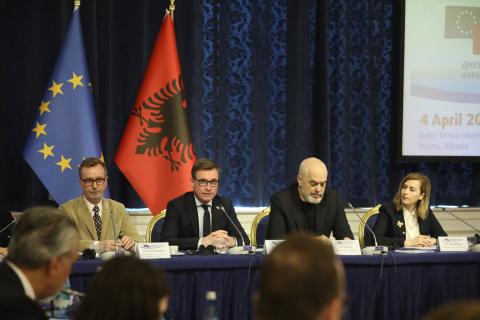
The European Economic and Social Committee (EESC) deepened its engagement with the Western Balkans this week with a series of high-level meetings and the official launch of the EU–Albania Joint Civil Society Consultative Committee (JCC)—a major milestone in Albania’s EU accession journey.
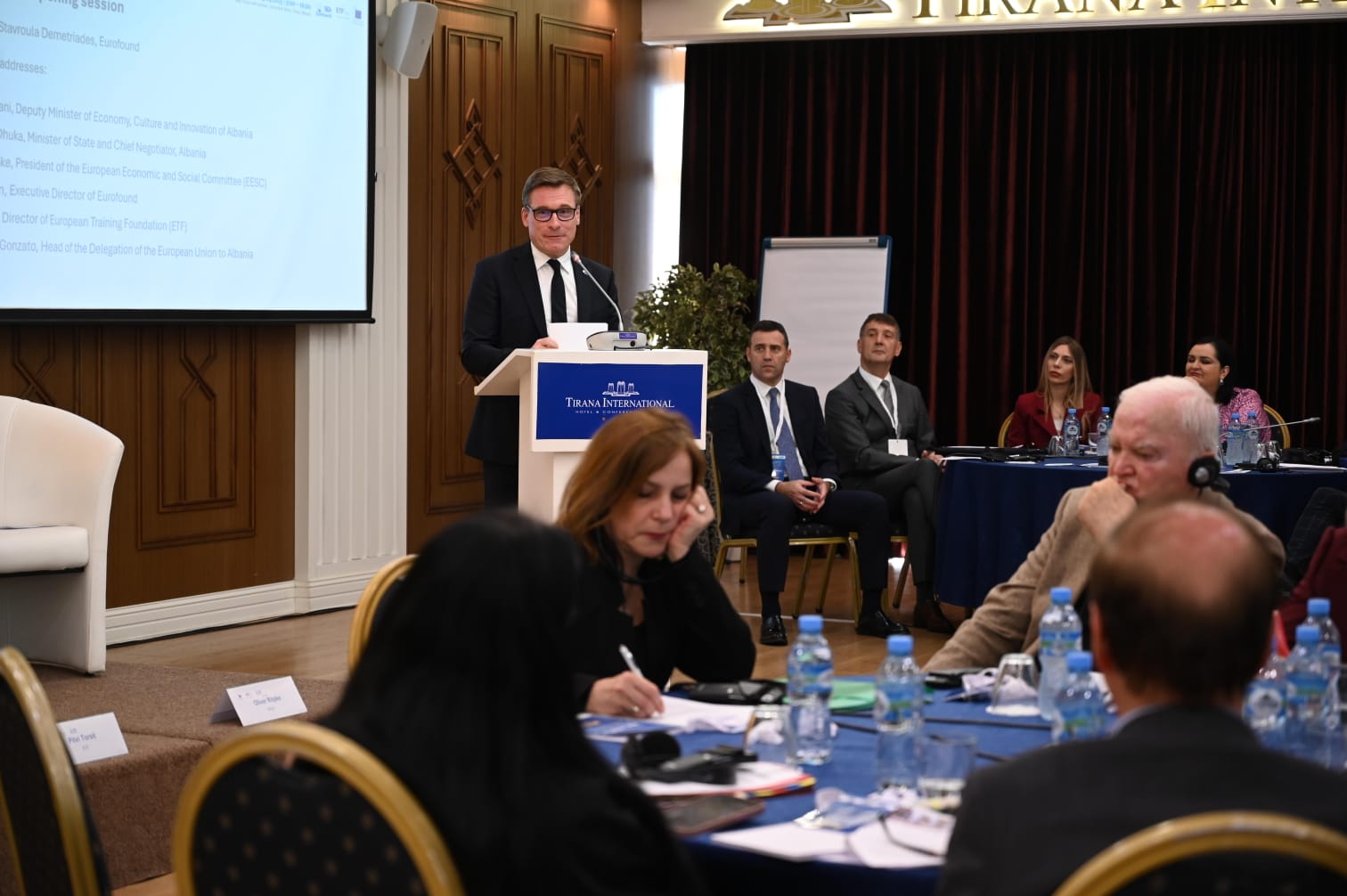
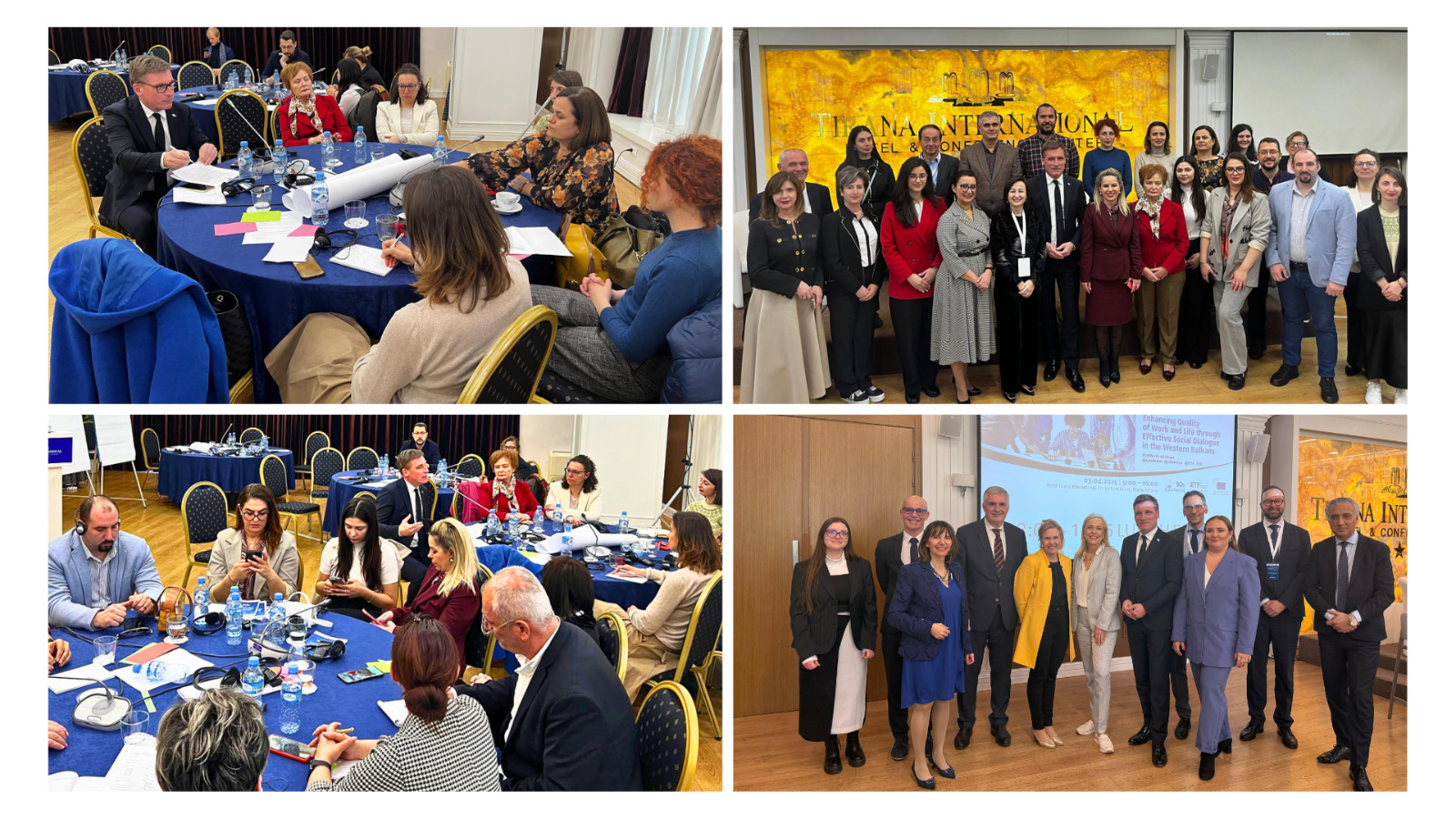
On Thursday, 3 April, the EESC co-hosted the regional event "Enhancing Quality of Work and Life through Effective Social Dialogue in the Western Balkans" in Tirana, alongside Eurofound and the European Training Foundation (ETF). The event gathered trade unions, employers’ organisations, EU institutions and government representatives to discuss how stronger social dialogue can address challenges like job quality, skills development, youth concerns and sustainable growth.
In his address, EESC President Oliver Röpke stressed the essential role of autonomous and inclusive social dialogue in delivering fair reforms and building trust in institutions across the region. The event also showcased the progress of the Enlargement Candidate Members (ECM) initiative, which has brought voices from the Western Balkans directly into the EESC’s policy work.
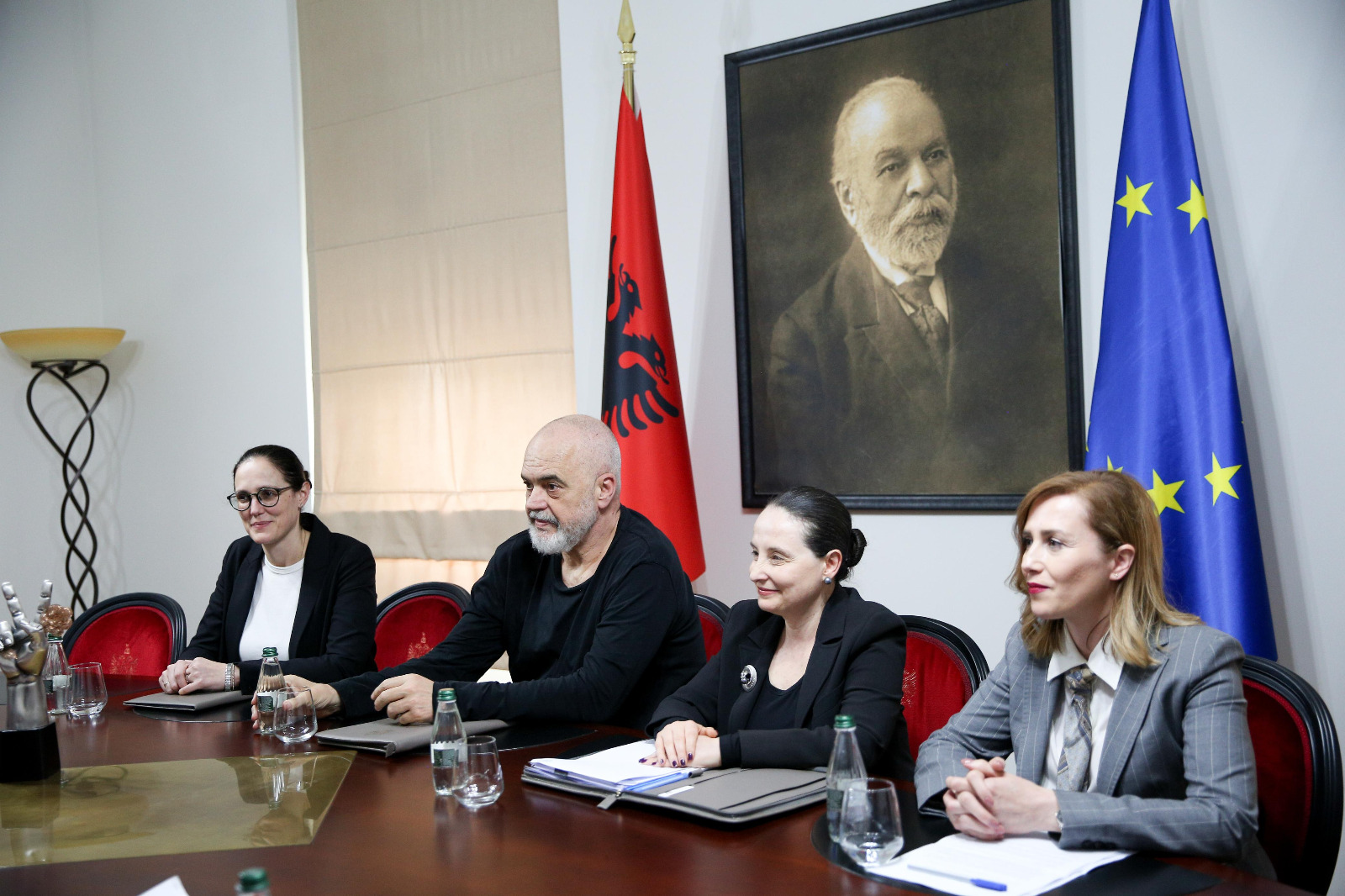
Later that afternoon, President Röpke held a high-level meeting with Prime Minister Edi Rama. In what both sides described as a fruitful and constructive exchange, discussions focused on Albania’s reform momentum, and the vital role of civil society in maintaining accountability and citizen trust throughout the accession process.
The two leaders praised the reinforced cooperation through the Enlargement Candidate Members initiative and the Joint Consultative Committee. President Röpke reiterated the EESC’s full support for Albania’s goal of opening all negotiation clusters by the end of 2025.
A New Platform for Civil Society
On Friday, 4 April, President Röpke and Prime Minister Rama opened the inaugural meeting of the EU–Albania Joint Consultative Committee (JCC)—a new institutional platform designed to embed civil society into the accession process.
The JCC brings together representatives of trade unions, employers and civil society organisations from both sides, enabling them to monitor reform implementation and issue joint recommendations to the Albanian authorities and EU institutions.
“This JCC is not symbolic—it is structural,” said President Röpke. “It formalises the voice of civil society in the EU accession process and ensures that reforms are not just passed, but shaped and supported by the people they affect to ensure a meaningful gradual integration.”
The meeting covered the state of play in EU–Albania relations, adopted rules of procedure for the JCC, and discussed the functioning of civil and social dialogue in the country. Albanian Ministers Majlinda Dhuka, Delina Ibrahimaj, and Olta Manjani also took part in the proceedings, reflecting the strong institutional commitment to the JCC’s success.
The Albanian delegation’s inclusive and transparent selection process was praised, with all six of its members also taking part in the EESC’s ECM initiative, reinforcing ties between Brussels and Tirana.
The session concluded with a strong commitment to regular engagement, with civil society set to play a proactive role in monitoring Albania’s reform agenda, including in areas such as rule of law, youth participation, labour rights and environmental sustainability.
Civil Society as a Strategic Partner
The establishment of the EU–Albania JCC reflects a broader shift in the enlargement process—one that places democratic accountability and bottom-up dialogue at its core. With Albania aiming to join the EU by 2030, the EESC reiterated that civil society is not an observer of this process but a strategic partner in delivering it.
In his remarks at the JCC’s inaugural session, Prime Minister Edi Rama underlined two central messages: the importance of equality in the EU–Albania relationship—“speaking equal to equal from the very beginning, whether in Brussels or in Tirana”—and the need to invest in building the knowledge base of civil society. Learning from each other, he stressed, is essential to ensure civil society can contribute meaningfully to Albania’s accession and shape the reforms that lie ahead.
The EESC will continue to support the JCC’s work, and President Röpke invited all participants to take part in the upcoming Western Balkans Civil Society Forum, to be held in Budva this May, as a next step in this deepening cooperation.
Recommended for you
Energi – EESK varnar för nya beroendeförhållanden
News
Europeiska ekonomiska och sociala kommittén (EESK) intar en fast hållning i energifrågan i ett yttrande som antogs vid dess plenarsession i september: kommissionens förslag är ett steg i rätt…
Svenska rådsordförandeskapet 2023: Ukraina står fortfarande högst upp på dagordningen
News
Vid Europeiska ekonomiska och sociala kommitténs (EESK) plenarsession i januari hölls en debatt under vilken Sveriges EU-minister Jessika Roswall redogjorde för prioriteringarna för det nya…
Ditt Europa, din mening! 2023: Ungdomar efterlyser ett mer transparent, digitalt och förenklat EU
News
Den 23–24 mars stod Europeiska ekonomiska och sociala kommittén (EESK) för 14:e gången värd för ”Ditt Europa, din mening!” (YEYS!) i Bryssel, med 105 elever från 35 skolor från alla 27 EU-länder och…
EESK diskuterar agendan för det svenska EU-ordförandeskapet 2023
News
Vid sammanträdet i Europeiska ekonomiska och sociala kommittén (EESK) i Stockholm redogjorde Sveriges statssekreterare med ansvar för EU-frågor, Christian Danielsson, för den politiska inriktningen…
EU–Ukraina: driftskompatibilitet och solidaritet – nyckelfaktorer för transportförbindelserna
News
Vid en debatt som Europeiska ekonomiska och sociala kommittén (EESK) höll i Bryssel framhöll deltagarna vikten av infrastruktur och harmoniserade standarder för att sammanlänka EU med dess…