European Economic
and Social Committee
European Economic
and Social Committee
The European Economic and Social Committee (EESC) is the voice of organised civil society in Europe.
Find out more about its role and structure at http://www.eesc.europa.eu/en/about
The EESC issues between 160 and 190 opinions, evaluation and information reports a year.
It also organises several annual initiatives and events with a focus on civil society and citizens’ participation such as the Civil Society Prize, the Civil Society Days, the Your Europe, Your Say youth plenary and the ECI Day.
Find the latest EESC opinions and publications at http://www.eesc.europa.eu/en/our-work/opinions-information-reports/opinions and http://www.eesc.europa.eu/en/our-work/publications-other-work/publications respectively.
The EESC is active in a wide range of areas, from social affairs to economy, energy and sustainability.
Learn more about our policy areas and policy highlights at http://www.eesc.europa.eu/en/policies
The EESC holds nine plenary sessions per year. It also organises many conferences, public hearings and high-level debates related to its work.
Find out more about our upcoming events at http://www.eesc.europa.eu/en/agenda/our-events/upcoming-events
Here you can find news and information about the EESC'swork, including its social media accounts, the EESC Info newsletter, photo galleries and videos.
Read the latest EESC news http://www.eesc.europa.eu/en/news-media/news and press releases http://www.eesc.europa.eu/en/news-media/press-releases
The EESC brings together representatives from all areas of organised civil society, who give their independent advice on EU policies and legislation. The EESC's326 Members are organised into three groups: Employers, Workers and Various Interests.
Find out more about our Members and groups at http://www.eesc.europa.eu/en/members-groups
The EESC has six sections, specialising in concrete topics of relevance to the citizens of the European Union, ranging from social to economic affairs, energy, environment, external relations or the internal market.
Find out more at http://www.eesc.europa.eu/en/sections-other-bodies
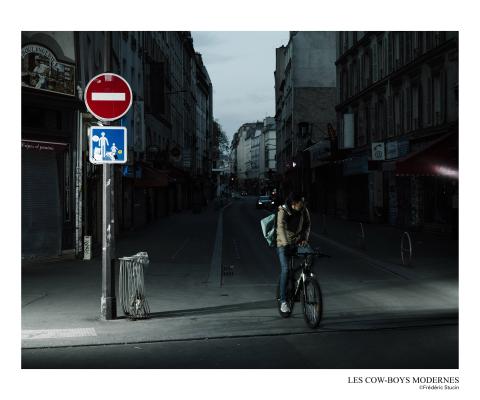
EHSV organizuje virtuálnu výstavu fotografií francúzskeho fotografa Frédérica Stucina, ktorá prezentuje donášku jedla ako typický znak dnešného života v mestách a novú formu zamestnania, kde sa často obchádzajú európske ustanovenia o ochrane zdravia a bezpečnosti pracovníkov.
Výstava predstavuje približne 20 fotografií, ktoré zachytávajú kuriérov pracujúcich pre Uber Eats, Deliveroo a ďalšie platformy podobného typu.
„Tým, ako vo dne v noci brázdia po mestách na bicykloch alebo skútroch, mi pripomínajú legendárnych jazdcov, ktorí doručovali poštu pre Pony Express v USA,“ vysvetľuje fotograf Frédéric Stucin.
Fotografie ukazujú aj ťažké podmienky, v ktorých kuriéri pracujú: musia byť vonku za každého počasia, čakať pred reštauráciami, sami si hradiť dopravné náklady a pokuty, musia si poradiť s bezohľadným platformami a náročnými zákazníkmi a zmieriť sa s tým, že sa môžu stať účastníkmi dopravnej nehody.
Platformy, pre ktoré pracujú, tvrdia, že poskytujú týmto pracovníkom flexibilitu a možnosť slobodne si vybrať pracovný čas, ale mnohým z nich sú odopierané základné pracovné práva. V tejto súvislosti sa už dosiahol určitý pokrok, niektoré platformy ponúkajú teraz o čosi lepšie podmienky a samotní pracovní začínajú vytvárať mechanizmy vzájomnej pomoci.
„Svojimi fotografiami som chcel vzdať hold týmto odvážnym ľuďom, ktorí si zaslúžia našu úctu,“ vyhlásil Frédéric Stucin.
Snímky upozorňujú na problémy tejto čoraz početnejšej skupiny atypických pracovníkov, a to súbežne so stanoviskom EHSV na tému Sociálny dialóg ako nástroj na zlepšenie bezpečnosti a ochrany zdravia pri práci, o ktorom sa bude rokovať na januárovom plenárnom zasadnutí.
Výstava sa organizuje v rámci francúzskeho predsedníctva Rady EÚ a potrvá od 15. januára do 15. februára 2022. Priblížime Vám ju TU. (ck)