European Economic
and Social Committee
European Economic
and Social Committee
The European Economic and Social Committee (EESC) is the voice of organised civil society in Europe.
Find out more about its role and structure at http://www.eesc.europa.eu/en/about
The EESC issues between 160 and 190 opinions, evaluation and information reports a year.
It also organises several annual initiatives and events with a focus on civil society and citizens’ participation such as the Civil Society Prize, the Civil Society Days, the Your Europe, Your Say youth plenary and the ECI Day.
Find the latest EESC opinions and publications at http://www.eesc.europa.eu/en/our-work/opinions-information-reports/opinions and http://www.eesc.europa.eu/en/our-work/publications-other-work/publications respectively.
The EESC is active in a wide range of areas, from social affairs to economy, energy and sustainability.
Learn more about our policy areas and policy highlights at http://www.eesc.europa.eu/en/policies
The EESC holds nine plenary sessions per year. It also organises many conferences, public hearings and high-level debates related to its work.
Find out more about our upcoming events at http://www.eesc.europa.eu/en/agenda/our-events/upcoming-events
Here you can find news and information about the EESC'swork, including its social media accounts, the EESC Info newsletter, photo galleries and videos.
Read the latest EESC news http://www.eesc.europa.eu/en/news-media/news and press releases http://www.eesc.europa.eu/en/news-media/press-releases
The EESC brings together representatives from all areas of organised civil society, who give their independent advice on EU policies and legislation. The EESC's326 Members are organised into three groups: Employers, Workers and Various Interests.
Find out more about our Members and groups at http://www.eesc.europa.eu/en/members-groups
The EESC has six sections, specialising in concrete topics of relevance to the citizens of the European Union, ranging from social to economic affairs, energy, environment, external relations or the internal market.
Find out more at http://www.eesc.europa.eu/en/sections-other-bodies
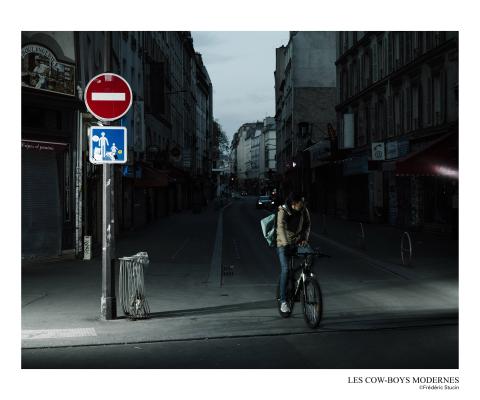
EESO gosti virtualno razstavo fotografij francoskega fotografa Frédérica Stucina, ki je dostavljavce hrane prikazal kot posebnost današnjega mestnega utripa in primer nove oblike zaposlitve, ki je v evropskih predpisih o zdravju in varnosti delavcev pogosto spregledana.
Razstavljen je sklop 20 fotografij, ki upodabljajo dostavljavce podjetij Uber Eats, Deliveroo in drugih podobnih platform.
„Dan in noč drvijo skozi mesto na kolesih in motorjih. Ti dostavljavci so kot legendarni jezdeci, ki so v Ameriki raznašali pošto za Pony Express“, je dejal Frédéric Stucin.
Fotografije prikazujejo tudi težke pogoje, v katerih delajo dostavljavci: na delu so v vseh vremenskih razmerah, čakati morajo pred restavracijami ter sami plačevati stroške prevoza in globe, soočajo se z neosebnimi platformami in težavnimi strankami ter nase prevzemajo tveganje nesreč.
Platforme, za katere delajo, poudarjajo prožnost in možnost samostojnega določanja delovnega časa, vendar marsikateremu od teh delavcem odrekajo številne temeljne delavske pravice. Nekaj napredka je sicer bilo doseženega, tako da platforme zdaj nudijo nekoliko boljše pogoje, sami delavci pa postopoma vzpostavljajo nekatere mehanizme medsebojne podpore.
„S temi fotografijami sem se želel pokloniti srčnim ljudem, ki si zaslužijo naše spoštovanje“, pravi Stucin.
Fotografije osvetljujejo vprašanja, ki se dotikajo te vse večje skupine delavcev z netipičnimi oblikami zaposlitve, in se navezujejo na mnenje EESO o socialnem dialogu kot načinu za spodbujanje zdravja in varnosti pri delu, ki bo obravnavano na januarskem plenarnem zasedanju.
Razstava, ki je organizirana v sodelovanju s francoskim predsedstvom Sveta EU, bo na voljo za ogled od 15. januarja do 15. februarja 2022. Oglejte si jo TUKAJ. (ck)