European Economic
and Social Committee
European Economic
and Social Committee
The European Economic and Social Committee (EESC) is the voice of organised civil society in Europe.
Find out more about its role and structure at http://www.eesc.europa.eu/en/about
The EESC issues between 160 and 190 opinions, evaluation and information reports a year.
It also organises several annual initiatives and events with a focus on civil society and citizens’ participation such as the Civil Society Prize, the Civil Society Days, the Your Europe, Your Say youth plenary and the ECI Day.
Find the latest EESC opinions and publications at http://www.eesc.europa.eu/en/our-work/opinions-information-reports/opinions and http://www.eesc.europa.eu/en/our-work/publications-other-work/publications respectively.
The EESC is active in a wide range of areas, from social affairs to economy, energy and sustainability.
Learn more about our policy areas and policy highlights at http://www.eesc.europa.eu/en/policies
The EESC holds nine plenary sessions per year. It also organises many conferences, public hearings and high-level debates related to its work.
Find out more about our upcoming events at http://www.eesc.europa.eu/en/agenda/our-events/upcoming-events
Here you can find news and information about the EESC'swork, including its social media accounts, the EESC Info newsletter, photo galleries and videos.
Read the latest EESC news http://www.eesc.europa.eu/en/news-media/news and press releases http://www.eesc.europa.eu/en/news-media/press-releases
The EESC brings together representatives from all areas of organised civil society, who give their independent advice on EU policies and legislation. The EESC's326 Members are organised into three groups: Employers, Workers and Various Interests.
Find out more about our Members and groups at http://www.eesc.europa.eu/en/members-groups
The EESC has six sections, specialising in concrete topics of relevance to the citizens of the European Union, ranging from social to economic affairs, energy, environment, external relations or the internal market.
Find out more at http://www.eesc.europa.eu/en/sections-other-bodies
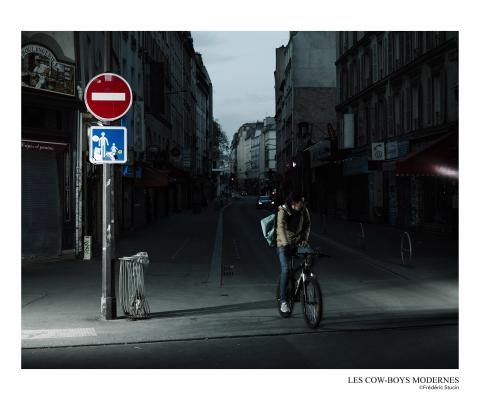
In een virtuele tentoonstelling met foto’s van de Franse fotograaf Frédéric Stucin komen maaltijdbezorgers in beeld als kenmerkend voor het hedendaagse straatbeeld en een nieuwe vorm van werkgelegenheid die vaak aan de Europese gezondheids- en veiligheidsvoorschriften voor werknemers ontsnapt.
De tentoonstelling bestaat uit twintig foto’s van bezorgers die ritten maken voor Uber Eats, Deliveroo en soortgelijke platforms.
“Razend door de stad, dag en nacht, op scooters en op fietsen, doen ze me denken aan de legendarische postbezorgers te paard van de Pony Express in de VS”, zegt Frédéric Stucin.
De foto’s geven een idee van hun harde werkomstandigheden: blootgesteld aan de elementen wachten ze op de stoep van restaurants, transportkosten en boetes betalen ze uit eigen zak, de platforms houden geen rekening met hun wensen, moeilijke klanten zijn schering en inslag en een verkeersongeval loert steeds om de hoek.
De platforms waarvoor ze werken, hebben de mond vol van flexibele werkuren, maar nemen vaak een loopje met de fundamentele arbeidsrechten van de bezorgers. Er is weliswaar enige verbetering merkbaar en de voorwaarden gaan er bij sommige platforms iets op vooruit, terwijl de betrokkenen zelf mechanismen voor wederzijdse steun opzetten.
“De foto’s zijn bedoeld als eerbetoon aan deze dappere mensen die ons respect verdienen”, aldus Stucin.
De foto’s werpen licht op de problematiek van deze groeiende groep atypische werknemers, waaraan aandacht wordt besteed in een advies van het EESC over de sociale dialoog als instrument ter bevordering van gezondheid en veiligheid op het werk waarover tijdens de januarizitting zal worden gedebatteerd.
De tentoonstelling, die in samenwerking met het Franse voorzitterschap van de Raad van de EU wordt gehouden, loopt van 15 januari tot 15 februari 2022. U kunt de tentoonstelling HIER bezichtigen. (ck)