European Economic
and Social Committee
European Economic
and Social Committee
The European Economic and Social Committee (EESC) is the voice of organised civil society in Europe.
Find out more about its role and structure at http://www.eesc.europa.eu/en/about
The EESC issues between 160 and 190 opinions, evaluation and information reports a year.
It also organises several annual initiatives and events with a focus on civil society and citizens’ participation such as the Civil Society Prize, the Civil Society Days, the Your Europe, Your Say youth plenary and the ECI Day.
Find the latest EESC opinions and publications at http://www.eesc.europa.eu/en/our-work/opinions-information-reports/opinions and http://www.eesc.europa.eu/en/our-work/publications-other-work/publications respectively.
The EESC is active in a wide range of areas, from social affairs to economy, energy and sustainability.
Learn more about our policy areas and policy highlights at http://www.eesc.europa.eu/en/policies
The EESC holds nine plenary sessions per year. It also organises many conferences, public hearings and high-level debates related to its work.
Find out more about our upcoming events at http://www.eesc.europa.eu/en/agenda/our-events/upcoming-events
Here you can find news and information about the EESC'swork, including its social media accounts, the EESC Info newsletter, photo galleries and videos.
Read the latest EESC news http://www.eesc.europa.eu/en/news-media/news and press releases http://www.eesc.europa.eu/en/news-media/press-releases
The EESC brings together representatives from all areas of organised civil society, who give their independent advice on EU policies and legislation. The EESC's326 Members are organised into three groups: Employers, Workers and Various Interests.
Find out more about our Members and groups at http://www.eesc.europa.eu/en/members-groups
The EESC has six sections, specialising in concrete topics of relevance to the citizens of the European Union, ranging from social to economic affairs, energy, environment, external relations or the internal market.
Find out more at http://www.eesc.europa.eu/en/sections-other-bodies
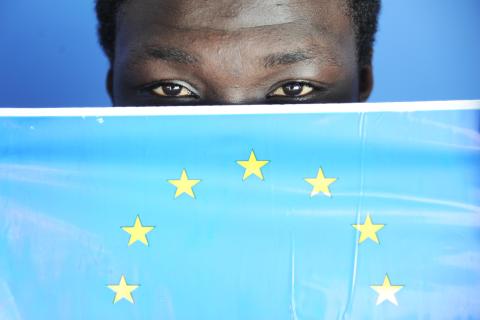
Predsedníčka Európskej komisie Ursula von der Leyenová predstavila v marci 2020 novú stratégiu pre Afriku zameranú na pretvorenie vzťahov medzi EÚ a africkými krajinami. V netrpezlivom očakávaní samitu EÚ – Afrika urobil EHSV krok vpred a ponúkol udržateľné partnerstvo medzi EÚ a Afrikou založené na všeobecných ľudských právach, demokratických štruktúrach, dlhodobých investíciách do infraštruktúry a plnom začlenení organizovanej občianskej spoločnosti. Toto navrhnuté nové partnerstvo medzi EÚ a Afrikou nemôže vychádzať zo zastaraného prístupu priemyselnej politiky a rastu, ktorý je škodlivý pre planétu a má veľmi negatívne sociálne dôsledky. Podľa EHSV sa treba zamerať na spravodlivé rozdelenie bohatstva a vytváranie štruktúr sociálneho štátu.
Pokiaľ ide o praktické hľadisko, EHSV poukazuje na to, že partnerstvo EÚ v oblasti rozvoja musí výraznejšie podporovať vytváranie miestnych verejných vzdelávacích systémov na všetkých úrovniach, a to vďaka rozšíreniu programu Erasmus+. Hlavným cieľom by malo byť zabrániť úniku mozgov z Afriky do EÚ a zvrátiť migráciu.
Odchádzajúci predseda EHSV Luca Jahier poukázal na to, že Afrika bola jednou z hlavných priorít jeho funkčného obdobia, a zdôraznil, že prebiehajúci projekt budovania Africkej kontinentálnej zóny voľného obchodu by vytvoril súčinnosť s vnútorným trhom EÚ. Luca Jahier spomenul migráciu a potrebné zapojenie africkej občianskej spoločnosti do nadchádzajúceho partnerstva EÚ – AKT a na záver dodal, že „napriek pandémii COVID-19 Afrika nestratila svoj kľúčové postavenie v programe EHSV.“ (dgf)