
European Economic
and Social Committee
Europe’s Social Protection Systems Under Pressure: 2024 Poverty Watch Report Exposes Current Challenges
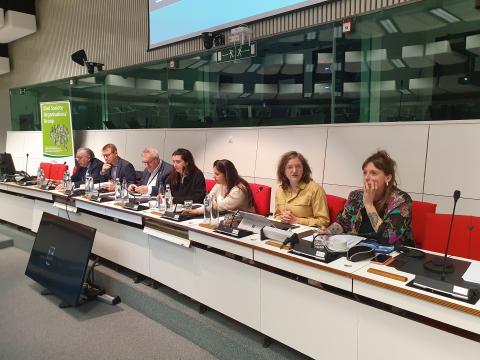
On 8 April, the European Anti-Poverty Network (EAPN) launched its latest Poverty Watch Report, entitled "Towards a systemic approach to social protection", at an event co-organised with the European Economic and Social Committee’s (EESC) Civil Society Organisations’ Group, in Brussels. The report addresses the challenges that need to be overcome to secure strong and resilient social protection systems, especially in the current context as EU welfare states face increasing financial constraints due to national spending limitations and increased defence and security expenditures.
The report, based on the findings from nineteen EAPN national member organisations, demonstrates that achieving a systemic approach to comprehensive and effective social protection requires policies embedded in integrated, long-term strategies, that coordinate economic, social, and environmental dimensions. These policies must be based on robust evidence, data, and the meaningful participation of people experiencing poverty.
EAPN's national networks voice apprehension over the reduction in social expenditure. Additionally, indicators such as high levels of non-take up of social benefits continue to raise concerns about the efficiency of policies that fail to reach those in need and eligible for social benefits.
According to the report, the response to a fast-changing world, marked by digitalisation, war, an ageing population, and climate change, has been inadequate, highlighting the need to re-establish a systemic approach to social policies.
On the eve of the launch of the report, Juliana Wahlgren, EAPN’s Director, highlighted the urgency of the issue, stating: 'The EU needs to protect the welfare state and to prioritise the social spending. For that, the Poverty Watch Report has recommendations on the minimum income, housing crisis, energy transition, among others. Efficiency and adequacy are essential. Next year, the European Commission will launch the EU Anti-Poverty Strategy, but it can only succeed if Member States adopt a truly systemic approach to social protection. With more than 20% of the EU population at risk of poverty, we cannot afford to continue with fragmented policies – social protection must be strong, coordinated, and effective.'
Séamus Boland, President of the EESC Civil Society Organisations’ Group, said: 'The eradication of poverty requires unrelenting action by all Member States. Much of the poverty experienced in the EU is intergenerational and can be particularly harsh on the lives of children and older people. In the areas of education, housing and high-cost energy, special measures - that target the weaknesses of the system - must be introduced. Otherwise, the EU as a political entity will struggle to retain the confidence of its citizens.'
The 2024 Poverty Watch Report "Towards a systemic approach to social protection" is available on the EAPN website.
Work organisation
Recommended for you
YEYS! 2023: Mládež žiada transparentnejšiu, digitálnejšiu a jednoduchšiu EÚ
News
Európsky hospodársky a sociálny výbor (EHSV) usporiadal 23. a 24. marca 14. ročník podujatia Vaša Európa, váš názor (YEYS), ktoré priviedlo do Bruselu 105…
Slovenská organizácia Integra získava Cenu EHSV pre občiansku spoločnosť za boj proti stereotypom spájaným s duševnými poruchami
News
Európsky hospodársky a sociálny výbor (EHSV) sa tohto roku rozhodol udeliť Cenu pre občiansku spoločnosť projektom na podporu duševného zdravia. Víťazom sa stala írska charitatívna organizácia…
EHSV otvára nový ročník Ceny pre občiansku spoločnosť, ktorej ústrednou témou je duševné zdravie
News
Organizácie občianskej spoločnosti, jednotlivci a súkromné spoločnosti môžu odteraz predkladať svoje neziskové projekty a uchádzať sa o cenu EHSV venovanú podpore duševnej pohody…
Odovzdajte svoj hlas v európskych voľbách v júni 2024: EHSV vyzýva Európanov, aby hlasovali za zjednotenú a demokratickú Európu
News
Vzhľadom na celosvetový trend ústupu demokracie, rýchle šírenie dezinformácií a zvyšujúcu sa nespokojnosť v dôsledku nárastu inflácie a hrozby vojny, pôjde pri hlasovaní o novom…
Dezinformácie a nedostatok záujmu sú hlavnými príčinami vysokej neúčasti voličov vo voľbách do Európskeho parlamentu
News
Európania musia poznať konkrétny vplyv rozhodnutí EÚ na ich životy, čo ich pomôže mobilizovať sa k účasti na voľbách. Rôznym krajinám EÚ je potrebné prispôsobiť rôzne posolstvá. Je potrebné preto…