With rising energy prices having an ever-increasing impact on businesses, workers and civil society at large, the European Economic and Social Committee (EESC) welcomes the European Commission's toolbox to mitigate the negative effect. EESC is also pleased that the document echoes a number of its proposals and calls for care to be taken to ensure that no one is left behind.
The EESC's Western Balkans Civil Society Forum, which took place in Skopje on 30 September and 1 October, put the spotlight on the need for a clear EU accession perspective for the region and the role civil society should play in this process.
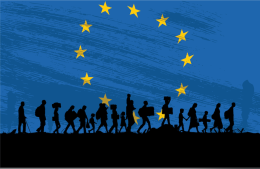
Prior to tomorrow's adoption of migration related communications by the European Commission, the European Economic and Social Committee (EESC) recalls the need for a common European framework for migration management that is effective, focusses on both external borders and legal migration pathways and is in line with EU's values. The EESC welcomes the existing monitoring done by the Commission as this provides the factual basis for future policy measures
The September plenary of the European Economic and Social Committee (EESC) hosted a debate on EU cohesion policy, where all participants agreed that the recovery must address the socio-economic inequalities that the COVID-19 crisis has exacerbated.
In a plenary debate with Reporters without Borders and the European Federation of Journalists, the EESC reaffirmed its commitment to supporting the pluralism and freedom of the media and guaranteeing absolute safety for journalists, amid alarming developments across the EU which have in the past few years claimed several reporters' lives.
Europa powoli wraca do normalności po kryzysie związanym z COVID-19, jest zatem najwyższy czas przejść od słów do czynów i wdrożyć strategię „od pola do stołu”. Europejski Komitet Ekonomiczno-Społeczny (EKES) zdecydowanie opowiada się za wspieraniem transformacji europejskich systemów żywnościowych, tak aby były one bardziej zrównoważone pod względem środowiskowym, gospodarczym i społecznym, i zauważa, że konsumenci mają tu do odegrania kluczową rolę. Odnotowuje także, że współpraca (a nie konkurencja) między podmiotami w łańcuchu żywnościowym ma zasadnicze znaczenie dla propagowania bardziej odpornego i inkluzywnego systemu żywnościowego zapewniającego sprawiedliwy udział podmiotów w korzyściach.
A strong emphasis on the EU's recovery, health union and digitalisation, a firm position on defending the rule of law and a focus on the future of Europe: these are the elements of this year's State of the Union that are very much welcomed by the European Economic and Social Committee (EESC) and that particularly align with its priorities.
The World Economic Forum's Jayant Narayan flagged up the figure in a debate on Artificial Intelligence at the European Economic and Social Committee's July plenary, saying that to compete Europe needs to invest in medium- to long-term actions to create an ecosystem where AI can thrive.
Joint press release by the EESC president Christa Schweng and the Slovenian Minister for Foreign Affairs Anže Logar - The European Economic and Social Committee welcomes the priorities of the Slovenian Presidency of the Council and declares that it will cooperate closely with Ljubljana to help turn them into a reality. During the July plenary session, the EESC members had the opportunity to discuss the priorities with the Slovenian Minister for Foreign Affairs Anže Logar.
At the July plenary session of the European Economic and Social Committee (EESC), the president, ChristaSchweng, and members met with prominent speakers to discuss the future European economy after the pandemic.