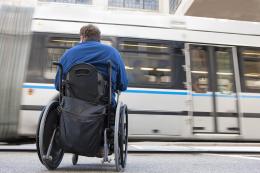
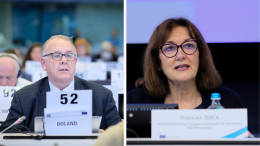
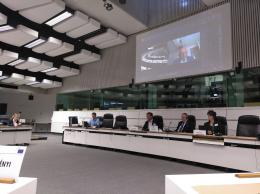
Many people take it for granted that they can move around freely and travel spontaneously by using public transport. But for people with reduced mobility, this is often not possible, due to a lack of accessibility arrangements. To discuss these matters, the European Economic and Social Committee (EESC) has held a public hearing
On 15–16 June the European Economic and Social Committee (EESC) officially joined the Rural Pact community during the first Rural Pact Conference. The EESC, as one of the organisers of the conference, participated in different panels to promote the application of a truly holistic approach to sustainable rural/urban development.
In a new opinion package the EESC argues that the whole semiconductor value chain needs to be bolstered, including the final stages of production, where COVID-19 also exposed some very critical gaps.
Finansowana przez państwo instrumentalizacja migrantów w celu destabilizacji UE oraz wojna w Ukrainie, która doprowadziła do niespotykanego dotąd napływu uchodźców, sprawiają, że niezbędny staje się przegląd europejskiej polityki migracyjnej. Europejski Komitet Ekonomiczno-Społeczny (EKES) zaznacza, że do wspólnego reagowania na kryzysy uchodźcze konieczne są solidarność i podział obciążeń między państwami członkowskimi. Jednocześnie podkreśla potrzebę zagwarantowania migrantom bezpieczeństwa i praw człowieka.
The EU's Employment and Social Innovation programme (EaSI), a finance instrument intended to promote high quality employment, has strengthened the coordination of action in the areas of employment and inclusion, but its smooth implementation encountered a number of hurdles, an evaluation report drawn up by the European Economic and Social Committee (EESC) found.
Drastically improving the energy efficiency of Europe's buildings, increasing the use of renewables and educating consumers on energy savings are among the main prerequisites for reducing the number of energy poor in the EU in the long term.
Uczestnicy seminarium internetowego zorganizowanego przez Europejski Komitet Ekonomiczno-Społeczny (EKES) opowiedzieli się za tym, by nowy europejski Bauhaus służył obywatelom Europy i pomagał w budowaniu bardziej inkluzywnej i zrównoważonej przyszłości UE.
On 25 May, the European Economic and Social Committee (EESC) held a hearing on the subject of "Improving equality in the EU" in preparation for an EESC opinion. It discussed intersectionality, discrimination and hierarchy of grounds, while emphasizing the importance of easier access to justice.
Na majowej sesji plenarnej Europejski Komitet Ekonomiczno-Społeczny (EKES) przyjął opinię w sprawie nowych ram mobilności w miastach. Głównym wnioskiem było to, że w świetle coraz bardziej ambitnych celów środowiskowych, zdrowotnych i społecznych UE powinna zmienić podejście: od zapewniania płynnego przepływu ruchu do przemieszczania osób i towarów w sposób bardziej zrównoważony i sprzyjający włączeniu społecznemu.