The EESC proposed to make sure that the relevant European and national legislation is fully implemented and enforced so as to reduce precarious work and the prevalence of the associated mental health problems;
to adopt specific legislation on preventing psychosocial risks at EU level;
to combat identified work-related psychosocial risks at the source.
Vulnerable groups pay a proportionally higher price of the consequences of climate change although they contribute less to it. In this opinion, the EESC calls for the development of a comprehensive EU political and social strategy to be able to respond proactively to climate emergency, stressing on the social aspects of the just transition. To do so, the EESC recommends, among other measures, the EU Social Climate Fund and the EU Climate Adjustment Fund be supplemented with additional instruments.
Download format:
Download — advies EESC: The climate crisis and its effect on vulnerable groups
Interactio and Room JDE 60, EESC building, Rue Belliard 99, 1040
Brussels
Belgium
In order to prepare the exploratory opinion requested by the future Spanish presidency of the EU on "Measures to improve mental health", the EESC is organising a hybrid public hearing on 11 April 2023 from 9:30 am to 1 pm.
The aim of the event is to gather input from policy makers, civil society organisations and social partners, which will feed into the EESC's opinion.
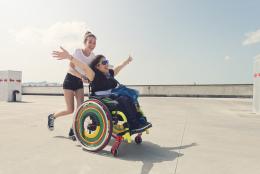
Persistent health inequalities are a huge factor behind the twofold higher mortality rate of people with disabilities, who on average die 10 to 20 years earlier than people without a disability. At the top of the list of barriers creating such inequalities are exorbitant treatment costs, inaccessible transport and health facilities, and stigma – but also a healthcare workforce that lacks proper training on disability issues.
On Thursday, 23 March 2023, the NAT Section is organising a public expert event "What next for European action on childhood obesity?" to feed into the exploratory opinion requested by the upcoming Spanish Presidency to the Council of the European Union.
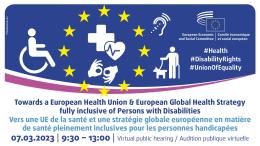
The EESC is organising a hybrid public hearing on "Towards a European Health Union and European Global Health Strategy fully inclusive of Persons with Disabilities " on 7th March 2023 am ( 9:30 am to 1 pm).
Despite being recognized by the UN Convention on the Rights of persons with Disabilities (UNCRPD) the right to the enjoyment of the highest attainable standard of health, persons with disabilities (pwd) are still victims of discrimination in access to healthcare both in the EU and at global level. The hearing, organised by the EESC Permanent Group on Disability Rights, will discuss what can be done to advance the rights of pwd in the field of health within the European Health Union and the EU Global Health Strategy.
The European Commission's proposal for a comprehensive European care strategy that should guarantee to all Europeans the possibility of receiving high quality healthcare and care service throughout their lifetime has been met with approval by the EESC