European Economic
and Social Committee
European Economic
and Social Committee
The European Economic and Social Committee (EESC) is the voice of organised civil society in Europe.
Find out more about its role and structure at http://www.eesc.europa.eu/en/about
The EESC issues between 160 and 190 opinions, evaluation and information reports a year.
It also organises several annual initiatives and events with a focus on civil society and citizens’ participation such as the Civil Society Prize, the Civil Society Days, the Your Europe, Your Say youth plenary and the ECI Day.
Find the latest EESC opinions and publications at http://www.eesc.europa.eu/en/our-work/opinions-information-reports/opinions and http://www.eesc.europa.eu/en/our-work/publications-other-work/publications respectively.
The EESC is active in a wide range of areas, from social affairs to economy, energy and sustainability.
Learn more about our policy areas and policy highlights at http://www.eesc.europa.eu/en/policies
The EESC holds nine plenary sessions per year. It also organises many conferences, public hearings and high-level debates related to its work.
Find out more about our upcoming events at http://www.eesc.europa.eu/en/agenda/our-events/upcoming-events
Here you can find news and information about the EESC'swork, including its social media accounts, the EESC Info newsletter, photo galleries and videos.
Read the latest EESC news http://www.eesc.europa.eu/en/news-media/news and press releases http://www.eesc.europa.eu/en/news-media/press-releases
The EESC brings together representatives from all areas of organised civil society, who give their independent advice on EU policies and legislation. The EESC's326 Members are organised into three groups: Employers, Workers and Various Interests.
Find out more about our Members and groups at http://www.eesc.europa.eu/en/members-groups
The EESC has six sections, specialising in concrete topics of relevance to the citizens of the European Union, ranging from social to economic affairs, energy, environment, external relations or the internal market.
Find out more at http://www.eesc.europa.eu/en/sections-other-bodies
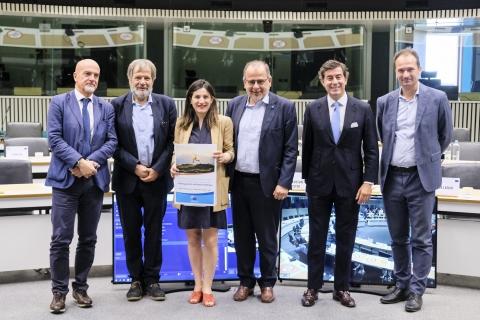
Skupina ad hoc Evropský semestr na své výroční konferenci v červnu znovu vyzvala k zapojení občanské společnosti a navrhla stálý a společný mechanismus financování investic, který by posílil připravenost na krizi a schopnost na ni reagovat.
Konference navázala na nedávné usnesení Výboru diskusí o reformě evropského semestru, který zajistí dohled nad prováděním národních plánů pro oživení a odolnost. „Vzhledem k novým výzvám, kterým EU čelí, je třeba evropský semestr aktualizovat, posílit a otevřít evropské organizované občanské společnosti,“ vysvětlil místopředseda skupiny Gonçalo Lobo Xavier.
Předsedkyně EHSV Christa Schweng při zahájení konference opětovně zdůraznila, že „občanská společnost hraje zásadní roli v budoucí Evropě“, a komisařka pro soudržnost a reformy Elisa Ferreira navázala slovy: „Bavíme-li se o budoucích krizích, musíme uvažovat ne o jednom hlavním nástroji, ale o celé sadě nástrojů. Musíme diverzifikovat.“
EU bude v nadcházejících letech potřebovat rozsáhlé investice. Účastníci diskutovali o tom, zda by se tyto plány obnovy měly stát stálou, strukturální součástí zajištění společných investic do hlavních oblastí. „Evropa potřebuje energetickou nezávislost,“ uvedl předseda skupiny ad hoc Evropský semestr Javier Doz Orrit, a předseda sekce Hospodářská a měnová unie, hospodářská a sociální soudržnost (ECO) Stefano Palmieri poté poukázal na nutnost „zajistit strukturální transformace celého systému“.
Konferenci uzavřel místopředseda skupiny ad hoc Evropský semestr Luca Jahier uznáním důležitosti Nástroje pro oživení a odolnost i příslušných národních plánů. „Díky těmto nástrojům jsme za uplynulé dva roky udělali víc, než za posledních 20 let,“ prohlásil. „Teď je třeba zajistit zapojení organizované občanské společnosti, více investovat a urychlit transformaci.“ (tk)