In an own-initiative opinion, the European Economic and Social Committee (EESC) has called for the EU to adopt a comprehensive approach to providing more support and faster treatment for rare disease patients.
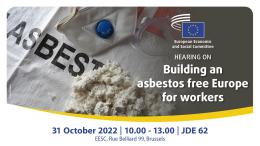
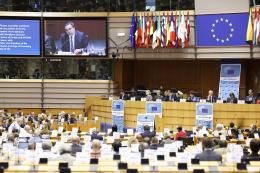
As part of its work to prepare an opinion on the Commission package to better protect people from asbestos and ensure an asbestos-free future, the European Economic and Social Committee (EESC) is organising a hybrid public hearing on 31 October 2022 from 10:00 am to 13 am.
The aim of the event is to gather input from other EU Institutions, civil society and academia on the following questions:
• What are the strengths and weaknesses of the Commission's package? • What kind of activities do different actors carry out to protect workers from asbestos exposure, and are there any best practices to be shared? Your participation and input are most welcome!
In this opinion, requested by the upcoming Spanish presidency of the EU, the EESC is exploring the consequences of precarious working conditions on the mental health of workers.
The Committee:
strongly upholds the evidence showing that precarious work increases the chances of worker´s mental health deteriorating and it is incompatible with the achievement of SDGs in the EU: it is a public health issue that has to be eradicated
stresses that combating work-related psychosocial risks at the source, using organisational interventions to reshape working conditions, is an essential first step in promoting mental health in the workplace as has highlighted by WHO and ILO
proposes adopting specific EU legislation on preventing psychosocial risk as well as developing and modernising the current directive on occupational safety and health
Download format:
Download — Становище на ЕИСК: Precarious work and mental health
The EESC proposes to launch a European Care Guarantee, which would ensure life-long access to affordable quality healthcare and care services for everyone living in the EU. It also underlines the importance of supporting families in their fundamental role as caregivers and asks for adopting specific measures to tackle Gender equality, namely addressing gender stereotypes, attracting more men in the sector and ensure better distribution of care within households.
In addition, the Committee highlights the need for a life cycle approach promoting healthy and active ageing and calls for the development of a European Strategy for Older Persons.
Download format:
Download — Становище на ЕИСК: The European Care strategy
This Opinion welcomes the Commission's ambition to reduce the incidence of cancer, and its specific efforts to minimise exposure to asbestos at work. It recommends that the technical limit value for asbestos exposure under the Directive on the protection of workers from the risks related to exposure to asbestos at work should ultimately be set at a lower level than the Commission is currently proposing. This Opinion also suggests that roadmap of complementary measures over and above the Commission's proposals should be drawn up in order to achieve that objective. It calls on the EU and its Member States to actively promote an international ban on the use of asbestos and protection for workers dealing with existing asbestos during activities such as renovation, demolition and waste management.
Download format:
Download — Становище на ЕИСК: Protection from exposure to asbestos at work
The classification, labelling and packaging of chemicals regulation is the core piece of Union legislation for the hazard assessment of chemicals, stemming from the United Nations’ global standard (GHS), and sets out the hazard classification of chemicals and how to communicate those hazards to consumers and workers.
Download format:
Download — Становище на ЕИСК: Revision of the classification, labelling and packaging of chemicals regulation
At the EESC plenary debate with Commission Vice-President Margaritis Schinas, the EESC reiterated its unwavering support for a European Health Union. It urged the Commission to be ambitious in the implementation of the new European care strategy, which aims to ensure that each and every European has access to affordable and high-quality healthcare
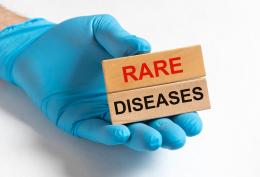
Rare diseases may be rare but they still affect up to 36 million people in the EU. Despite advances in research and the exchange of good practices, Europe is still failing patients with rare diseases on many fronts