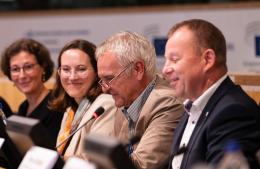
Water resilience requires stronger cooperation, recognition of access to affordable water as a universal right, and a more effective multilateral framework. The EESC brought together civil society actors to help shape the EU contribution to the 2026 UN Water Conference.
On 15 September, the European Economic and Social Committee (EESC) will bring together civil society organisations, EU institutions and other stakeholders to help shape an ambitious, resilient and inclusive European contribution to the UN Water Conference, taking place on 8 – 10 December 2026.
Ahead of the UN Water Conference 2026, the European Economic and Social Committee (EESC) held a plenary debate with EU Commissioner for Environment and Water Resilience Jessika Roswall. The EESC calls for water to be treated as a strategic resource for Europe’s economy, security and global role.
The EU needs a long-term vision that takes greater account of geographic specificities. Sustainable water management and food security must become top priorities, with food security and biodiversity going hand in hand.
The first EU Water Resilience Forum, co-organised by the European Economic and Social Committee (EESC), the Committee of the Regions, and the European Commission, brought together people working on Europe’s water challenges to share ideas and solutions to protect water for families, communities and future generations. The Forum also launched the Water Resilience Stakeholder Platform to turn these ideas into action.