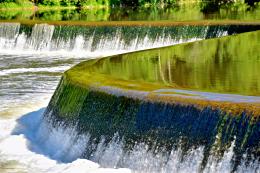
Droughts, floods and damaged ecosystems threaten food supplies, safe drinking water, jobs and homes. Water moves across borders through rivers, soils and the atmosphere, meaning that no country can secure its water future alone. In its opinion Water Diplomacy in Action: Restoring the Global Hydrological Cycle, the European Economic and Social Committee (EESC) calls for the restoration of the global water cycle to become a shared international priority.
Water resilience requires stronger cooperation, recognition of access to affordable water as a universal right, and a more effective multilateral framework. The EESC brought together civil society actors to help shape the EU contribution to the 2026 UN Water Conference.
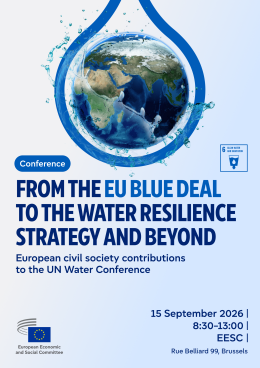
On 15 September, the European Economic and Social Committee (EESC) will bring together civil society organisations, EU institutions and other stakeholders to help shape an ambitious, resilient and inclusive European contribution to the UN Water Conference, taking place on 8 – 10 December 2026.
Dans cet aperçu, le Comité économique et social européen (CESE) présente ses avissur les propositions de la Commission européenne pour le Cadre financier pluriannuel (CFP) 2028-2034, en rassemblant les points de vue de la société civile organisée sur l’orientation future du budget de l’UE.
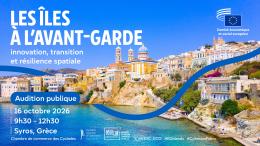
Dans le cadre de la préparation de l'avis du Comité économique et social européen (CESE) sur une Stratégie européenne pour les îles, le Comité économique et social européen, en coopération avec INSULEUR, organisera une audition publique à Syros, au cœur des Cyclades. Cette audition a pour objectif de réunir les autorités locales et régionales, la société civile organisée, les entreprises, le monde académique et les citoyens afin d'échanger sur les défis, mais aussi sur les opportunités encore largement inexploitées des îles européennes. Au-delà des questions liées à la connectivité, aux évolutions démographiques, à l'accès aux services et à la résilience face au changement climatique, l'événement mettra en lumière les atouts uniques d'îles telles que Syros, notamment leur position stratégique, leur patrimoine culturel, leur potentiel dans l'économie bleue, leur capacité d'innovation, les possibilités offertes par les énergies renouvelables et le développement d'un tourisme durable. Les conclusions de cette audition contribueront directement à l'avis du CESE, en veillant à ce que les voix, les expériences et les aspirations des communautés insulaires soient pleinement prises en compte dans les futures politiques européennes ainsi que dans la mise en œuvre de la première Stratégie européenne pour les îles, adoptée en juin 2026.
rue Belliard 101, Jacques Delors building, room JDE 63, 9:30-11:00
Brussels
Belgium
EESC, room JDE 63, 9:30-11:00
The policy debate brings together stakeholders to assess how National and Regional and Partnership Plans will work in practice. In a workshop setting connected to the European Economic and Social Committee, participants from civil society, social partners and institutions will exchange perspectives on transparency, inclusiveness and impact. The discussion aims to highlight gaps, share best practices and strengthen the role of organised civil society in shaping and monitoring the implementation of NRPPs in the EU.
On 15 September, the CCMI organised a high-level event bringing together European civil society and key stakeholders to help shape the EU’s contribution to the UN Water Conference 2026. Building on the EESC’s work on the EU Blue Deal and its recently adopted opinion on this process, the event fostered dialogue and delivered key recommendations from civil society to EU and global decision-makers, feeding into global water policy discussions.
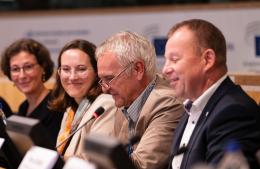
Ahead of the UN Water Conference 2026, the European Economic and Social Committee (EESC) held a plenary debate with EU Commissioner for Environment and Water Resilience Jessika Roswall. The EESC calls for water to be treated as a strategic resource for Europe’s economy, security and global role.