
European Economic
and Social Committee
Freedom of assembly
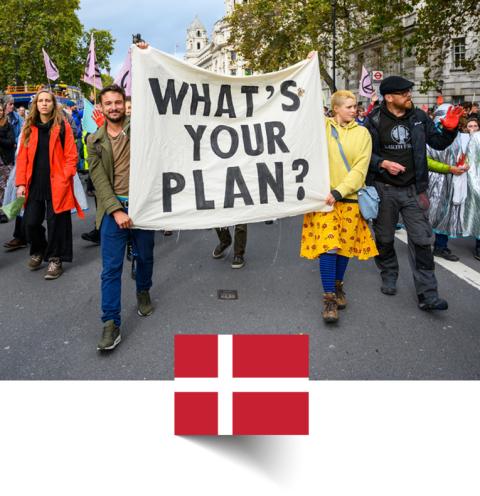
CSO representatives agreed that the overall environment for CSOs in Denmark was good. Many people in Denmark took part in civil society activities, although the trend was for these activities to increasingly take place outside of classical CSO frameworks. A participant mentioned that this could be problematic as informal groups tended to focus relatively less on democratic values.
Both CSO participants and the Danish authorities mentioned that the COVID-19 related limitations on freedoms of association and assembly had remained within the boundaries of the Constitution and were proportionate. Exceptions to limitations were for example foreseen for political or other meaningful meetings. Despite an overall good level of protection of freedom of assembly, a participant mentioned the unconstitutional restrictions that were imposed on pro-Tibet demonstrators during a Chinese official visit a few years ago, and the fact that investigations were still ongoing.
Participants agreed that it was generally easy for CSOs to register and to access funding. The level of public funding was high, and the national lottery fund secured amounts beyond short-term political decisions. Some concerns were expressed with regards to a possible diminution of available funding for CSOs following the COVID-19 crisis. A representative mentioned that CSOs could have been better included in the negotiations of the EU Multiannual Financial Framework and the post-COVID-19 recovery plan, and another one insisted the need to better fund democracy promotion activities. The Danish authorities explained that public funding was always available based on transparent and competitive public procurements and that CSOs were key partners in policies like gender equality.
CSO participants provided their analysis on more controversial areas like the draft law on "Security for all Danes" ("Tryghed for alle danskere"), which could be adopted by mid-2021. The law would allow the authorities to ban people from specific areas based on the vaguely defined concept of "behaviour and appearance creating insecurity in public spaces". Participants in the session on the "right to non-discrimination" also pointed to this bill as having the potential to disproportionality affect members of ethnic minorities. The Danish authorities commented that the bill aimed to address the feelings of insecurity in some areas controlled by groups of young people, and a general prohibition included all persons in the specific area. Therefore, it did not constitute discrimination.
One participant mentioned the risks to privacy rights and freedom of assembly that the Danish Counter-Terrorism legislation inferred because of a lack of sufficient due process guarantees in relation with far-reaching provisions leaving a wide margin of interpretation to the police. It was recommended to review the full Danish Counter Terrorism legislation and its implementation and to ensure that judicial review was available in all its aspects. This topic was also raised in following sessions.
Several representatives in this session and the following ones shared their concerns with regards to the deterioration of the democratic tone in Denmark. It was said that debates had become tougher and more polarised, with less and less effort put towards understanding the other's viewpoint. It was thought that more was to be done on education to debate. A participant explained that despite a general high level of societal trust in democracy, this level of confidence was lower amongst young people and minorities.
One participant considered it problematic that the Danish Constitution enshrined into law the non-separation between the State and the Church. The participant considered that criticisms of this situation were too often considered as being aggressive, instead of being taken as a basis for a wide debate on how to make the Danish society more opened to various life stances.