
European Economic
and Social Committee
Meet our members | Luís Mira: farmers at the heart of integrated wildfire prevention
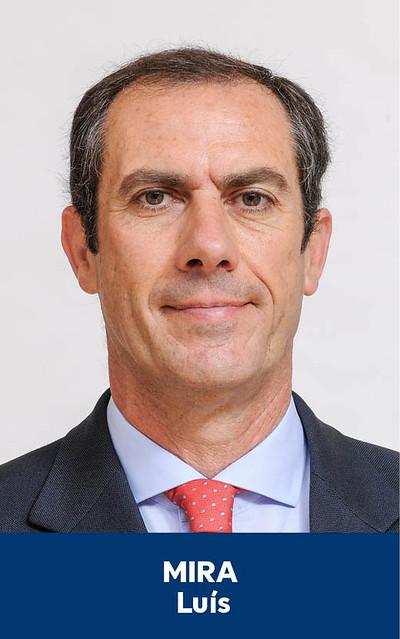
Luís Mira has been a member of the EESC (Employers' group) since 2006. He's the Secretary-General of the Portuguese Farmers' Confederation (Confederação dos Agricultores de Portugal – CAP), the largest socio-professional agricultural organization in Portugal which gives voice to farmers and works towards a competitive, innovative and future-oriented agriculture. Luís was the rapporteur of the recently adopted EESC opinion on Integrated Wildfire Risk Management.
You were recently the rapporteur of the EESC opinion on the EU approach on Integrated Wildfire Risk Management and had the opportunity to present it on 3 September to the AGRI committee of the European Parliament during a 45-minute debate. What are your takeaways from this exchange?
The exchange with the AGRI Committee was extremely valuable because it confirmed that wildfire risk is not only an environmental or civil protection issue, but also a major agricultural and rural development challenge. There was a clear recognition that prevention must lie at the heart of the EU's approach. Farmers and forest owners are directly affected by fires, but they can also be important partners in preventing and managing risks. I believe we need to move from a model that mainly responds to disasters towards one that invests systematically in prevention, land management and preparedness.
The discussion also highlighted the importance of stronger European coordination, better use of scientific knowledge and data and adequate financial resources. Finally, I stressed that wildfire policy must take into account the economic viability of rural territories: abandoned or unmanaged land increases risks, while active and profitable agricultural and forestry activities can contribute significantly to prevention.
Wildfires are unfortunately very topical after last summer, and they sit at the crossroads of both pressing crises such as climate change or biodiversity loss and ongoing policy developments such as the EU livestock strategy. What are, in your view, the most significant connections?
Wildfires are increasingly connected to several of the major challenges facing Europe. Climate change is increasing the frequency and severity of extreme heat and drought, creating conditions in which fires can spread more rapidly. At the same time, land abandonment, the decline of agricultural activity and the lack of appropriate land management can lead to the accumulation of combustible material. This is where agriculture and livestock farming have an important role to play.
Extensive grazing, for example, can help to manage vegetation and reduce fuel loads in vulnerable areas, while sustaining economic activity in rural areas. Biodiversity and fire prevention should therefore not be seen as competing objectives. Instead, we need integrated land management that recognises the role of farmers, livestock keepers and forest managers. The resilience of rural areas depends on maintaining both populations and productive activities on the land. Farmers should be recognised not only as victims of wildfires, but also as active partners in prevention, landscape management and climate resilience.
You have been very active presenting this opinion at a series of conferences in Portugal and Spain. How do local stakeholders see the role of the EU in an integrated wildfire risk management?
The message I have heard very clearly from stakeholders in both Portugal and Spain is that the EU has an important role to play, but that European action must complement and strengthen national and regional capacity rather than replace it. Local stakeholders want stronger European coordination, access to knowledge and technology, improved cooperation between Member States and, above all, predictable and dedicated financing for prevention.
There is also a strong recognition that wildfire prevention must be addressed throughout the year and not only during the fire season. Farmers, forest owners, municipalities, firefighters and local communities all have a role to play.
From my discussions in Portugal and Spain, I believe there is a growing expectation of a genuinely European strategy that reflects the specific vulnerabilities of Mediterranean and other high-risk regions. The EU can provide coordination, solidarity, knowledge and financial support, while implementation must remain closely connected to local realities and the people who manage the territory every day.
Work organisation
Recommended for you
Energi – EESK varnar för nya beroendeförhållanden
News
Europeiska ekonomiska och sociala kommittén (EESK) intar en fast hållning i energifrågan i ett yttrande som antogs vid dess plenarsession i september: kommissionens förslag är ett steg i rätt…
Svenska rådsordförandeskapet 2023: Ukraina står fortfarande högst upp på dagordningen
News
Vid Europeiska ekonomiska och sociala kommitténs (EESK) plenarsession i januari hölls en debatt under vilken Sveriges EU-minister Jessika Roswall redogjorde för prioriteringarna för det nya…
Ditt Europa, din mening! 2023: Ungdomar efterlyser ett mer transparent, digitalt och förenklat EU
News
Den 23–24 mars stod Europeiska ekonomiska och sociala kommittén (EESK) för 14:e gången värd för ”Ditt Europa, din mening!” (YEYS!) i Bryssel, med 105 elever från 35 skolor från alla 27 EU-länder och…
EESK diskuterar agendan för det svenska EU-ordförandeskapet 2023
News
Vid sammanträdet i Europeiska ekonomiska och sociala kommittén (EESK) i Stockholm redogjorde Sveriges statssekreterare med ansvar för EU-frågor, Christian Danielsson, för den politiska inriktningen…
EU–Ukraina: driftskompatibilitet och solidaritet – nyckelfaktorer för transportförbindelserna
News
Vid en debatt som Europeiska ekonomiska och sociala kommittén (EESK) höll i Bryssel framhöll deltagarna vikten av infrastruktur och harmoniserade standarder för att sammanlänka EU med dess…