
European Economic
and Social Committee
Quality Jobs for a Socially Sustainable Europe
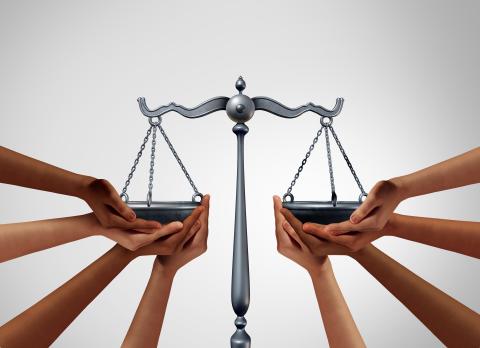
Last week, the Economic and Social Committee's Plenary adopted the opinion on the Commission's Quality Jobs Roadmap, after a debate with the European Commission’s Executive Vice-President for Social Rights and Skills Roxana Mînzatu.
In the face of green and digital transitions, global challenges and geopolitical turmoil, the EU is searching for resilience and competitiveness. As the Draghi and Letta reports emphasise, competitiveness and productivity must be accompanied by a strong social dimension. Therefore, economic resilience can only be achieved if jobs are of a high quality and socially sustainable, ensuring that all workers receive safe and decent working conditions and no one is left behind. Moreover, the last Commission Report on the Social Pillar progress shows that some targets are off-course (particularly in terms of poverty and in-work poverty), pointing to the need for clear and ambitious measures in the Quality Jobs Act.
For the EESC, this includes first and foremost the incorporation of meaningful social dialogue and collective bargaining, including consultation in the drafting process of instruments. Further, it is important to find a common and comprehensive understanding of the term "quality jobs". This definition should encompass sustainable competitiveness, social progress, investment, innovation, productivity and territorial cohesion. The Commission can build on the work of the OECD, the ILO, Eurofound and other existing frameworks. This would also mean that job quality is something that can be measured according to certain indicators
Other pillars of quality jobs in the EU should include health and safety in the workplace and dignified working conditions, especially considering that the modern workplace brings additional psycho-social and mental health risks along with concerns over work-life balance, increasing work intensity and job unpredictability. The EESC stresses that special attention must be paid to the different needs of workers in different circumstances, such as persons with disabilities, young people, gender-specific challenges, non-standard workers. Similarly, artificial intelligence and algorithmic management bring new challenges, their usefulness in the workplace must be balanced by protections for the rights of workers and the human-first principle.
As the work environment is changing, it is more important than ever to support and guarantee workers' access to reskilling and lifelong learning. While the EESC welcomes the Commission's Communication, ultimately the success of the Quality Jobs Roadmap will depend on the ability of the measures to create positive change in workplaces.
Work organisation
Related content

Recommended for you
Energi – EESK varnar för nya beroendeförhållanden
News
Europeiska ekonomiska och sociala kommittén (EESK) intar en fast hållning i energifrågan i ett yttrande som antogs vid dess plenarsession i september: kommissionens förslag är ett steg i rätt…
Svenska rådsordförandeskapet 2023: Ukraina står fortfarande högst upp på dagordningen
News
Vid Europeiska ekonomiska och sociala kommitténs (EESK) plenarsession i januari hölls en debatt under vilken Sveriges EU-minister Jessika Roswall redogjorde för prioriteringarna för det nya…
Ditt Europa, din mening! 2023: Ungdomar efterlyser ett mer transparent, digitalt och förenklat EU
News
Den 23–24 mars stod Europeiska ekonomiska och sociala kommittén (EESK) för 14:e gången värd för ”Ditt Europa, din mening!” (YEYS!) i Bryssel, med 105 elever från 35 skolor från alla 27 EU-länder och…
EESK diskuterar agendan för det svenska EU-ordförandeskapet 2023
News
Vid sammanträdet i Europeiska ekonomiska och sociala kommittén (EESK) i Stockholm redogjorde Sveriges statssekreterare med ansvar för EU-frågor, Christian Danielsson, för den politiska inriktningen…
EU–Ukraina: driftskompatibilitet och solidaritet – nyckelfaktorer för transportförbindelserna
News
Vid en debatt som Europeiska ekonomiska och sociala kommittén (EESK) höll i Bryssel framhöll deltagarna vikten av infrastruktur och harmoniserade standarder för att sammanlänka EU med dess…