
European Economic
and Social Committee
Labour rights for journalists: safeguarding independence and truthful Information
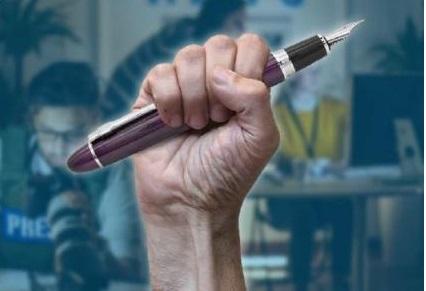
At its December 2025 plenary session, the European Economic and Social Committee (EESC) adopted an own-initiative opinion calling for urgent action to strengthen labour rights for journalists and media professionals across Europe. The EESC’s message is clear: decent working conditions are essential to safeguard the independence of journalism and ensure citizens’ access to reliable, pluralist, and truthful information.
The EESC’s opinion draws on extensive research and stakeholder input, highlighting the increasingly hostile environment in which journalists operate. The Committee warns that growing insecurity and deteriorating working conditions threaten not only journalists’ well-being but also the democratic right to independent information. The opinion sets out a comprehensive set of recommendations to improve working conditions, support media pluralism, and protect journalists from both economic and physical threats.
Europe at a crossroads
‘Today, the working environment for journalists is increasingly hostile: lies, rumours, as well as job insecurity and poor working conditions for information workers, undermine not only the quality of information but freedom itself,’ highlights rapporteur José Antonio Moreno Díaz, in a video message following the adoption of the opinion.
In the same message, Co-rapporteur Christian Moos emphasized that 'Europe is at a crossroads: either we take decisive action to protect journalists, or we risk weakening one of the pillars of our democracy.'
The EESC calls for the full application of the European Media Freedom Act (EMFA) and urges the European Commission to ensure Member States comply with its provisions. The Committee also highlights the need for independent support for media outlets, including measures such as VAT reductions, to counteract the dominance of large online platforms and ensure the sustainability of the European media sector.
The EESC emphasises the importance of social dialogue and collective bargaining for all journalists, including freelancers. It calls on governments to transpose the Directive on adequate minimum wages and to implement guidelines with regard to collective agreements for solo self-employed persons. The Committee also urges action against bogus self-employment and calls on employers to fully apply EU occupational safety and health directives. The EESC stresses the need for increased funding to support quality jobs in the media sector and to protect a sound information ecosystem.
Journalists face high levels of job insecurity, stress, burnout, and online harassment. The opinion draws attention to the working conditions of freelance journalists and the decline in collective agreements, which leaves many without adequate social security or protection. The Committee calls for deeper engagement with journalists’ organisations to build structures that safeguard safety and well-being, and is ready to issue an opinion on the European Parliament's call for the adoption of a directive on psychosocial risks in the workplace.
Responding to new challenges, AI and disinformation
The rapid rise of artificial intelligence (AI) in newsrooms presents both opportunities and risks. The EESC calls on the European Commission to monitor the application of EU legislation on AI to ensure a fair balance between innovation and the protection of journalists. It encourages journalists’ unions and media organisations to address AI-related issues through social dialogue and calls for funding to develop AI literacy among journalists. The Committee also highlights the growing threat of disinformation and challenges linked to the right to disconnect and work-life balance.
The EESC expresses concern about the concentration of media ownership and the vulnerability of public service media to political and financial pressures. It calls for strict enforcement of the EMFA to guarantee the independence and sustainability of public broadcasters. The Committee also supports sustainable financial support for independent journalism initiatives, such as Radio Free Europe/Radio Liberty.
The adoption of the opinion has been welcomed by the European Federation of Journalists (EFJ), echoing the Committee’s call for urgent action to combat the precarious situation of journalists and underscoring the importance of safeguarding labour rights to protect press freedom.
In an era of growing threats to press freedom and the integrity of information, the EESC’s opinion is a call to action: Europe must protect the labour rights of journalists to safeguard democracy itself. By ensuring decent working conditions, robust protections, and meaningful social dialogue the EU can help guarantee that journalism continues to serve its vital role as a watchdog and pillar of democratic society.
Work organisation
Recommended for you
Energi – EESK varnar för nya beroendeförhållanden
News
Europeiska ekonomiska och sociala kommittén (EESK) intar en fast hållning i energifrågan i ett yttrande som antogs vid dess plenarsession i september: kommissionens förslag är ett steg i rätt…
Svenska rådsordförandeskapet 2023: Ukraina står fortfarande högst upp på dagordningen
News
Vid Europeiska ekonomiska och sociala kommitténs (EESK) plenarsession i januari hölls en debatt under vilken Sveriges EU-minister Jessika Roswall redogjorde för prioriteringarna för det nya…
Ditt Europa, din mening! 2023: Ungdomar efterlyser ett mer transparent, digitalt och förenklat EU
News
Den 23–24 mars stod Europeiska ekonomiska och sociala kommittén (EESK) för 14:e gången värd för ”Ditt Europa, din mening!” (YEYS!) i Bryssel, med 105 elever från 35 skolor från alla 27 EU-länder och…
EESK diskuterar agendan för det svenska EU-ordförandeskapet 2023
News
Vid sammanträdet i Europeiska ekonomiska och sociala kommittén (EESK) i Stockholm redogjorde Sveriges statssekreterare med ansvar för EU-frågor, Christian Danielsson, för den politiska inriktningen…
EU–Ukraina: driftskompatibilitet och solidaritet – nyckelfaktorer för transportförbindelserna
News
Vid en debatt som Europeiska ekonomiska och sociala kommittén (EESK) höll i Bryssel framhöll deltagarna vikten av infrastruktur och harmoniserade standarder för att sammanlänka EU med dess…