
European Economic
and Social Committee
A Climate Adjustment Fund to ensure a swift response to crises
In an own-initiative opinion, the European Economic and Social Committee (EESC) proposes creating a Climate Adjustment Fund (CAF) to ensure a rapid response to new climate and energy crises. The CAF would complement existing EU policies and ensure more effective use of existing funding.
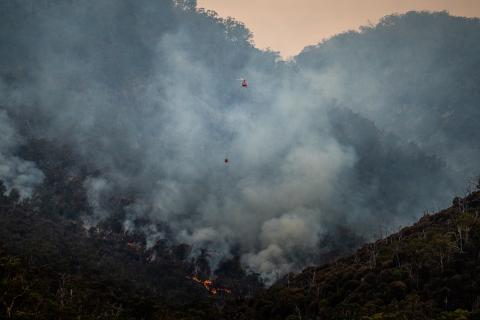
In the opinion approved at the EESC plenary session in September, the Committee noted the increasing severity of climate change, as seen in extensive flooding and wildfires in Europe in 2021 and the drought affecting half of the European continent this year.
While it has provided impressive support to Member States since 2002, the EU Solidarity Fund with its EUR 500 million annual budget cannot cover the costs of the damage caused by natural disasters in 2021, the EESC warned. Flooding in Western Europe alone caused damage estimated at EUR 38 billion.
Rapporteur Ioannis Vardakastanis said: Our vision for a CAF is to ensure a strong funding mechanism, using existing EU funds, to respond quickly to emergencies and help rebuild damaged communities. It is a very ambitious way to rebuild and protect areas affected by pressing climate, energy and environmental crises.
Responding to the energy crisis
Russia's invasion of Ukraine has highlighted the need for the EU to ensure its energy independence. While funding for the energy transition is already ambitious, the existence of several different funds risks duplication and inefficiency, and also combines long-term objectives with emergency response, the EESC believes.
In addition, the current energy crisis was not anticipated when the EU's Multiannual Financial Framework budget for 2021 to 2027 and the NextGenerationEU recovery plan were drawn up.
The EU is already focused on the development of green energy over the long term. The CAF would address the need for urgent investment in alternative energy sources more effectively than existing mechanisms. This is especially relevant now, when many people face being unable to pay their gas or electricity bills.
Financed by Cohesion Fund and NextGenerationEU
The CAF would be used to respond to natural disasters in the short term and this would complement spending from the five EU structural and investment funds on long-term disaster preparation and prevention, the EESC proposes.
The CAF could be financed by the portion of the Cohesion Fund intended for climate change response, by Recovery and Resilience Facility funding for environmental reforms, and by the EU Solidarity Fund.
Having a single funding programme would ensure more efficient disaster response and allow better monitoring of investment needs, the EESC recommends.
The criteria for awarding funding from the CAF could be based on the approach used by NextGenerationEU: EU countries would qualify for financing on condition that it is used to combat climate change and that projects involve both social partners and civil society.
Since the CAF alone would be unable to fully meet the needs of countries responding to crises, the EU should promote disaster insurance for EU countries, the EESC proposes. Disaster insurance would help reduce pressure on other EU funds. CAF funding could also be boosted with private funding.
Co-rapporteur Judith Vorbach said: We are not adequately prepared to respond to emergencies and disasters due to the climate change and the energy crisis, either in terms of volume of funds or of timeliness. The establishment of a Climate Adjustment Fund would be an important tool to fix that.
Work organisation
Recommended for you
Energi – EESK varnar för nya beroendeförhållanden
News
Europeiska ekonomiska och sociala kommittén (EESK) intar en fast hållning i energifrågan i ett yttrande som antogs vid dess plenarsession i september: kommissionens förslag är ett steg i rätt…
Svenska rådsordförandeskapet 2023: Ukraina står fortfarande högst upp på dagordningen
News
Vid Europeiska ekonomiska och sociala kommitténs (EESK) plenarsession i januari hölls en debatt under vilken Sveriges EU-minister Jessika Roswall redogjorde för prioriteringarna för det nya…
Ditt Europa, din mening! 2023: Ungdomar efterlyser ett mer transparent, digitalt och förenklat EU
News
Den 23–24 mars stod Europeiska ekonomiska och sociala kommittén (EESK) för 14:e gången värd för ”Ditt Europa, din mening!” (YEYS!) i Bryssel, med 105 elever från 35 skolor från alla 27 EU-länder och…
EESK diskuterar agendan för det svenska EU-ordförandeskapet 2023
News
Vid sammanträdet i Europeiska ekonomiska och sociala kommittén (EESK) i Stockholm redogjorde Sveriges statssekreterare med ansvar för EU-frågor, Christian Danielsson, för den politiska inriktningen…
EU–Ukraina: driftskompatibilitet och solidaritet – nyckelfaktorer för transportförbindelserna
News
Vid en debatt som Europeiska ekonomiska och sociala kommittén (EESK) höll i Bryssel framhöll deltagarna vikten av infrastruktur och harmoniserade standarder för att sammanlänka EU med dess…