
European Economic
and Social Committee
REFLECTIONS BY CIVIL SOCIETY PARTNERS: EU budget

Resilience: The Price of Stability
Resilience sounds reassuring. It suggests strength, safety, continuity. But what do we actually mean when we use the word?
For cities and regions, resilience is the capacity to absorb shocks without losing core functions. It means that when a flood hits, public transport still runs. When storms arrive, waste is collected, drinking water is safe, hospitals function. It is about reserves and buffers, parallel pipelines and storage capacity – but also about preparedness, social trust and leadership. Resilience is not only infrastructure. It is a mindset for dealing with uncertainty.
It has become one of Europe’s trending buzzwords because volatility is no longer the exception. Events once described as ‘once in 100 years’ now occur within a single political mandate. Resilience means preparing not only for what we have already experienced, but for what we have never seen before. It requires a toolkit and a mental framework to face the unfamiliar.
But resilience has a price.
Redundant pipelines. Retention basins that may fill only once a decade. Floodplains that could have eased housing shortages. Backup energy systems, generators, continuous staff training for emergencies that may not occur for years. Money invested in buffers is money not spent on eye-catching growth projects, tax cuts or ribbon-cutting infrastructure.
Here lies the tension with another trending word: competitiveness. Competitiveness seeks optimisation – fewer duplications, lower costs, streamlined systems, risk-taking. Resilience accepts inefficiency – redundancy, reserves, regulation, risk minimisation. One mindset primed for efficiency, the other for survival. Leaders must navigate between them.
Resilience forces us to confront difficult questions: What risks are we willing to accept? Who do we protect? Are we ready to invest more today to reduce danger tomorrow? What are we willing to sacrifice now to remain stable in the future?
As uncertainty about the future grows, this discipline of choice becomes not theoretical – but defining.
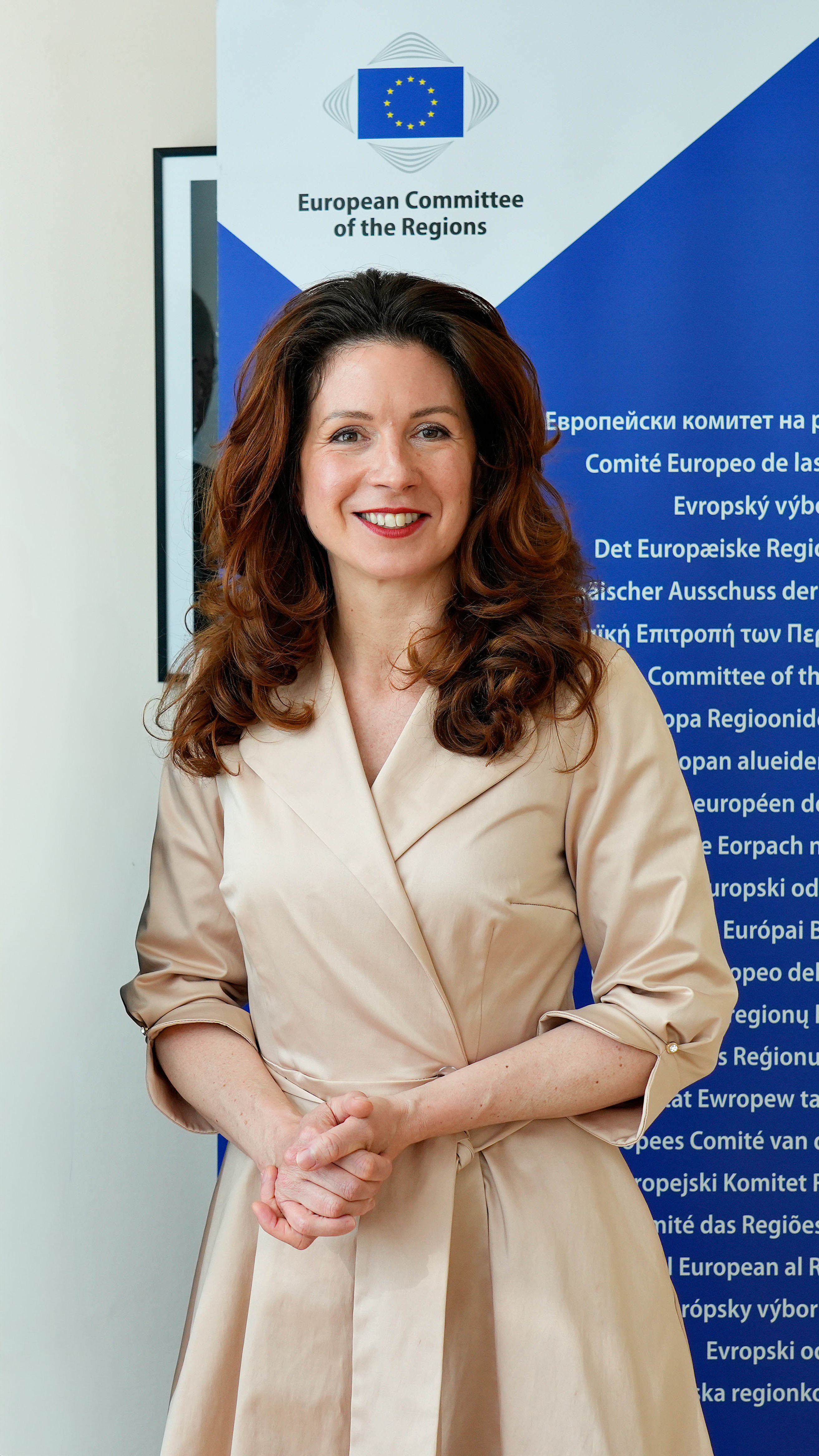
Kata TÜTTŐ, President of the European Committee of the Regions (CoR)
© EU/CoR