
European Economic
and Social Committee
Totstandbrenging van klimaatneutraliteit hangt sterk af van de vraag in hoeverre de EU de burgers erbij betrekt
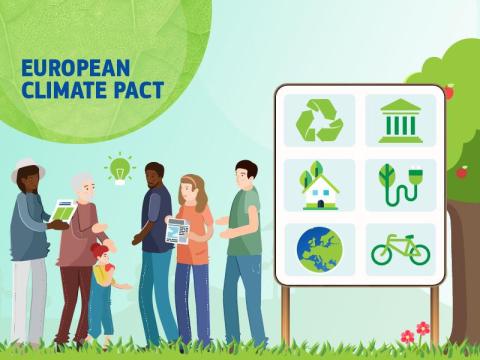
Totstandbrenging van klimaatneutraliteit hangt sterk af van de vraag in hoeverre de EU de burgers erbij betrekt Het aanpakken van de uitdagingen op klimaat- en milieugebied is een topprioriteit van de EU geworden. Van klimaatverandering tot klimaatcrisis – de EU moet wezenlijke veranderingen doorvoeren om een welzijnsgerichte economie tot stand te helpen brengen.
Om deze uitdagingen het hoofd te bieden en deze veranderingen te bewerkstelligen heeft de Europese Commissie de Europese Green Deal goedgekeurd en het initiatief genomen tot een raadpleging om na te gaan hoe het publiek bij een Europees klimaatpact betrokken kan worden.
Het EESC werd in dat verband verzocht om aan te geven hoe kan worden voortgebouwd op bestaande structuren, zoals dialogen en bijeenkomsten met burgers, om het gewenste maatschappelijk draagvlak voor de duurzame-ontwikkelingdoelstellingen te creëren. Zonder betrokkenheid van de burgers zijn alle klimaatmaatregelen immers gedoemd te mislukken.
“De Commissie heeft met de uitvoering van het klimaatpact een belangrijke kans en plicht in handen om een innovatieve modelaanpak te hanteren die de actie weerspiegelt die al gaande is in het maatschappelijk middenveld, de gemeenschappen, steden en regio’s, en die deze ondersteunt en stimuleert", aldus Dimitris Dimitriadis, rapporteur voor het advies van het EESC over het Europese klimaatpact.
De Commissie stelt daarnaast voor om een nieuwe doelstelling voor 2030 in de EU-wetgeving op te nemen door middel van de onlangs voorgestelde Europese klimaatwet, waarmee het streven om de netto-uitstoot van broeikasgassen tegen 2050 tot nul te reduceren wettelijk wordt vastgelegd.
“Het is nu of nooit: maatschappelijk middenveld en overheid moeten zich met vereende krachten committeren aan de uitvoering van de klimaatwet nu we de herstelfase na de COVID-crisis ingaan. Door de pandemie zijn we allemaal meer gaan beseffen dat we de zaken heel anders kunnen aanpakken als we onze schouders er maar onder zetten”, aldus Jan Dirx, rapporteur voor het advies over de Europese klimaatwet. (mr)