European Economic
and Social Committee
European Economic
and Social Committee
The European Economic and Social Committee (EESC) is the voice of organised civil society in Europe.
Find out more about its role and structure at http://www.eesc.europa.eu/en/about
The EESC issues between 160 and 190 opinions, evaluation and information reports a year.
It also organises several annual initiatives and events with a focus on civil society and citizens’ participation such as the Civil Society Prize, the Civil Society Days, the Your Europe, Your Say youth plenary and the ECI Day.
Find the latest EESC opinions and publications at http://www.eesc.europa.eu/en/our-work/opinions-information-reports/opinions and http://www.eesc.europa.eu/en/our-work/publications-other-work/publications respectively.
The EESC is active in a wide range of areas, from social affairs to economy, energy and sustainability.
Learn more about our policy areas and policy highlights at http://www.eesc.europa.eu/en/policies
The EESC holds nine plenary sessions per year. It also organises many conferences, public hearings and high-level debates related to its work.
Find out more about our upcoming events at http://www.eesc.europa.eu/en/agenda/our-events/upcoming-events
Here you can find news and information about the EESC'swork, including its social media accounts, the EESC Info newsletter, photo galleries and videos.
Read the latest EESC news http://www.eesc.europa.eu/en/news-media/news and press releases http://www.eesc.europa.eu/en/news-media/press-releases
The EESC brings together representatives from all areas of organised civil society, who give their independent advice on EU policies and legislation. The EESC's326 Members are organised into three groups: Employers, Workers and Various Interests.
Find out more about our Members and groups at http://www.eesc.europa.eu/en/members-groups
The EESC has six sections, specialising in concrete topics of relevance to the citizens of the European Union, ranging from social to economic affairs, energy, environment, external relations or the internal market.
Find out more at http://www.eesc.europa.eu/en/sections-other-bodies
For the second year running, the EESC is liaising with the European Parliament and replicating the European Gender Equality Week initiative. The idea is to include a gender perspective in debates as part of our regular work.
The EESC has decided to organise a number of events during the October and November meetings of its sections and consultative committee on industrial change (CCMI). In addition, at its October plenary, which will take place during Gender Equality Week, the EESC will be holding a debate with MEP and European Parliament Vice-President Evelyn Regner, who is responsible for this project at the Parliament.
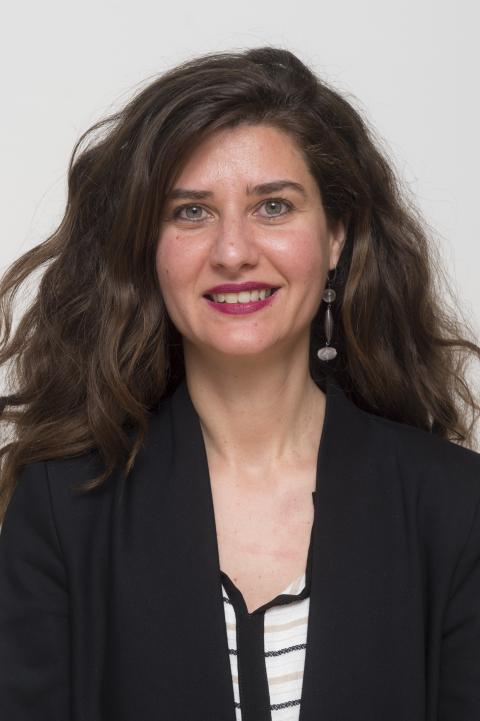
The EESC has embraced this initiative and I hope we can keep it running for as long as is necessary in order to raise awareness of the fact that, even though we are progressing towards effective equality between men and women, progress is neither fast enough nor consolidated. Our society is openly against inequality, discrimination and violence against women. Consciously and publicly, women's rights are being defended and respected by the majority. But unfortunately, certain attitudes and discourses are so deeply ingrained that some people unconsciously fall into the trap and perpetuate them, while others do it on purpose so as to block social change.
The remits of the EESC sections give us an opportunity to highlight the position of women in a variety of contexts, from the most male-dominated ones to the ones where women are most represented. Gender equality is not a "women's thing". It is a precondition for building fair, resilient and prosperous societies. That is why it is important for women and men to walk down this road together, hand in hand, demonstrating mutual respect and support.
Maria Nikolopoulou, EESC member and President of the Equality Group