European Economic
and Social Committee
European Economic
and Social Committee
The European Economic and Social Committee (EESC) is the voice of organised civil society in Europe.
Find out more about its role and structure at http://www.eesc.europa.eu/en/about
The EESC issues between 160 and 190 opinions, evaluation and information reports a year.
It also organises several annual initiatives and events with a focus on civil society and citizens’ participation such as the Civil Society Prize, the Civil Society Days, the Your Europe, Your Say youth plenary and the ECI Day.
Find the latest EESC opinions and publications at http://www.eesc.europa.eu/en/our-work/opinions-information-reports/opinions and http://www.eesc.europa.eu/en/our-work/publications-other-work/publications respectively.
The EESC is active in a wide range of areas, from social affairs to economy, energy and sustainability.
Learn more about our policy areas and policy highlights at http://www.eesc.europa.eu/en/policies
The EESC holds nine plenary sessions per year. It also organises many conferences, public hearings and high-level debates related to its work.
Find out more about our upcoming events at http://www.eesc.europa.eu/en/agenda/our-events/upcoming-events
Here you can find news and information about the EESC'swork, including its social media accounts, the EESC Info newsletter, photo galleries and videos.
Read the latest EESC news http://www.eesc.europa.eu/en/news-media/news and press releases http://www.eesc.europa.eu/en/news-media/press-releases
The EESC brings together representatives from all areas of organised civil society, who give their independent advice on EU policies and legislation. The EESC's326 Members are organised into three groups: Employers, Workers and Various Interests.
Find out more about our Members and groups at http://www.eesc.europa.eu/en/members-groups
The EESC has six sections, specialising in concrete topics of relevance to the citizens of the European Union, ranging from social to economic affairs, energy, environment, external relations or the internal market.
Find out more at http://www.eesc.europa.eu/en/sections-other-bodies
Pelo segundo ano consecutivo, o CESE colabora com o Parlamento Europeu e relança a iniciativa da Semana Europeia da Igualdade de Género. O objetivo é incluir a perspetiva de género nos debates levados a cabo no âmbito do seu trabalho regular.
O CESE decidiu organizar uma série de eventos durante as reuniões de outubro e novembro das suas secções e da Comissão Consultiva das Mutações Industriais (CCMI). Além disso, na sua reunião plenária de outubro, que se realizará durante a Semana Europeia da Igualdade de Género, o CESE realizará um debate com a deputada e vice-presidente do Parlamento Europeu, Evelyn Regner, responsável por este projeto no Parlamento.
O CESE acolheu com agrado esta iniciativa e espero que possamos mantê-la durante o tempo que for necessário para sensibilizar para o facto de que, apesar de avançarmos no sentido de uma igualdade efetiva entre homens e mulheres, os progressos não são suficientemente rápidos nem estão consolidados. A nossa sociedade é abertamente contra a desigualdade, a discriminação e a violência contra as mulheres. Consciente e publicamente, os direitos das mulheres estão a ser defendidos e respeitados pela maioria. Infelizmente, algumas atitudes e discursos estão tão profundamente enraizados que algumas pessoas caem inconscientemente na armadilha e os perpetuam, enquanto outras o fazem conscientemente, no intuito de bloquear a mudança social.
As competências das secções do CESE dão-nos a oportunidade de destacar a posição das mulheres em diversos contextos, dos mais dominados pelos homens àqueles em que estão mais representadas. A igualdade de género não é uma «coisa das mulheres». É uma condição indispensável para a construção de sociedades justas, resilientes e prósperas, razão pela qual mulheres e homens devem travar esta luta lado a lado, num espírito de respeito e apoio mútuos.
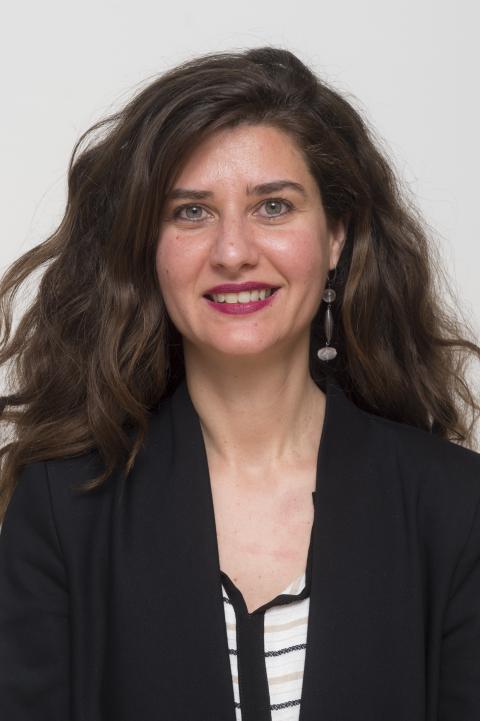
Maria Nikolopoulou, membro do CESE e presidente do Grupo para a Igualdade