
European Economic
and Social Committee
POVERTY IN OLD AGE: EUROPE MUST DO BETTER
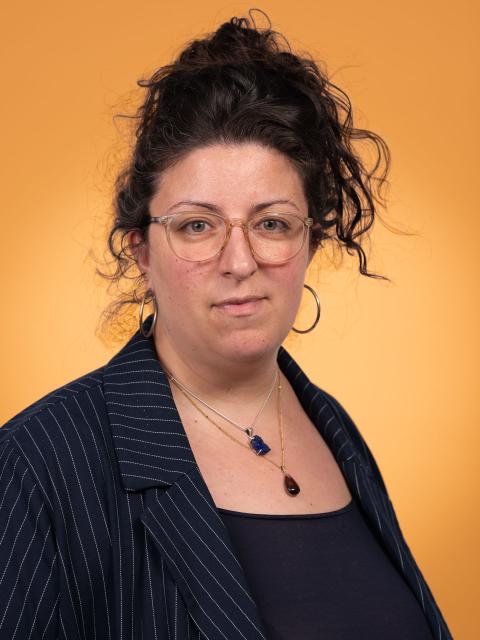
For many Europeans, retirement can turn a lifetime of work into a struggle to make ends meet. Across the EU, almost one in five people aged 65 and over is at risk of poverty, with the figure reaching 30-40% in some countries, particularly in the Baltic states and Eastern Europe. Sarah Loriato of AGE Platform Europe, the EU’s largest network of non-profit organisations representing and supporting older people, told EESC Info about how ageism and other inequalities drive old-age poverty, the gaps in the EU Anti-Poverty Strategy and the action needed at national level to enable older people to live in dignity.
AGE Platform Europe has described the new EU Anti-Poverty Strategy as a positive step. What, in your view, does it get right, and where does it fall short when it comes to older people?
The EU Anti-Poverty Strategy is a positive step. It is the first comprehensive EU initiative to address poverty across the life course and explicitly recognises older people as a group at risk of poverty and social exclusion.
We welcome its focus on adequate income and access to essential services, including healthcare and housing, as well as the Commission’s commitment to involve people experiencing poverty in shaping solutions. We hope this will translate into meaningful participation of older people and their representatives in implementation and monitoring.
However, the strategy still frames poverty primarily as a barrier to competitiveness and growth. Poverty eradication should first and foremost be pursued as a matter of human rights, equality and social justice. It also falls short in addressing structural drivers of old-age poverty, including ageism.
The EU’s strategy to combat poverty is a concrete measure that can underpin the European Union’s leadership in the ongoing negotiations towards the adoption of a United Nations Convention on the Rights of Older People. This requires a firmly grounded human rights-based approach that addresses poverty in older age not merely as an economic concern, but as a barrier to the enjoyment of fundamental rights, dignity, autonomy and full participation in society.
In your 2025 policy paper on tackling old-age poverty, you identify ageism as a major obstacle to addressing poverty among older people. Does the new strategy do enough to tackle ageism and its role in creating or deepening poverty in later life?
No. While older people are identified as a group at risk of poverty, the strategy does not sufficiently recognise ageism as a structural driver of exclusion.
Ageism affects access to employment, training, healthcare, financial services and participation in society. These disadvantages accumulate throughout life and often result in poverty in older age.
An intersectional approach is also essential. Older people are not a homogeneous group, and poverty risks differ according to gender, disability, migration status, ethnic origin or sexual orientation. Older women, older migrants, older persons with disabilities and older LGBTQI+ people often face multiple and reinforcing forms of discrimination. Without addressing these realities, anti-poverty policies risk leaving people behind.
The strategy places a strong emphasis on employment as a route out of poverty. But what does this mean for people who are already retired and struggling to make ends meet?
Employment can help prevent poverty, and supporting those who wish to work longer is important. However, the Strategy presents employment as the primary route out of poverty, overlooking structural drivers of poverty and ultimately, those who are already retired.
For many older people, the issue is not labour market participation but inadequate pensions, rising living costs and difficulties accessing affordable, quality essential public services. Many have completed long working lives and cannot compensate for insufficient pension income by returning to work.
The strategy should therefore place greater emphasis on pension adequacy, pension indexation and strong social protection systems. It should also pay more attention to affordable healthcare, long-term care, housing, transport and energy. Poverty in older age is not only about income. It is also about access to essential services and the ability to live independently and with dignity.
Retirement does not necessarily protect people from poverty, and in some Member States the financial situation of older people is worsening. Does the strategy sufficiently reflect these different national realities and what measures are needed to ensure an adequate income throughout old age?
The strategy provides a useful framework while recognising that poverty risks vary significantly across Member States depending on the adequacy of pension systems, social protection and public services.
We welcome the Commission’s commitment to support stronger national and local anti-poverty strategies, and the proposal to appoint National Anti-Poverty Coordinators.
However, implementation remains a concern. The strategy does not provide Member States with new dedicated resources, meaning much will depend on political will and national priorities. Ambitious objectives require adequate investment.
To ensure income security throughout old age, Member States should guarantee adequate minimum pensions, protect purchasing power through pension indexation and provide accessible income support for those with insufficient resources. Access to affordable healthcare, long-term care and housing is equally important.
Older women face a significantly higher risk of poverty in retirement because inequalities in pay, employment and caring responsibilities accumulate over their lifetime. Does the strategy do enough to address the gender pension gap, and what concrete measures are needed for women who are already retired?
The strategy rightly acknowledges that women face a higher risk of poverty and social exclusion, but it does not go far enough in addressing the gender pension gap. This gap reflects inequalities accumulated throughout life, including lower wages, career interruptions, part-time work and unpaid care responsibilities, which often result in lower pension entitlements in older age.
A life-course approach is therefore essential. Preventing future inequalities requires action on equal pay, quality employment and the fair sharing of care responsibilities. At the same time, women who are already retired need adequate minimum pensions, pension credits for caring periods and targeted support for low-income pensioners.
Closing the gender pension gap is not only a matter of pension policy, it is a matter of gender equality, social justice and human rights. Every woman should be able to age with dignity, financial security and independence.
Here you can read AGE Platform Europe’s recommendations on tackling old age poverty and its position on the EU Anti-Poverty Strategy.
Sarah Loriato is Policy Manager on Employment, Pensions and Social Inclusion at AGE Platform Europe. She is responsible for AGE’s policy activities in the areas of employment, participation, adequate income, and social inclusion. Her work includes monitoring EU initiatives on old age poverty, volunteering and lifelong learning. Sarah joined AGE in 2022 after gaining experience in the European Commission and with Amnesty International. She holds Master’s degrees in political science and in international law.