
European Economic
and Social Committee
From European priorities to real results: making the European Semester deliver
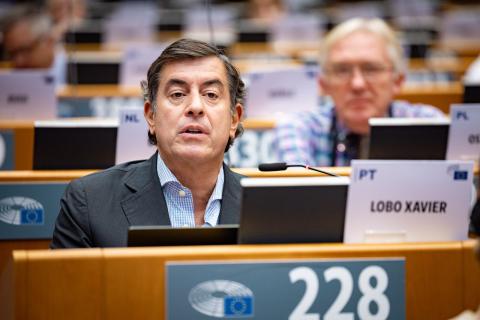
Europe has no shortage of strategies, ambitions or recommendations. What it urgently needs is stronger implementation and tangible results. In its opinion on the 2026 European Semester Spring Package, adopted at its October plenary, the European Economic and Social Committee calls for a European Semester that drives reforms, strengthens productivity and turns shared priorities into real improvements for businesses, workers and citizens.
The country-specific recommendations set out in the European Commission’s 2026 Spring Package, presented on 3 June 2026, should focus on sustainable productivity growth and be backed by the administrative capacity, funding and governance needed to implement them. The EESC also calls for systematic efforts to remove national barriers in the single market and for better-designed, more consistent rules that encourage private investment.
‘Europe does not need another list of priorities. It needs the determination and capacity to deliver on those already agreed. The European Semester must become a genuine framework for implementation, turning reforms and investment into measurable progress in productivity, competitiveness and social cohesion. Our credibility depends not only on what we promise, but on what we achieve.’ said Gonçalo Lobo Xavier, president of the EESC’s European Semester Group and rapporteur for the opinion.
Protecting investment and sustainable growth
Sound public finances and strategic investment must go hand in hand. Fiscal adjustment should not undermine investment in skills, innovation, clean energy, infrastructure, affordable housing and public services. The EESC stresses that harnessing investment requires more than the capacity to channel financial resources. It also requires a stable and predictable regulatory environment. Efficient public administration is essential to lowering transaction costs, speeding up investment and building trust in institutions.
The Committee also calls for lessons from the Recovery and Resilience Facility (RRF) to inform the next EU long-term budget and the design of future investment support. Member States must complete the reforms and investments supported by the Facility by the 2026 deadline, while avoiding an investment gap once the Facility comes to an end.
As the European Semester becomes more closely linked to the next multiannual financial framework (MFF), the EESC calls for reforms to be supported by appropriate incentives and warns against macroeconomic conditionalities. The EU must establish a stronger and more positive link between national and European investment to pursue shared objectives of sustainable and inclusive growth.
Making competitiveness work for people
The EESC considers that sustainable competitiveness and social cohesion should become the organising principle of the European Semester. Competitiveness is not an end in itself, but the foundation upon which sustainable growth, social resilience and Europe’s strategic autonomy ultimately depend. Europe’s competitiveness relies on productive businesses, quality jobs and a skilled workforce. The EESC calls for greater investment in skills, education, training and lifelong learning, alongside measures to improve job quality, increase labour-market participation and tackle poverty.
Europe must also give priority to the inextricable link between the economy and Europe’s climate goals. The EESC calls for policies that raise productivity and strengthen economic resilience while protecting social cohesion, accelerating the green transition and addressing the root causes of the climate and economic crises.
Making energy and housing more affordable is equally important, as high costs put pressure on household budgets and weigh on businesses’ ability to invest and grow.
Co-rapporteur Philip von Brockdorff stressed that ‘sustainable competitiveness and social cohesion must guide economic governance. This requires closer coordination between reforms and investment, while keeping the EU’s long-term strategic priorities in view and applying the lessons learned from the RRF.’
Giving civil society a real say in reforms
Social partners and civil society organisations should be involved throughout the European Semester, from setting priorities to carrying out and monitoring reforms. The EESC calls for participation that is meaningful, structured and timely, with public authorities explaining how stakeholder contributions have influenced their decisions. Meaningful involvement can improve the quality of reforms, strengthen public ownership and ensure that national policies reflect realities on the ground.
The European Semester will ultimately be judged by delivery. Stronger administration, coordinated reforms and investment, and meaningful civil society involvement must translate shared European priorities into measurable results for citizens and businesses.
Contact: thomas.kersten@eesc.europa.eu
Work organisation
Recommended for you
Pro odolnost EU má zásadní význam aktivní úloha organizované občanské společnosti
News
Na plenárním zasedání EHSV se diskutovalo o tom, jak roste význam organizované občanské společnosti a měst, neboť ovlivňují schopnost Evropy čelit asymetrickým otřesům a neočekávaným…
Mladí lidé coby hybatelé změn a evropské integrace zemí západního Balkánu
News
V rámci konference občanské společnosti na vysoké úrovni na téma Politika v oblasti mládeže v zemích západního Balkánu, kterou uspořádal Evropský hospodářský a sociální výbor (EHSV),…
České předsednictví chce dát Evropě nové pojetí, novou podobu a nový impuls
News
Jedním z bodů červencového plenárního zasedání Evropského hospodářského a sociálního výboru (EHSV) byla diskuse s českým ministrem zahraničních věcí Janem Lipavským o…
Vaše Evropa, váš názor (YEYS!) 2023: Mladí lidé požadují transparentnější, digitálnější a zjednodušenou EU
News
Evropský hospodářský a sociální výbor (EHSV) uspořádal ve dnech 23. a 24. března 14. ročník akce Vaše Evropa, váš názor (YEYS!). V jejím rámci se v Bruselu sešlo 105 studentů z 35 škol ze všech 27…
Spravedlivý přechod na nízkouhlíkovou společnost není možný bez účasti občanské společnosti
News
Dolní Vítkovice v Ostravě jsou bývalou průmyslovou oblastí, kde se dříve těžilo uhlí a vyráběla ocel. 11. října 2022 se zde na konferenci sešli zástupci akademické obce, místních…