
European Economic
and Social Committee
A comprehensive strategy for nature-based biodegradable materials to foster circularity and resource efficiency, strengthen the agri-food sector and scale-up the EU bioeconomy
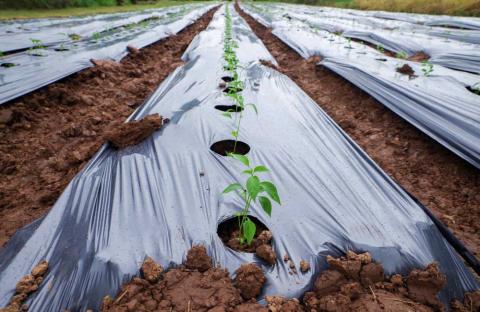
In the opinion, the EESC:
- considers that the EU has a timely opportunity to accelerate the transition towards a circular bioeconomy, combining resource efficiency, sustainable biomass use and industrial competitiveness, building on upcoming legislative initiatives such as the Circular Economy Act and the EU Bioeconomy Strategy;
- stresses that efficient use of resources requires applying the waste hierarchy and lifecycle thinking, prioritising prevention, reuse and material efficiency, while recognising both technical and biological circular pathways to achieve the best environmental outcomes;
- highlights the potential of nature-based biodegradable materials to reduce pollution, support regional economies and strengthen EU competitiveness, while calling for greater regulatory coherence—particularly in the implementation of packaging legislation—to avoid barriers and enable innovation.
The full text of the opinion is available here.
Context:
Europe is under growing pressure on natural resources, waste systems and ecosystems, while material use continues to rise. This shows the limits of linear production models and the need to move faster towards a circular economy. At the same time, the EU is advancing key legislation, including the Circular Economy Act, EU Bioeconomy strategy and the Packaging and Packaging Waste Regulation (PPWR). These frameworks will shape how materials are designed, used and managed in the years to come.
Nature-based biodegradable materials can play an important role in this transition. They offer alternatives to fossil-based materials and can support more sustainable use of agricultural, forestry and fishery resources. However, current EU rules do not always reflect their specific characteristics, creating uncertainty and potential barriers for innovation. This makes the opinion particularly timely, as it highlights how ongoing legislative processes can better support these materials.
Date of the section meeting: 16 April 2026
Rapporteur: Stoyan Tchoukanov (Civil society organisations' group – BG)
The opinion will be on vote adopted at the EESC plenary on 29 April 2026
Contacts:
- Press officer: Katerina Serifi
- Tel.: + 32 2 546 9175
- email: Aikaterini.serifi@eesc.europa.eu
- Policy officer: Caroline Verhelst
- Tel.: +32 2 546 94 97
- email: Caroline.verhelst@eesc.europa.eu
Recommended for you
Pro odolnost EU má zásadní význam aktivní úloha organizované občanské společnosti
News
Na plenárním zasedání EHSV se diskutovalo o tom, jak roste význam organizované občanské společnosti a měst, neboť ovlivňují schopnost Evropy čelit asymetrickým otřesům a neočekávaným…
Mladí lidé coby hybatelé změn a evropské integrace zemí západního Balkánu
News
V rámci konference občanské společnosti na vysoké úrovni na téma Politika v oblasti mládeže v zemích západního Balkánu, kterou uspořádal Evropský hospodářský a sociální výbor (EHSV),…
České předsednictví chce dát Evropě nové pojetí, novou podobu a nový impuls
News
Jedním z bodů červencového plenárního zasedání Evropského hospodářského a sociálního výboru (EHSV) byla diskuse s českým ministrem zahraničních věcí Janem Lipavským o…
Vaše Evropa, váš názor (YEYS!) 2023: Mladí lidé požadují transparentnější, digitálnější a zjednodušenou EU
News
Evropský hospodářský a sociální výbor (EHSV) uspořádal ve dnech 23. a 24. března 14. ročník akce Vaše Evropa, váš názor (YEYS!). V jejím rámci se v Bruselu sešlo 105 studentů z 35 škol ze všech 27…
Spravedlivý přechod na nízkouhlíkovou společnost není možný bez účasti občanské společnosti
News
Dolní Vítkovice v Ostravě jsou bývalou průmyslovou oblastí, kde se dříve těžilo uhlí a vyráběla ocel. 11. října 2022 se zde na konferenci sešli zástupci akademické obce, místních…