
European Economic
and Social Committee
A stronger European Social Fund for a more Social Europe
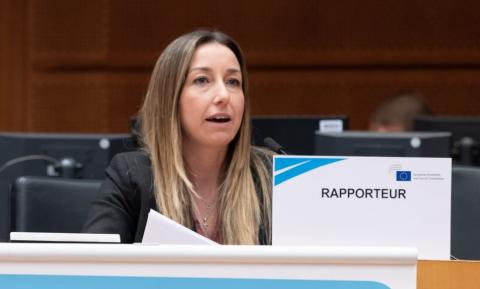
At its January 2026 plenary session, the European Economic and Social Committee (EESC) adopted an opinion calling for a significantly strengthened European Social Fund (ESF) within the future National and Regional Partnership Plans (NRPPs). The Committee argues that the ESF must play a central role in ensuring quality jobs, lifelong learning, social inclusion and equal opportunities for all during the 2028–2034 programming period.
The opinion responds to the European Commission’s proposal to reorganise cohesion and agricultural funding under a single strategic architecture. For the EESC, the success of this new approach will depend on guaranteeing that the European Social Fund keeps its distinctive mission, supports people most in need and is fully shaped through meaningful partnerships with social actors at every level.
Bolstering the ESF to deliver on Europe’s social priorities
The EESC stresses that Europe’s social challenges (from digital and green transition, skills shortages and demographic shifts to poverty, exclusion and unequal access to essential services) require a robust, inclusive and well‑funded ESF. The Committee therefore calls for increasing social spending under the NRPPs from 14% to 20%, with at least 14% earmarked specifically for the ESF. It also urges a clearer definition of what counts as social expenditure to ensure transparency and consistency across Member States.
Maintaining the ESF’s multi‑level governance model is a key priority. The Committee insists that national and regional ESF programmes remain mandatory, enabling regions, social partners and civil society organisations to continue shaping investment priorities based on local realities.
Putting partnership at the centre of the new funding model
Echoing long‑standing EESC positions, the opinion underscores that structured, meaningful and formal participation of social and economic actors is vital for the effective implementation of the ESF.
The Committee calls for:
Systematic consultation of social partners and civil society at every stage of the programming cycle,
Mandatory voting rights for these organisations on ESF monitoring committees,
Dedicated ESF resources (at least 1% in all Member States) to strengthen their administrative and organisational capacities both at regional and national level.
This approach, the EESC argues, is essential to ensuring accountability, better policy design and shared ownership of reforms.
Improving complementarity, efficiency and administrative capacity
To avoid fragmentation and overlaps between EU funds, the Committee encourages a multi‑fund approach between the ESF and programmes such as the European Regional Development Fund (ERDF). It also stresses the need to preserve the principles of additionality and supplementarity, ensuring that EU resources complement, rather than replace, national budgets.
The opinion highlights significant administrative bottlenecks in past programming cycles. To address these, it recommends that Member States dedicate part of their ESF allocation to upgrading public administration capacity, improving coordination and ensuring that funds are deployed efficiently and on time.
Investing in people: skills, employment and lifelong learning
A major pillar of the EESC’s position is the urgent need to invest in high‑quality education, training and skills development. The Committee calls for:
Strengthened vocational training and adult learning pathways, including lifelong learning,
Targeted funding to reduce skills mismatches and underemployment,
Greater focus on STEM, green and digital skills,
Stronger efforts to promote women’s participation in STEM fields,
Improved support for apprenticeships, upskilling and school‑to‑work transitions.
Recognising the persistent issue of youth unemployment, the EESC specifies that at least 20% of ESF resources should support the implementation of the reinforced Youth Guarantee and quality youth employment measures.
Supporting inclusion, social services and fair opportunities
The EESC highlights the ESF’s key role in fostering social inclusion, reducing poverty and improving access to affordable, high‑quality services. It calls for:
Raising the share of ESF allocations for social inclusion from 25% to 30%,
Strengthening services that support work‑life balance,
Improving home‑based care and autonomy for older people and persons with disabilities,
Promoting mental and physical health,
Facilitating co‑financing of affordable housing plans.
The Committee emphasises that all ESF‑funded actions must respect gender equality, the EU Charter of Fundamental Rights and the UN Convention on the Rights of Persons with Disabilities.
Towards a more visible, effective and citizen‑centred ESF
Finally, the EESC calls for better communication strategies to raise awareness of ESF opportunities. This includes clearer language, fewer acronyms, and more effective use of digital tools, social media and AI to reach diverse groups.
The EESC’s position is clear: a stronger, well‑governed and more accessible European Social Fund will be essential to delivering on Europe’s commitments to foster quality employment, equal opportunities and social cohesion. By reinforcing the ESF’s scope, governance and funding within the NRPPs, the EU can ensure that people, especially the most vulnerable, remain at the heart of Europe’s socialmodel.
Work organisation
Recommended for you
Pro odolnost EU má zásadní význam aktivní úloha organizované občanské společnosti
News
Na plenárním zasedání EHSV se diskutovalo o tom, jak roste význam organizované občanské společnosti a měst, neboť ovlivňují schopnost Evropy čelit asymetrickým otřesům a neočekávaným…
Mladí lidé coby hybatelé změn a evropské integrace zemí západního Balkánu
News
V rámci konference občanské společnosti na vysoké úrovni na téma Politika v oblasti mládeže v zemích západního Balkánu, kterou uspořádal Evropský hospodářský a sociální výbor (EHSV),…
České předsednictví chce dát Evropě nové pojetí, novou podobu a nový impuls
News
Jedním z bodů červencového plenárního zasedání Evropského hospodářského a sociálního výboru (EHSV) byla diskuse s českým ministrem zahraničních věcí Janem Lipavským o…
Vaše Evropa, váš názor (YEYS!) 2023: Mladí lidé požadují transparentnější, digitálnější a zjednodušenou EU
News
Evropský hospodářský a sociální výbor (EHSV) uspořádal ve dnech 23. a 24. března 14. ročník akce Vaše Evropa, váš názor (YEYS!). V jejím rámci se v Bruselu sešlo 105 studentů z 35 škol ze všech 27…
Spravedlivý přechod na nízkouhlíkovou společnost není možný bez účasti občanské společnosti
News
Dolní Vítkovice v Ostravě jsou bývalou průmyslovou oblastí, kde se dříve těžilo uhlí a vyráběla ocel. 11. října 2022 se zde na konferenci sešli zástupci akademické obce, místních…