European Economic
and Social Committee
European Economic
and Social Committee
The European Economic and Social Committee (EESC) is the voice of organised civil society in Europe.
Find out more about its role and structure at http://www.eesc.europa.eu/en/about
The EESC issues between 160 and 190 opinions, evaluation and information reports a year.
It also organises several annual initiatives and events with a focus on civil society and citizens’ participation such as the Civil Society Prize, the Civil Society Days, the Your Europe, Your Say youth plenary and the ECI Day.
Find the latest EESC opinions and publications at http://www.eesc.europa.eu/en/our-work/opinions-information-reports/opinions and http://www.eesc.europa.eu/en/our-work/publications-other-work/publications respectively.
The EESC is active in a wide range of areas, from social affairs to economy, energy and sustainability.
Learn more about our policy areas and policy highlights at http://www.eesc.europa.eu/en/policies
The EESC holds nine plenary sessions per year. It also organises many conferences, public hearings and high-level debates related to its work.
Find out more about our upcoming events at http://www.eesc.europa.eu/en/agenda/our-events/upcoming-events
Here you can find news and information about the EESC'swork, including its social media accounts, the EESC Info newsletter, photo galleries and videos.
Read the latest EESC news http://www.eesc.europa.eu/en/news-media/news and press releases http://www.eesc.europa.eu/en/news-media/press-releases
The EESC brings together representatives from all areas of organised civil society, who give their independent advice on EU policies and legislation. The EESC's326 Members are organised into three groups: Employers, Workers and Various Interests.
Find out more about our Members and groups at http://www.eesc.europa.eu/en/members-groups
The EESC has six sections, specialising in concrete topics of relevance to the citizens of the European Union, ranging from social to economic affairs, energy, environment, external relations or the internal market.
Find out more at http://www.eesc.europa.eu/en/sections-other-bodies
skupina Zaměstnanci v EHSV
„Nelze lhát, pokud nejste přesvědčeni, že znáte pravdu. K vypouštění hovadin nic takového potřeba není.“ Publikace filozofa Harryho G. Frankfurta s názvem On Bullshit (O hovadinách) nabývá na významu po včerejším tzv. ‚Dni osvobození‘ ve Washingtonu.
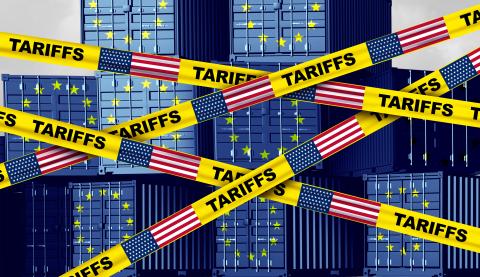
Americký prezident oznámil 2. dubna plošná dovozní cla ve výši 10 % pro všechny a k tomu specifická cla navíc pro ‚nejhorší pachatele‘. Seznam těchto hříšníků byl předveden v plné parádě s uvedením výše ‚recipročních cel‘ uvalených na konkrétní státy, včetně 20% sazby pro EU. Skutečnost, že tato čísla jsou z velké části nesmysly a rozhodně se neblíží žádné z řádných definic recipročních cel, prezidenta evidentně nijak nevzrušuje. Nezajímá ho ani to, že deficit EU v sektoru služeb téměř vyrovnává celkovou obchodní bilanci mezi oběma bloky. O pravdivost tu ostatně nikdy nešlo.
Když tedy vstupujeme do nové obchodní války založené na nesmyslech, co mohou lidé očekávat? Vyšší inflaci, nejistotu na trzích a ránu evropskému průmyslu. Jestli něco z toho prospěje pracujícím v USA, se teprve ukáže.
Kromě cel musí EU chránit domácí pracovníky a pracovní místa a tlumit první dopady nejen kvůli clům, ale též následkem nejistoty spojené s jejich nahodilým nastavením. Znamená to oživit naši vnitřní poptávku a dbát na efektivní redistribuci a využití bohatství.
Stejně tak je třeba chránit klíčová odvětví a sektory našeho průmyslu a investovat do nich, diverzifikovat zdroje energie, řešit krizi životních nákladů a reformovat EU tak, aby se mohla rozhodovat efektivně. Jedině silná a odolná společnost zabrání vyklíčení dalších takových Trumpů na našem kontinentu. Ke klíčovým složkám takové společnosti patří sociální partneři. Však také duo Musk-Trump počítá odbory mezi své úhlavní nepřátele, a dobře ví proč.