
European Economic
and Social Committee
EESC wants stronger, binding action for second half of EU Disability Strategy
At its June 2025 plenary session, the European Economic and Social Committee (EESC) adopted a forward-looking opinion on the future of the EU Strategy on the Rights of Persons with Disabilities, calling for a more ambitious and binding approach for the 2025–2030 period.
The EU Strategy for the Rights of Persons with Disabilities 2021–2030 aims to ensure full inclusion and equal rights for persons with disabilities across Europe. It focuses on accessibility, independent living, education, employment, and participation, aligning with the UN Convention on the Rights of Persons with Disabilities. It adopts an intersectional approach, recognizing the diverse challenges faced by individuals with different types of disabilities, and includes flagship initiatives like AccessibleEU to promote best practices.
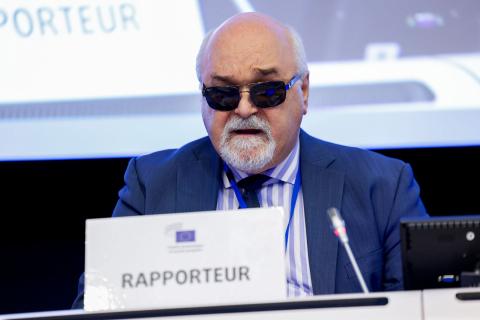
The EESC opinion The Future of the EU Strategy on the Rights of Persons with Disabilities post-2025 aims to guide the European Commission in shaping the final phase (2025–2030) of the EU Strategy. As rapporteur Ioannis Vardakastanis explains: 'The EU’s disability strategy cannot stop halfway through its 10-year existence. We need new actions that clearly improve the lives of persons with disabilities and keeps disability rights highly prioritised. Actions, initiatives and flagships that improve the day-to-day reality of Europeans with Disabilities, that combat discrimination and exclusion that prevent institutionalization and that build real community-based services.'
From consultation to implementation
In the opinion, the EESC welcomes the European Commission’s commitment to continue the strategy and acknowledges the positive impact of actions such as the EU Disability Card, the AccessibleEU Centre, and guidance on independent living. However, it warns that many initiatives lacked legal force, limiting their real-world impact. The Committee calls for meaningful consultation with persons with disabilities and their representative organisations, and for a dedicated budget under the next Multiannual Financial Framework to support implementation.
A roadmap for rights and inclusion
To ensure the strategy delivers tangible change, the EESC proposes a series of targeted actions, including:
- A viable alternative to the stalled Horizontal Equal Treatment Directive
- A Disability Employment and Skills Guarantee, modelled on the Youth Guarantee
- A directive to ensure freedom of movement for persons with disabilities
- A fully-fledged EU Accessibility Agency with regulatory powers
- Stronger protections for women and girls with disabilities, including a ban on forced sterilisation
- A Fund for Accessible Housing to address the housing crisis
- Mutual recognition of assistive technologies across Member States
- Anti-discrimination safeguards in AI and algorithmic management
- A Disability Action Plan in EU external action
Monitoring and momentum
The EESC also calls for a robust evaluation of the strategy’s first half, including the implementation of the EU Accessibility Act and Web Accessibility Directive. It urges the Commission to ensure that the 2028 EU elections are fully accessible, and to tackle stigma, hate speech, and media representation of persons with disabilities.
A call for political will
The EESC concludes that delivering on these priorities will require not only ambition but also adequate funding and political resolve. It urges the EU to uphold its commitments under the UN Convention on the Rights of Persons with Disabilities and to ensure that disability rights remain central to the EU’s social and economic agenda.
Work organisation
Recommended for you
Цифровият преход трябва да бъде справедлив: правата на човека и човешкият надзор трябва да продължат да заемат централно място
News
Европейският икономически и социален комитет (ЕИСК) привлича вниманието върху възможностите, които предлага цифровата революция, но предупреждава и за заплахите: ако бъдат приложени твърде бързо,…
Организациите на гражданското общество са първите точки за контакт по време на криза и те могат да помогнат за сплотеността на ЕС
News
На годишното си заседание Европейският икономически и социален комитет (ЕИСК) и националните икономически и социални съвети на ЕС обсъдиха интеграцията на хората, бягащи от войната в Украйна,…
YEYS! 2023: Младите хора искат по-прозрачен, цифров и опростен ЕС
News
На 23 и 24 март Европейският икономически и социален комитет (ЕИСК) беше домакин на 14-ото издание на проявата „Твоята Европа, твоето мнение!“ (YEYS!), която събра в Брюксел 105 ученици от 35 училища…
Участници от гражданското общество — незаменими съюзници за изпълнението на целите за устойчиво развитие
News
На пленарната си сесия през март Европейският икономически и социален комитет (ЕИСК) прие посланика Лъчезара Стоева, председател на Икономическия и социален съвет на ООН. Посланик Стоева изрази…
ЕС ще бъде по-конкурентоспособен, като подкрепя малките и средните предприятия
News
По време на пленарната си сесия през февруари Европейският икономически и социален комитет (ЕИСК) зае твърда позиция в полза на създаването на по-добра бизнес среда за МСП в Европа: законодателството…