
European Economic
and Social Committee
EESC wants stronger, binding action for second half of EU Disability Strategy
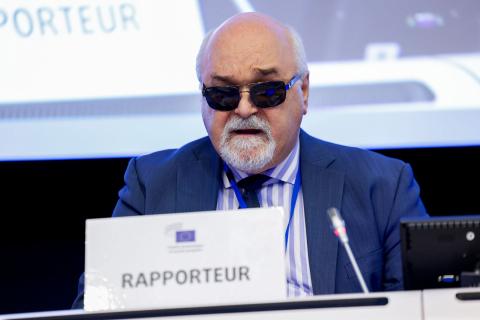
At its June 2025 plenary session, the European Economic and Social Committee (EESC) adopted a forward-looking opinion on the future of the EU Strategy on the Rights of Persons with Disabilities, calling for a more ambitious and binding approach for the 2025–2030 period.
The EU Strategy for the Rights of Persons with Disabilities 2021–2030 aims to ensure full inclusion and equal rights for persons with disabilities across Europe. It focuses on accessibility, independent living, education, employment, and participation, aligning with the UN Convention on the Rights of Persons with Disabilities. It adopts an intersectional approach, recognizing the diverse challenges faced by individuals with different types of disabilities, and includes flagship initiatives like AccessibleEU to promote best practices.
The EESC opinion The Future of the EU Strategy on the Rights of Persons with Disabilities post-2025 aims to guide the European Commission in shaping the final phase (2025–2030) of the EU Strategy. As rapporteur Ioannis Vardakastanis explains: 'The EU’s disability strategy cannot stop halfway through its 10-year existence. We need new actions that clearly improve the lives of persons with disabilities and keeps disability rights highly prioritised. Actions, initiatives and flagships that improve the day-to-day reality of Europeans with Disabilities, that combat discrimination and exclusion that prevent institutionalization and that build real community-based services.'
From consultation to implementation
In the opinion, the EESC welcomes the European Commission’s commitment to continue the strategy and acknowledges the positive impact of actions such as the EU Disability Card, the AccessibleEU Centre, and guidance on independent living. However, it warns that many initiatives lacked legal force, limiting their real-world impact. The Committee calls for meaningful consultation with persons with disabilities and their representative organisations, and for a dedicated budget under the next Multiannual Financial Framework to support implementation.
A roadmap for rights and inclusion
To ensure the strategy delivers tangible change, the EESC proposes a series of targeted actions, including:
- A viable alternative to the stalled Horizontal Equal Treatment Directive
- A Disability Employment and Skills Guarantee, modelled on the Youth Guarantee
- A directive to ensure freedom of movement for persons with disabilities
- A fully-fledged EU Accessibility Agency with regulatory powers
- Stronger protections for women and girls with disabilities, including a ban on forced sterilisation
- A Fund for Accessible Housing to address the housing crisis
- Mutual recognition of assistive technologies across Member States
- Anti-discrimination safeguards in AI and algorithmic management
- A Disability Action Plan in EU external action
Monitoring and momentum
The EESC also calls for a robust evaluation of the strategy’s first half, including the implementation of the EU Accessibility Act and Web Accessibility Directive. It urges the Commission to ensure that the 2028 EU elections are fully accessible, and to tackle stigma, hate speech, and media representation of persons with disabilities.
A call for political will
The EESC concludes that delivering on these priorities will require not only ambition but also adequate funding and political resolve. It urges the EU to uphold its commitments under the UN Convention on the Rights of Persons with Disabilities and to ensure that disability rights remain central to the EU’s social and economic agenda.
Work organisation
Recommended for you
Toghadh Séamus Boland ina Uachtarán ar Choiste Eacnamaíoch agus Sóisialta na hEorpa, agus gheall sé go gcuirfear an tsochaí shibhialta i gcroílár na hEorpa
News
Toghadh Séamus Boland na hÉireann ar an 35ú Uachtarán ar Choiste Eacnamaíoch agus Sóisialta na hEorpa (CESE) le haghaidh an téarma oifige 2025-2028. Is urlabhra riamh anall é do phobail na tuaithe…
CESE, Uachtarántacht na hÉireann agus an fhís choiteann atá acu
News
I ndiaidh na díospóireachta a reáchtáladh le Comhaltaí CESE le linn sheisiún iomlánach mhí Iúil, níl aon dabht faoi ach go bhfuil clár Uachtaránacht reatha an Aontais ag freagairt go mór do na…
Sochaí shibhialta na hEorpa agus na hÚcráine ag obair as lámha a chéile i gcoinne na barbarthachta
News
Tá an tsochaí shibhialta san Úcráin agus ar fud na hEorpa ag obair i gcomhar le chéile chun cuidiú le pobail atá i gcruachás. Éist le podchraoladh CESE The Grassroots View, ar a roinneann ionadaithe…
#YEYS2022: Ceist na bréagaisnéise pléite ag aos óg na hEorpa agus a dtuairimí ina leith curtha in iúl acu don Leas-Uachtarán Jourová
News
Chuir daltaí meánscoile ó gach cearn den Eoraip ocht gcinn de thograí nithiúla faoi bhráid Leas-Uachtarán an Choimisiúin Eorpaigh um Luachanna agus um Thrédhearcacht, Věra Jourová. Bhí páirt á…
#CivilsocietyforUkraine
News
Cáineann CESE ionradh Rialtas na Rúise ar an Úcráin, ionradh atá gan údar agus gan chúis Rún ó Choiste Eacnamaíoch agus Sóisialta na hEorpa (CESE) maidir leis an gcogadh san Úcráin agus an tionchar…