
European Economic
and Social Committee
EESC wants stronger, binding action for second half of EU Disability Strategy
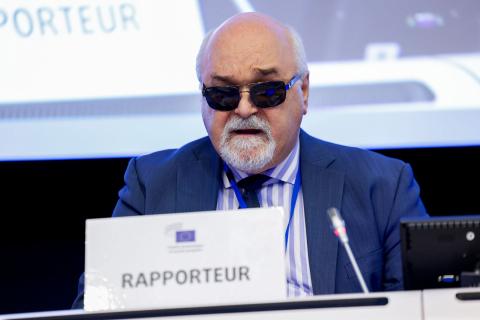
At its June 2025 plenary session, the European Economic and Social Committee (EESC) adopted a forward-looking opinion on the future of the EU Strategy on the Rights of Persons with Disabilities, calling for a more ambitious and binding approach for the 2025–2030 period.
The EU Strategy for the Rights of Persons with Disabilities 2021–2030 aims to ensure full inclusion and equal rights for persons with disabilities across Europe. It focuses on accessibility, independent living, education, employment, and participation, aligning with the UN Convention on the Rights of Persons with Disabilities. It adopts an intersectional approach, recognizing the diverse challenges faced by individuals with different types of disabilities, and includes flagship initiatives like AccessibleEU to promote best practices.
The EESC opinion The Future of the EU Strategy on the Rights of Persons with Disabilities post-2025 aims to guide the European Commission in shaping the final phase (2025–2030) of the EU Strategy. As rapporteur Ioannis Vardakastanis explains: 'The EU’s disability strategy cannot stop halfway through its 10-year existence. We need new actions that clearly improve the lives of persons with disabilities and keeps disability rights highly prioritised. Actions, initiatives and flagships that improve the day-to-day reality of Europeans with Disabilities, that combat discrimination and exclusion that prevent institutionalization and that build real community-based services.'
From consultation to implementation
In the opinion, the EESC welcomes the European Commission’s commitment to continue the strategy and acknowledges the positive impact of actions such as the EU Disability Card, the AccessibleEU Centre, and guidance on independent living. However, it warns that many initiatives lacked legal force, limiting their real-world impact. The Committee calls for meaningful consultation with persons with disabilities and their representative organisations, and for a dedicated budget under the next Multiannual Financial Framework to support implementation.
A roadmap for rights and inclusion
To ensure the strategy delivers tangible change, the EESC proposes a series of targeted actions, including:
- A viable alternative to the stalled Horizontal Equal Treatment Directive
- A Disability Employment and Skills Guarantee, modelled on the Youth Guarantee
- A directive to ensure freedom of movement for persons with disabilities
- A fully-fledged EU Accessibility Agency with regulatory powers
- Stronger protections for women and girls with disabilities, including a ban on forced sterilisation
- A Fund for Accessible Housing to address the housing crisis
- Mutual recognition of assistive technologies across Member States
- Anti-discrimination safeguards in AI and algorithmic management
- A Disability Action Plan in EU external action
Monitoring and momentum
The EESC also calls for a robust evaluation of the strategy’s first half, including the implementation of the EU Accessibility Act and Web Accessibility Directive. It urges the Commission to ensure that the 2028 EU elections are fully accessible, and to tackle stigma, hate speech, and media representation of persons with disabilities.
A call for political will
The EESC concludes that delivering on these priorities will require not only ambition but also adequate funding and political resolve. It urges the EU to uphold its commitments under the UN Convention on the Rights of Persons with Disabilities and to ensure that disability rights remain central to the EU’s social and economic agenda.
Work organisation
Recommended for you
Il-KESE jappella għal regolamentazzjoni b’saħħitha u ssemplifikata tal-kriptoassi
News
Il-Kumitat Ekonomiku u Soċjali Ewropew jappoġġja żieda fir-regolamentazzjoni tal-kriptoassi, b’regoli robusti u koerenti biex l-investituri fl-UE jiġu protetti aħjar, f’konformità mal-miżuri attwali…
L-istrumentalizzazzjoni tal-migranti u l-kriżi tar-refuġjati tal-Ukrajna jappellaw għal bidu ġdid għall-politika dwar il-migrazzjoni
News
L-istrumentalizzazzjoni tal-migranti sostnuta mill-Istat, li għandha l-għan li tiddestabbilizza lill-UE, u l-gwerra attwali fl-Ukrajna, li wasslet għal influss bla preċedent ta’ refuġjati, jagħmluha…
“L-Ewropa Tiegħek, Leħnek” 2023: Iż-żgħażagħ jitolbu UE aktar trasparenti, diġitali u semplifikata
News
Fit-23 u l-24 ta’ Marzu, il-Kumitat Ekonomiku u Soċjali Ewropew (KESE) ospita l-14-il avveniment L-Ewropa Tiegħek, Leħnek!, li laqqa’ fi Brussell 105 studenti minn 35 skola mis-27 Stat Membru tal-UE…
Euro-Med – L-organizzazzjonijiet tas-soċjetà ċivili huma essenzjali biex l-ekonomija u s-soċjetà jaħdmu tajjeb
News
Matul is-sessjoni plenarja ta’ Diċembru tal-Kumitat Ekonomiku u Soċjali Ewropew (KESE) sar dibattitu dwar ir-rikostruzzjoni u r-reżiljenza tar-reġjun Ewro‑Mediterranju wara l-pandemija tal-COVID-19.…
Il-KESE jiftaħ l-applikazzjonijiet għall-Premju tiegħu għas-Soċjetà Ċivili li se jkun qed jindirizza s-saħħa mentali
News
L-organizzazzjonijiet tas-soċjetà ċivili, l-individwi u l-kumpaniji privati issa jistgħu jdaħħlu l-proġetti tagħhom mingħajr skop ta’ qligħ għall-premju tal-KESE ddedikat għall-appoġġ tal-benesseri…