Europe’s cleantech sector has considerable research expertise but struggles to turn innovation into commercial success. Competition from the US and China makes it harder for Europe to scale up investment and maintain leadership in clean-energy and water technologies. The European Economic and Social Committee (EESC) calls on the European Commission to treat cleantech as a distinct industrial sector and take concrete steps to help it grow, create jobs and strengthen Europe’s competitiveness.
EESC adopts two opinions at September session: one pushing for reduced red tape in the Common Agricultural Policy, the other calling for a cross-cutting food policy to boost quality and organic products.
The European Economic and Social Committee (EESC) adopted two opinions at its September session, calling on the EU to build a coherent food policy around organic and quality products while also simplifying the Common Agricultural Policy (CAP) to cut red tape for farmers.
The European Economic and Social Committee (EESC) has adopted an opinion on the European Commission’s proposals to amend the EU Securitisation Regulation and prudential rules for banks. While supporting efforts to revive the securitisation market as a way of channelling more finance to Europe’s economy, the Committee warns against repeating mistakes of the past and calls for strict safeguards to protect households, small businesses and financial stability.
At its September 2025 plenary session, the European Economic and Social Committee (EESC) adopted an opinion on the EU Employment Guidelines, urging Member States to accelerate efforts on inclusion, skills, and productivity to ensure a fair and competitive labour market for all.
In an opinion adopted at the September plenary session, the European Economic and Social Committee (EESC) identifies that fostering entrepreneurship and quality job creation in the Mediterranean region is the answer to high unemployment rates. Leveraging the potential of women and young people can promote inclusive, resilient growth.
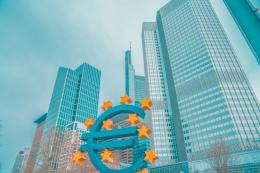
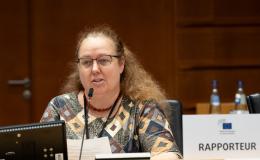
The European Economic and Social Committee (EESC) has adopted two important opinions in plenary outlining the priorities for the euro area economy and the European Semester in 2025. The EESC calls for urgent and coordinated measures to boost investment, competitiveness, social cohesion and strategic autonomy, while responding to global economic and geopolitical challenges. One opinion, drafted by rapporteur Juraj Sipko, focuses on additional considerations on the euro area economic policy 2025. The other, led by rapporteur Javier Doz Orrit, puts forward recommendations for additional considerations on the way forward for the European Semester 2025.
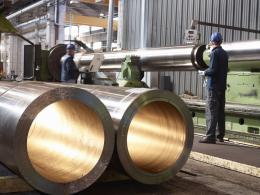
Europe’s steel industry is facing serious challenges with wide-reaching implications. Without swift and decisive action, factories could close, jobs be lost, and the EU’s strategic autonomy in defence, clean energy and digital technologies threatened. The European Economic and Social Committee (EESC) calls on the European Commission to strengthen trade safeguards, reform energy policies and support investment in low-carbon production.
EESC calls for integrated EU strategy linking environment, food and health policies to safeguard citizens’ wellbeing.
At its September plenary, the European Economic and Social Committee (EESC) adopted an own-initiative opinion on One Health, setting out a comprehensive vision for how Europe can protect human wellbeing in the face of mounting environmental and health threats.
At its September 2025 plenary session, the European Economic and Social Committee (EESC) adopted a pioneering opinion on the use of Artificial Intelligence (AI) and Big Data in rare disease diagnosis and treatment. It sets out a comprehensive vision for harnessing digital innovation to improve the lives of rare disease patients.
At its September plenary session, the European Economic and Social Committee (EESC) adopted a resolution Defending the EU’s values and strengthening its future in the new geopolitical order, calling for a secure, resilient and strategically autonomous EU. The text highlights the critical momentum for Europe’s strategic response to the current geopolitical challenges, underlining that civil society must keep its central role.