
European Economic
and Social Committee
Europe must act to strengthen its cleantech manufacturing base
Europe’s cleantech sector has considerable research expertise but struggles to turn innovation into commercial success. Competition from the US and China makes it harder for Europe to scale up investment and maintain leadership in clean-energy and water technologies. The European Economic and Social Committee (EESC) calls on the European Commission to treat cleantech as a distinct industrial sector and take concrete steps to help it grow, create jobs and strengthen Europe’s competitiveness.
In an opinion adopted at its September plenary session, the EESC stresses that, while Europe has vibrant cleantech ecosystems, too many innovations stall before reaching the market compared with global competitors. Europe risks falling behind in sectors where it currently leads unless innovation is backed by strategic investment and coherent policies.
The Committee urges the Commission to design technology roadmaps for cleantech, complemented by social and human-centred plans to help workers adapt. Pilot projects and public-private partnerships can reduce risks for investors, while funding through Horizon Europe and the 10th Framework Programme can give innovators the boost they need.
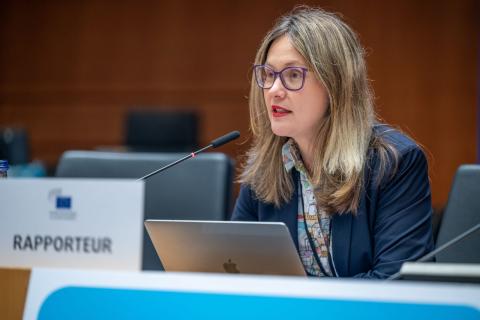
‘We call on the Commission to design clear roadmaps for technologies and sectors, taking into account their maturity and areas of comparative advantage,’ said opinion rapporteur Corina Murafa Benga.
People are at the heart of the transition. The EESC wants the EU to assess labour shortages in clean-energy and water technology jobs and ensure these roles are high-quality and open to everyone. ‘The EU must develop tools such as an EU skills passport, harmonised certification and stronger links between education and industry to ease transitions into net-zero jobs,’ added co-rapporteur Guido Nelissen.
Strengthening Europe’s manufacturing base is equally important. The Committee recommends creating a European Competitiveness Fund, repurposing the Innovation Fund and front-loading European Investment Bank (EIB) support, while ensuring cohesion and access for small and medium-sized enterprises. Investments should also target regional cleantech clusters, modernised electricity grids, capital market integration and faster permitting processes.
Finally, the EESC advocates integrating decarbonisation and water efficiency measures into EU trade agreements and building strategic partnerships to strengthen cleantech supply chains. By doing so, Europe can turn energy and water-related challenges into opportunities for job creation, new skills and sustainable business growth.