
European Economic
and Social Committee
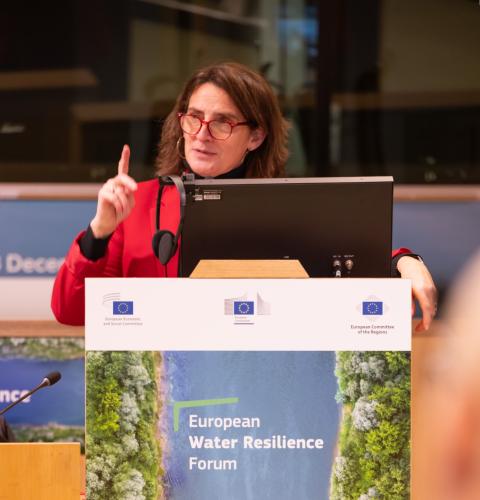
The first EU Water Resilience Forum, co‑organised by the EESC, the Committee of the Regions and the European Commission, gathered policymakers and stakeholders to chart solutions for Europe’s growing water challenges.
Commissioner Jessika Roswall warned that ‘water is no longer an infinite resource’ and called for urgent collective action, while Executive Vice‑President Teresa Ribera underlined that ‘water connects everything we care about… water is life, a shared responsibility.’ The Forum also launched the new Water Resilience Stakeholder Platform, designed to turn shared ideas into coordinated implementation.
Water resilience at the heart of EU priorities
For the EESC, the Forum reinforced momentum behind its EU Blue Deal, which has helped push water security up the EU’s political agenda and inspired the creation of a dedicated Commissioner portfolio. The updated Blue Deal Declaration now includes 31 specific actions, including an EU Water Test to assess the impact of new legislation on water resources and pollution. EESC President Séamus Boland stressed the social dimension of water: ‘Fair access to water is a matter of justice… Europe’s water future is ultimately about protecting people, livelihoods and future generations.’
Local action, shared responsibility
Cities and regions play a pivotal role. The President of the European Committee of the Regions, Kata Tüttő, reminded participants that ‘water is everywhere in our lives… and we feel the anxiety of water every day.’ She stressed that cross‑border collaboration is essential, noting how pollution in one city affects communities far downstream. Forum participants exchanged concrete solutions on restoring the water cycle, improving water efficiency, deploying digital tools and ensuring equitable access, especially for vulnerable groups.
From commitment to action
The Forum concluded with a shared determination to translate political ambition into practical measures and investments in order to achieve water resilience by 2050. With the launch of the Water Resilience Stakeholder Platform, the EESC reaffirmed its readiness to help connect policymakers with workers, businesses, farmers and communities. ‘This platform is a chance to turn ideas into practical, people‑centred solutions and ensure that no one is left behind’, the EESC President concluded. (gb)