
European Economic
and Social Committee
President Röpke concludes mandate with strong record on democracy, enlargement and social justice
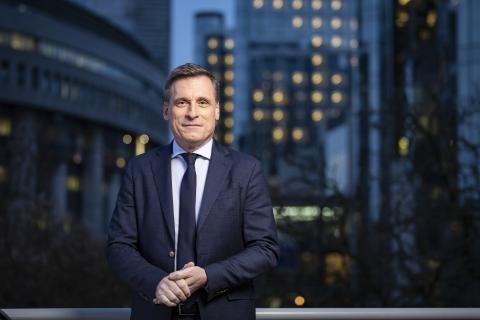
As his mandate draws to a close, EESC President Oliver Röpke looks back on more than two years of achievements that strengthened the role of organised civil society in Europe and gave the Committee greater visibility in EU policy-making.
From the outset of his Presidency in April 2023, President Röpke pledged to “stand up for democracy, speak up for Europe.” This guiding principle has shaped the Committee’s work throughout his term.
Enlargement: bringing candidate countries to the table
One of the defining initiatives of the Presidency was the launch of the Enlargement Candidate Members (ECM) initiative, which brought 147 representatives from nine candidate countries into the EESC’s work. For the first time, civil society from Ukraine, Moldova and the Western Balkans participated directly in debates and opinions. The EESC also launched the Enlargement Forum, further reinforcing its role as the voice of civil society in the enlargement process.
Social justice and the cost of living
Responding to citizens’ concerns about rising rents, inflation and inequality, the Presidency put affordable housing and the cost of living firmly on the European agenda. The EESC highlighted housing as a matter of social rights, competitiveness and democratic legitimacy, ensuring it became part of the EU’s wider debate on social cohesion.
Youth and future generations
Under President Röpke, the Committee pioneered the Youth Test, making youth perspectives systematically part of its advisory work. A Youth Advisory Council was created to strengthen structured dialogue with young people, while Your Europe, Your Say! was redesigned to give youth organisations a stronger voice. For the first time, the EESC also took part in the EU Conclave, ensuring organised civil society a seat at the highest strategic forum of the Union.
Democracy, equality and rights
The Presidency placed democracy and equality at the heart of the Committee’s agenda. The EESC launched Civil Society Week, now established as a permanent forum on democracy and disinformation. It was the first EU body to endorse the Commission’s Declaration of Principles for a Gender-Equal Society and deepened cooperation with UN Women. Through its Fundamental Rights and Rule of Law Group, the Committee carried out missions to complement the Commission’s rule of law reports and gave civil society organisations stronger visibility and protection.
A stronger voice in Europe
Under President Röpke's mandate and thank to the collaborative work of his cabinet with the institutional communication team, the EESC’s communication efforts were marked by a sharper presence in European media. The President was frequent flyer in the Politico Playbook, and gave over 150 interviews since April 2023. The Committee launched new audiovisual tools, strengthened cooperation with national ESCs, and raised its profile with flagship events such as Civil Society Week and the Blue Deal.
Looking back, President Röpke underlined that these achievements are the result of teamwork: “We have shown that a strong democracy needs a strong civil society. Together, we have made the EESC more visible, more relevant and more united.”